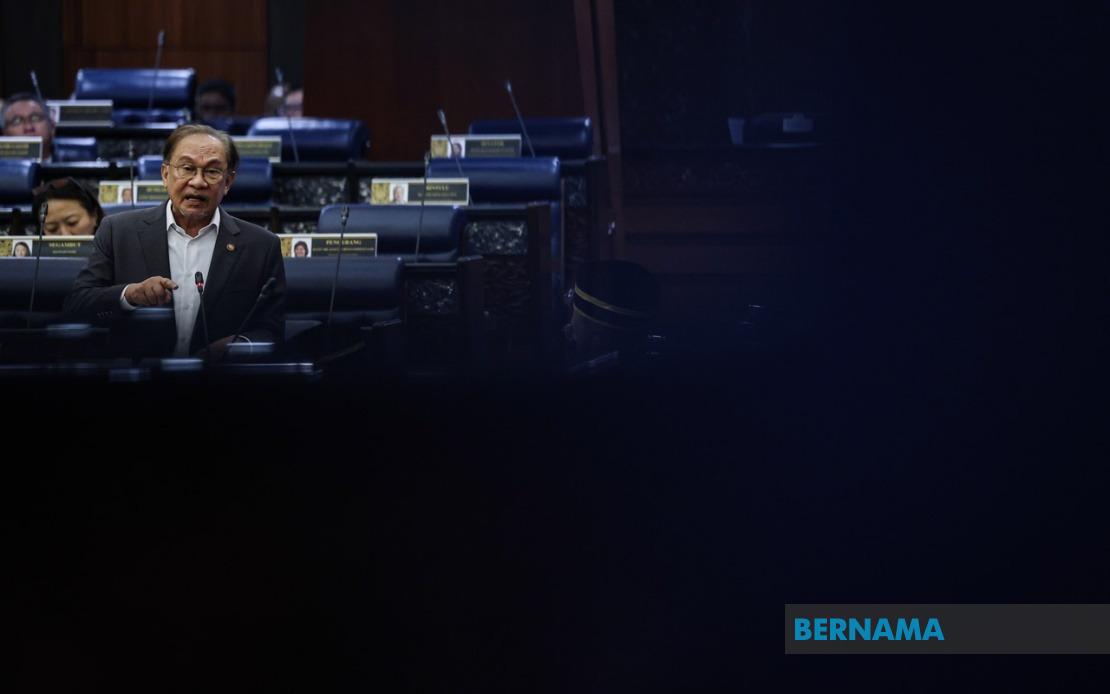
Prime Minister Datuk Seri Anwar Ibrahim has introduced a new institutional safeguard for press freedom, directing that complaints lodged against journalists working for recognised media organisations be channeled through the Malaysian Media Council rather than proceeding directly to law enforcement or prosecution. The announcement represents a significant procedural shift aimed at protecting media practitioners from what the government characterises as arbitrary or politically motivated investigations that could chill legitimate reporting and commentary.
The mechanism operates as a filtering system designed to add an independent layer of scrutiny before any formal enforcement action commences. By requiring complaints to first pass through the Malaysian Media Council's review process, the government argues it is preventing journalists from facing investigation or criminal charges simply because their reporting has prompted criticism from government departments or officials. Anwar emphasised during parliamentary Question Time that this institutional approach reflects international best practice in balancing legitimate law enforcement with the need to protect journalistic independence.
The Prime Minister's position addresses a longstanding tension within Malaysia's legal framework. Laws including the Sedition Act 1948 and the Official Secrets Act 1972 remain on the statute books and retain the potential to prosecute journalists, a concern that human rights groups and international press freedom organisations have regularly highlighted. These laws contain broadly worded provisions that can capture legitimate news reporting, and historically they have been deployed in ways that critics argue disproportionately affect coverage of sensitive government policies or public sector performance. The new Malaysian Media Council protocol seeks to create institutional resistance to such applications.
Anwar's comments directly responded to a parliamentary question from Datuk Mohd Isam Mohd Isa, the Tampin MP representing the Barisan Nasional coalition. The question specifically focused on whether the government recognised the tension between these older laws and Malaysia's stated commitment to press freedom. By instituting the Malaysian Media Council as a mandatory first checkpoint, the government signals acceptance that legal frameworks alone do not adequately protect journalists and that procedural safeguards require institutional implementation.
The Prime Minister's framing emphasises that press freedom is not absolute and operates within legal boundaries that apply equally to all citizens, including journalists themselves. He noted explicitly that no jurisdiction grants unlimited freedom to media practitioners, and that both government officials and journalists remain subject to applicable laws. However, this legal universality does not justify treating journalists as though they occupy no special category worthy of protective procedural frameworks. The distinction Anwar drew acknowledges that journalists perform a constitutionally significant function—holding power accountable through public scrutiny—and therefore warrant procedural protections against investigation weaponisation.
For Malaysian media organisations and journalism practitioners, this reform carries tangible implications. Reporters covering controversial topics, investigative journalists pursuing potentially sensitive stories, and editors making editorial decisions about publication can now operate with somewhat greater clarity that their work will not immediately trigger formal investigations simply because powerful figures or departments dislike the coverage. The Malaysian Media Council review process introduces time and institutional scrutiny into decisions to proceed with prosecution, potentially preventing rash actions based on political frustration.
However, the reform's effectiveness ultimately depends on the Malaysian Media Council's composition, independence, and actual decision-making practices. The council must function as a genuine institutional buffer rather than a performative entity that rubber-stamps enforcement decisions made elsewhere. If the council operates without genuine autonomy—if its membership predominantly reflects government preferences or if its reviews are overridden by law enforcement agencies—the procedural protection becomes largely cosmetic. Malaysian journalists and their employers will necessarily monitor whether the Malaysian Media Council genuinely screens complaints or simply delays inevitable prosecutions.
The announcement also carries significance for international perceptions of Malaysian press freedom. International organisations tracking journalist safety and media independence regularly cite the broad reach of sedition and official secrets laws as impediments to journalistic work. While the new Malaysian Media Council mechanism does not repeal or narrow these statutes, it does demonstrate governmental awareness of the tensions they create and institutional willingness to erect practical safeguards. Whether international press freedom monitors view this as substantive reform or as insufficient palliative depends on the council's actual performance in defending journalists against questionable complaints.
From a regional perspective, Malaysia's approach offers an instructive model for other Southeast Asian democracies grappling with similar tensions between national security legislation and press freedom. Thailand, the Philippines, and Indonesia have all debated how to reconcile older laws with contemporary press freedom norms, and the Malaysian Media Council mechanism represents one institutional approach to that reconciliation. If the council operates with genuine independence and effectively screens frivolous or politically motivated complaints, it could provide a template other regional nations examine.
Anwar's announcement also reflects the Pakatan Harapan-led government's broader positioning on civil liberties issues following its 2022 return to power. The coalition has emphasised rule of law, institutional independence, and human rights protections as distinguishing features of its governance compared to the preceding administration. The Malaysian Media Council protocol fits within that narrative, presenting the current government as willing to constrain state power through institutional checks rather than relying on unfettered executive discretion in press-related matters.
Yet tensions remain unresolved. The underlying legislation—particularly the Sedition Act and Official Secrets Act—retains its original expansive language and could still be invoked to prosecute journalists even if the Malaysian Media Council recommends against doing so. Anwar's statement does not indicate that these laws will be revised or repealed, only that their application to journalists will be filtered through an additional institutional process. For advocates of more fundamental press freedom reform, the announcement represents progress within existing constitutional constraints but falls short of the legal reforms necessary to definitively remove these tools from the state's press control arsenal.
The Malaysian Media Council mechanism ultimately represents a compromise position that acknowledges both the need for institutional safeguards protecting journalists and the government's stated conviction that press freedom operates within legal limits applicable to all citizens. Whether this institutional approach proves sufficient to protect Malaysian journalists from investigation weaponisation, or whether it merely delays inevitable prosecutions while preserving the underlying legal threats, will become clear as the Malaysian Media Council processes complaints and demonstrates whether it functions as an independent institutional check or as a government-aligned filtering mechanism.

