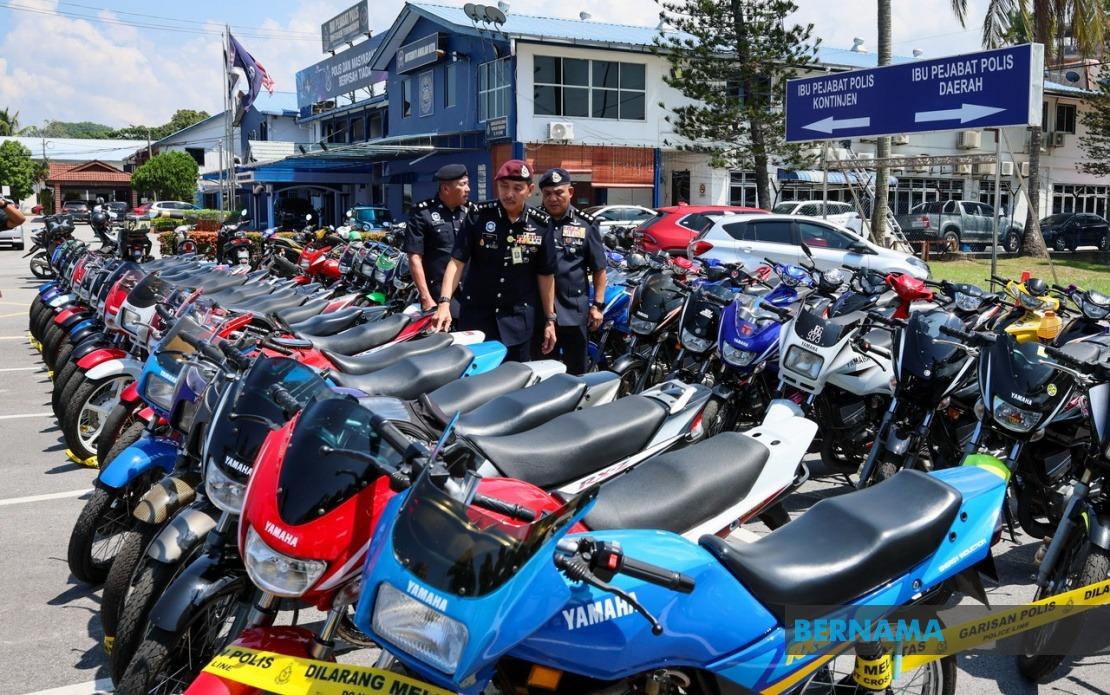
The rising toll of road fatalities at Malaysia's largest motorcycle gathering has prompted fresh calls for systematic safety intervention. Shahrim Tamrin, former board member of the Malaysian Institute of Road Safety Research, has outlined an urgent case for treating the RXZ Members programme not as a conventional enforcement challenge but as a complex large-scale event requiring sophisticated risk management protocols.
The statistics paint a concerning trajectory. Two deaths in 2024 gave way to five fatalities in 2025, before spiking to eleven deaths during last month's RXZ Members 8.0 gathering. This escalating pattern suggests the event has outgrown the safety infrastructure originally designed for it. When the RXZ Members programme first launched in 2017, attendance figures bore little resemblance to today's scale. The latest edition, held at the Gong Badak Motor Racing Circuit in Kuala Nerus, attracted over 200,000 participants across its four-day run from July 30 onwards—transforming what began as a niche motorcyclist meetup into one of Southeast Asia's most significant motorcycle assemblies.
Data released by the Bukit Aman Traffic Investigation and Enforcement Department reveals the severity of the safety crisis during those four days. Officers recorded 46 road accidents involving motorcyclists, with eleven proving fatal and five classified as serious injury collisions. The remaining 30 incidents resulted in minor injuries, yet collectively they underline a systemic vulnerability in how Malaysia's traffic authorities manage mass motorcycle participation events. The fatal accident rate of nearly 24 per cent of all recorded incidents stands as a stark indictment of current safety measures.
Shamrim's proposed framework addresses critical operational gaps that conventional law enforcement cannot remedy alone. His recommendations encompass advance participant projections to enable proper resource allocation, strategic planning of entry and exit routes to minimise congestion-related hazards, and the establishment of designated rest areas where fatigued riders can safely pause. The proposal also calls for ambulance deployment point mapping, a dedicated emergency response centre staffed and equipped for mass casualty scenarios, and a comprehensive communications infrastructure to coordinate response efforts across dispersed event locations.
Beyond immediate operational measures, Shahrim advocates for evidence-based improvement cycles. He has proposed that authorities conduct detailed post-event safety audits examining accident locations, temporal patterns, causative factors, and rider demographics. These reports should be published well ahead of the next edition, allowing stakeholders to implement corrections grounded in data rather than reactive crisis management. This approach mirrors best practice in major sporting and cultural events globally, where safety iteration drives continuous improvement.
A particularly neglected dimension concerns the vehicle themselves. The Yamaha RXZ, the iconic motorcycle anchoring this gathering, typically dates from two to three decades ago. Many have changed ownership multiple times, been substantially modified, or lack complete documentation. While Shahrim acknowledges that roadworthy examples deserve a pathway to legal registration through the Computerised Vehicle Inspection Centre, he cautions against blanket approval of machines compromised by unsafe modifications. His recommendation balances inclusivity with safety—allowing restoration but rejecting unsafe configurations—ensuring that all motorcycles on Malaysian roads carry valid insurance and road tax coverage.
The enforcement angle extends beyond rider behaviour. Local residents in the Kuala Terengganu area have lodged complaints regarding excessive noise and exhaust emissions during RXZ gatherings, creating secondary safety and environmental concerns. Shahrim has urged tightened enforcement of noise and emission standards, suggesting that event organisers bear responsibility for participant conduct and vehicle compliance. This positions the RXZ programme within broader environmental governance, not merely as a traffic matter.
Another critical recommendation targets the human element of convoy management. Shahrim proposes joint training initiatives between police, the Road Transport Department, RXZ club leadership, and event organisers to equip marshals and group leaders with protocols for safe mass movement. Large-scale motorcycle convoys present unique challenges—riders operating in formation, communication difficulties, and peer pressure toward aggressive riding styles. Professional marshal training could substantially reduce these organisational risks.
The travel management dimension draws inspiration from Malaysian highway concessionaires' seasonal festive season protocols. Shahrim suggests introducing advisory systems that inform participants of peak travel windows, recommend alternative routes to congested corridors, and designate safe rest stops along journey routes. Such measures require coordination between the RXZ programme organisers, the Road Transport Department, and potentially the Malaysian Highway Authority, creating a multi-stakeholder governance structure previously absent from this event.
For Malaysian policymakers, the RXZ Members programme presents both a challenge and an opportunity. The event reflects genuine enthusiasm for motorcycle culture and community among hundreds of thousands of citizens. Suppressing or heavily restricting the gathering risks pushing participation underground or into less regulated alternatives. Conversely, allowing it to continue under minimal safety governance invites preventable tragedies that erode public confidence in event management capacity.
The framework Shahrim advocates positions risk management not as a constraint on enjoyment but as an enabler of sustainable participation. By professionalising safety systems, authorities signal that they take riders' welfare seriously while demonstrating the government's capability to manage complex mass events. This approach holds lessons for other large-scale Malaysian gatherings facing similar safety pressures.
Implementation barriers remain real. Coordinating multiple agencies—traffic police, the Road Transport Department, the Ministry of Transport, event organisers, and motorcycle clubs—requires political will and sustained commitment. The financial and logistical demands of comprehensive safety infrastructure demand investment. Yet the alternative—continued escalation in fatalities at an increasingly popular event—poses graver costs to national road safety performance and public trust in event governance.

