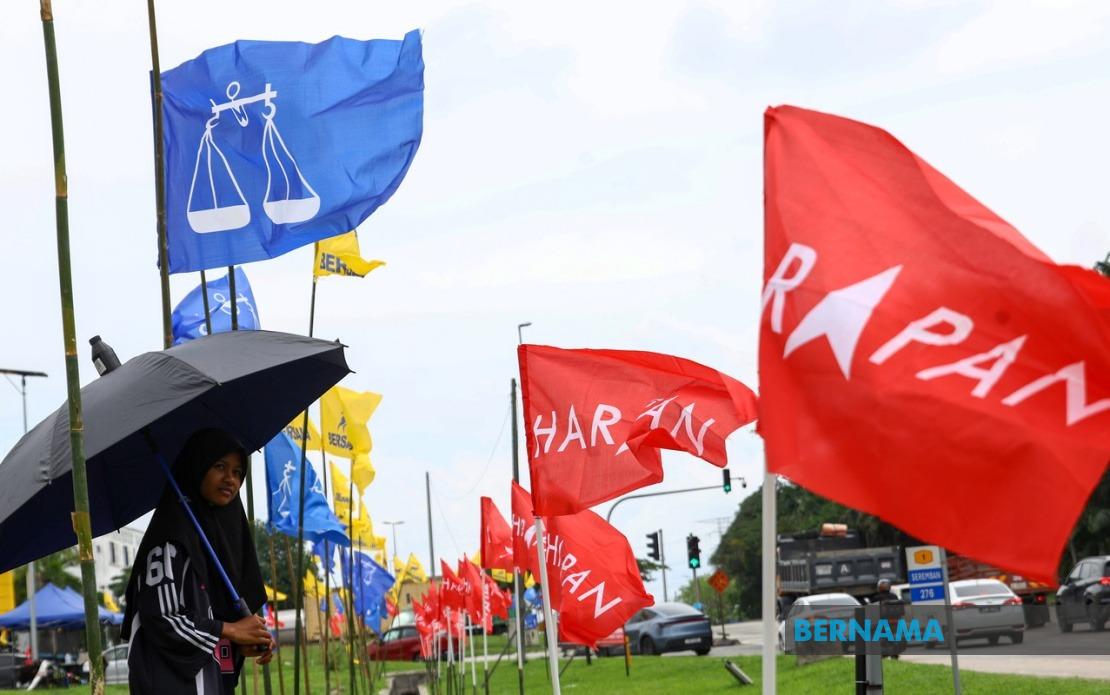
The second week of campaigning in Johor's 16th state election reveals a fundamental divergence in how the two major political alliances are attempting to secure voter support. Pakatan Harapan and Barisan Nasional, each contesting all 56 state seats with 172 candidates in total, have adopted distinctly different playbooks heading toward the Saturday July 11 polling day. While PH concentrates its messaging on substantive policy proposals that tackle everyday economic hardships facing ordinary Johoreans, BN is banking on the star power and extensive party machinery of established political figures to drive its campaign forward. This strategic split reflects broader shifts in Malaysian electoral behaviour and raises important questions about what voters genuinely value when making their choices.
Pakatan Harapan's campaign architecture centres on persuading voters through concrete policy offerings that directly address the issues weighing most heavily on household budgets and long-term financial security. The coalition has prioritized concerns spanning the cost of living crisis, wage stagnation, the chronic shortage of affordable housing, skills development and human resource advancement, and the need for more equitable distribution of economic opportunities across the state. This approach fundamentally reframes how development should be measured and evaluated. Rather than accepting the traditional metrics of foreign direct investment flows or headline GDP figures, PH is arguing that genuine progress must be tangible and felt in the daily lives of residents through higher incomes, accessible housing, meaningful employment prospects, and reliable social safety nets.
The manifesto titled "Johor For All" encapsulates this philosophy by laying out an integrated strategic framework designed to lift domestic wage levels while ensuring that investment returns translate directly into improved living standards for the broader Johor population. This messaging strategy responds to a perception among many voters that previous development initiatives enriched investors and connected elites while leaving ordinary workers behind. By centering economic distribution and welfare alongside growth, PH is attempting to redefine the conversation about what constitutes successful governance in an economically advanced state like Johor.
Meanwhile, Barisan Nasional's campaign relies heavily on the high-profile return of two prominent UMNO figures who had previously stepped back from frontline politics. Former UMNO vice-president Datuk Seri Hishammuddin Tun Hussein and former UMNO Youth chief Khairy Jamaluddin have rejoined the party through the "Rumah Bangsa" initiative and are now actively campaigning on behalf of the coalition. Their reappearance in electoral politics represents a calculated bid to energize grassroots support and leverage their established networks and public recognition to amplify BN's reach and credibility throughout the state.
However, political analysts warn that the strategic calculus surrounding personality-driven campaigns has shifted considerably in recent years. Dr Mohammad Tawfik Yaakub from Universiti Malaya observes that contemporary voters have become significantly more discerning and are no longer automatically swayed by the mere presence of prominent speakers at campaign events. Modern electorates evaluate political figures through a more comprehensive lens, examining not just who is delivering the message but whether the party behind that figure possesses coherent policy solutions, credible candidates capable of delivering results, and a genuine commitment to addressing voter concerns. This evolution in voter sophistication suggests that BN's reliance on personality and organization must be accompanied by persuasive policy narratives to be fully effective.
Nevertheless, Hishammuddin's active involvement in the campaign carries potential strategic value for BN, particularly in reengaging UMNO supporters who may have drifted away from the party in recent years due to dissatisfaction or declining confidence. According to Assoc Prof Dr Mohd Yusry Ibrahim, chief researcher at the Ilham Centre and lecturer at Universiti Malaysia Terengganu, Hishammuddin retains substantial influence within Johor's political ecosystem and could help revive coalition support among traditional BN constituencies. His track record and established relationships within the state apparatus position him as a figure capable of appealing to the party's historical base of support.
Khairy Jamaluddin's participation addresses a different demographic challenge that has confounded BN in recent electoral cycles—winning meaningful support among younger voters. Khairy has consistently enjoyed positive personal approval ratings among this age group and represents a style of political engagement that younger voters find more relatable and authentic than many of his party peers. Young Malaysians increasingly display fluid voting patterns and weak party loyalty compared to older generations, instead gravitating toward individual politicians they recognize, follow, and feel genuinely connected to. Khairy's return therefore serves as a direct attempt to penetrate a voter segment that UMNO and BN have struggled to attract, by leveraging the candidate factor as a primary draw rather than relying on institutional party loyalty.
The generational shift in voting behaviour carries profound implications for electoral strategy across the region. Younger voters prioritize personality and perceived authenticity over traditional appeals to communal loyalty or historical party affiliation. This structural change means that regardless of a party's organizational strength or policy sophistication, its success among younger demographics increasingly hinges on fielding candidates who can project genuine appeal and cultivate personal followings. For BN, Khairy represents a bridge to constituencies that might otherwise remain unreceptive to the coalition's broader messaging.
The election encompasses 56 state seats with early voting scheduled for July 7 and main polling on July 11. Both coalitions face a critical test of whether their chosen strategies—substance versus star power—resonate more powerfully with Johor voters. The outcome will provide valuable insights into which approach better captures the contemporary Malaysian electoral imagination. If PH's policy-focused campaign generates stronger resonance, it would signal that voters increasingly demand detailed solutions to material grievances. Conversely, if BN's recruitment of established political figures proves decisive, it would confirm the enduring appeal of personality and organizational reach in Malaysian elections.
The Johor contest occurs within a broader context of coalition realignment and voter realignment across Malaysia. The return of figures like Hishammuddin and Khairy to frontline campaigning suggests BN is actively working to rebuild and stabilize its political position following electoral setbacks in recent years. Simultaneously, PH's emphasis on policy articulation reflects the opposition coalition's effort to consolidate support among voters seeking substantive alternatives to traditional BN governance. For Malaysian observers and regional analysts tracking the evolution of Southeast Asian electoral politics, the contrasting campaign strategies on display in Johor offer a microcosm of how political competition is transforming in response to changing voter expectations and demographic shifts.

