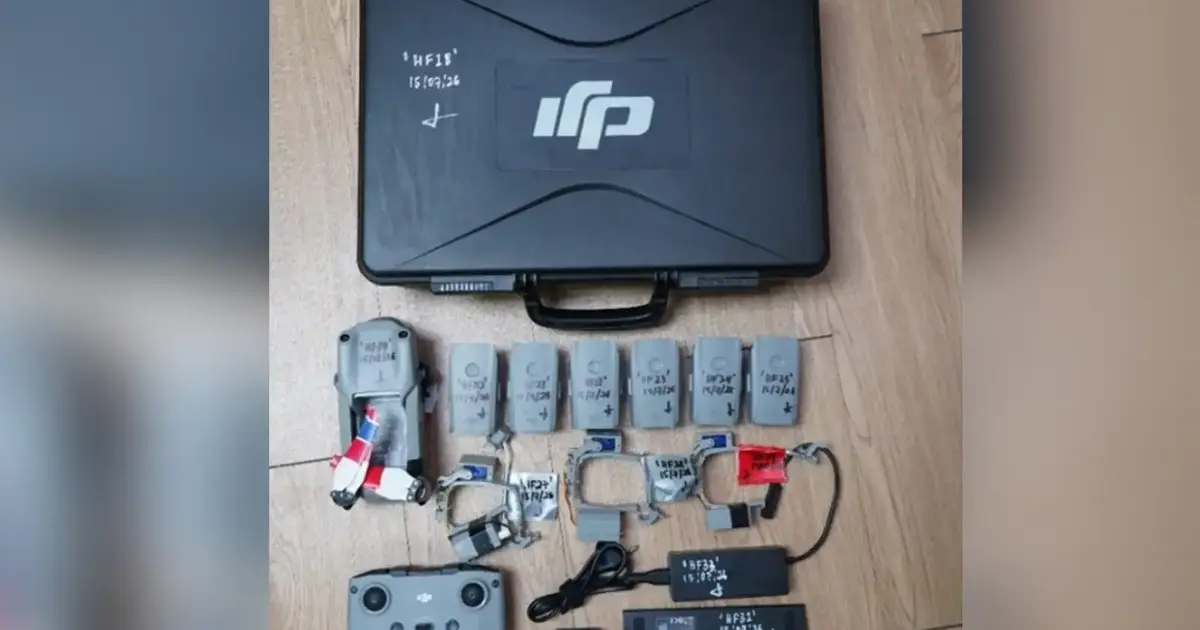
Police in Melaka have arrested a couple on suspicion of attempting to smuggle tobacco into the state prison using an unmanned aerial vehicle, marking another incident in a growing pattern of contraband operations targeting Malaysian correctional facilities. The operation reportedly involved coordination with an inmate already serving time at the institution, according to the state police chief.
The use of drones for smuggling contraband into prisons has emerged as a significant security challenge across Malaysia and the wider region. Unlike traditional methods involving corrupt staff or visitors, drone operations allow outsiders to bypass physical barriers and security checkpoints entirely, making detection and prevention increasingly difficult for prison authorities. The technology's accessibility and the difficulty in monitoring airspace around detention facilities has made it an attractive option for those seeking to deliver prohibited items.
Tobacco products remain among the most sought-after commodities in Malaysian prisons, commanding premium prices due to their scarcity and the addiction dependency among the inmate population. The contraband trade generates substantial revenue for criminal networks operating both inside and outside prison walls, creating powerful financial incentives for the kind of cross-fence cooperation that this case appears to exemplify. The collaboration between external operatives and an internal accomplice represents a coordinated smuggling network rather than an isolated opportunistic incident.
The Melaka police chief's confirmation that the activity occurred in alleged collusion with a prisoner underscores how security vulnerabilities extend beyond physical infrastructure to encompass human factors within the system. Inmates with access to communication devices—whether smuggled phones, messaging apps, or other contact mechanisms—can coordinate with outside associates to arrange deliveries. This creates a dual challenge for prison management: securing the perimeter against aerial intrusions while simultaneously controlling internal communications networks that enable such schemes.
Investigations into drone-assisted smuggling operations typically reveal complex supply chains involving multiple actors. Beyond the couple now in custody, authorities frequently pursue lines of inquiry into how the drone was obtained, who provided funding, what communications infrastructure was used to coordinate the operation, and which inmate or inmates served as the intended recipients. Understanding these broader networks is essential for disrupting the organised crime elements that orchestrate such activities.
Malaysian correctional facilities have faced mounting pressure to upgrade security measures in response to such incidents. Many prisons have implemented drone detection systems, signal jammers, and increased aerial surveillance, though these technologies represent significant capital expenditures for an already stretched corrections budget. The effectiveness of technological solutions remains limited if procedural and human security weaknesses persist alongside.
The detention of this couple follows similar cases nationwide, suggesting that drone-based smuggling has graduated from an experimental approach to an established method within criminal logistics. Law enforcement agencies across Southeast Asia have reported increasing seizures of contraband delivered via drone to prisons in Thailand, Indonesia, and the Philippines, indicating a regional security trend rather than a Malaysia-specific phenomenon. The relative ease of acquiring commercial drones and their improving payload capacity has made them increasingly practical for organised smuggling operations.
For Malaysian readers, such incidents highlight the interconnected nature of internal prison security with broader organised crime networks operating in communities. When individuals outside prison collaborate with inmates to circumvent security, they become part of systems that often profit from multiple illegal activities simultaneously—drug trafficking, money laundering, illegal gambling operations, and loan sharking all frequently intersect with prison contraband networks. Disrupting these schemes therefore contributes to dismantling larger criminal enterprises.
The charges against the arrested couple will likely proceed through Malaysia's criminal justice system, with courts examining the evidence of intent, association, and specific actions taken toward smuggling. Sentencing for such offences typically considers factors including the quantity and nature of contraband involved, the sophistication of the operation, and whether the accused had prior criminal records. Successful prosecution requires establishing the direct link between the accused's actions and the drone delivery attempt.
Beyond this specific case, the incident prompts broader questions about prison management strategy in Malaysia. Authorities must balance rehabilitation objectives with security imperatives, implement staff vetting procedures to prevent internal corruption, maintain rigorous perimeter security without creating excessively brutal conditions, and develop intelligence capabilities to identify and disrupt smuggling networks before operations commence. The challenge lies in executing these functions consistently across a system managing tens of thousands of inmates.
The case also reflects how technological change outpaces regulatory and enforcement responses in many jurisdictions. While Malaysia has begun developing drone regulations and no-fly zones around sensitive facilities, implementation remains inconsistent. Prisons typically lack the authority to independently enforce airspace restrictions or pursue drone operators, requiring coordination with aviation authorities, police, and military assets that may not maintain permanent presence at every facility.
As authorities continue investigating this particular operation, they will likely uncover additional details about the supply network, financial arrangements, and communication methods involved. The couple's cooperation with investigators—or lack thereof—may determine whether authorities successfully trace the operation to other participants and organised crime connections. Each smuggling attempt that authorities successfully intercept and prosecute provides valuable intelligence about evolving tactics, helping law enforcement stay ahead of increasingly sophisticated criminal adaptations.

