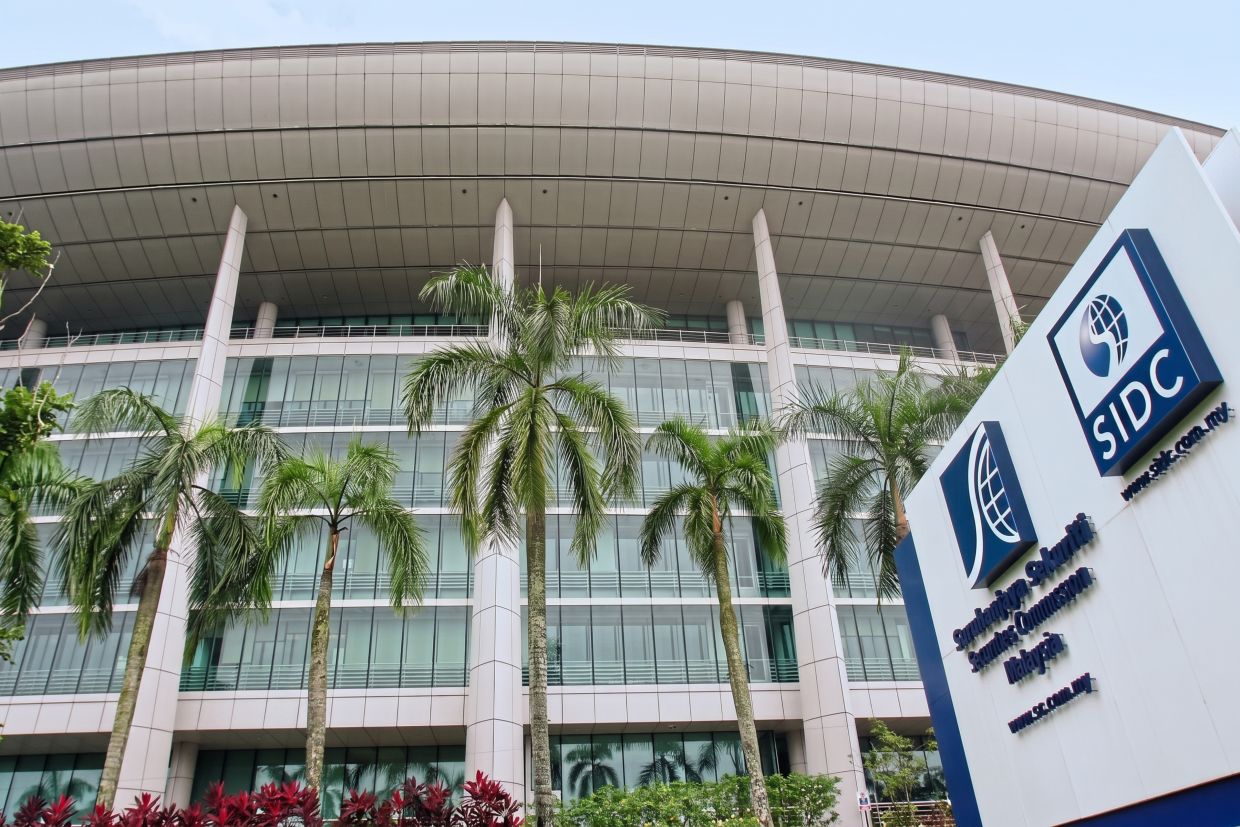
Malaysia's Court of Appeal has delivered a decisive blow to insider trading in the local capital market by unanimously upholding a High Court judgment from 2022 that found former WCT Bhd deputy managing director Goh Chin Liong and Ara Holdings Sdn Bhd director Leong Ah Chai guilty of market abuse. The unanimous decision represents a significant moment for Malaysia's financial regulator, the Securities Commission Malaysia (SC), which has been pursuing the case for nearly a decade.
The appellate court's rejection of both defendants' appeals came without identifying any legal errors in the original High Court judgment, signalling judicial confidence in the rigorous application of insider trading provisions. The court dismissed the appeals while imposing costs of RM100,000 on each appellant, a measure that underscores the seriousness with which Malaysia's judiciary treats market misconduct. This comprehensive affirmation strengthens the legal precedent surrounding insider trading enforcement in Southeast Asia's third-largest economy.
The financial consequences for the defendants remain substantial. Each is required to pay RM2.5mil as disgorgement—a legal remedy that strips wrongdoers of profits gained through illicit activity—alongside civil penalties of RM300,000 apiece. The court also ordered them to reimburse the SC's litigation costs amounting to RM75,000. Collectively, the judgment demands RM5.83mil in recovery, a figure that reflects both the gains avoided and the broader regulatory costs associated with investigating and prosecuting insider trading.
The case originated in 2015 when the SC initiated civil proceedings against Goh and Leong under sections 188(2) and 188(3) of the Capital Markets and Services Act 2007. What began as an investigation into suspicious trading activity revealed a troubling pattern of market abuse centring on access to material non-public information. The regulators alleged that Goh, leveraging his position at WCT Bhd, had shared confidential details about a major business development with Leong, creating an asymmetric informational advantage that enabled profitable securities trading.
The heart of the case involved a cancelled contract for a racecourse development in Dubai, United Arab Emirates. WCT Bhd had entered into a joint venture with Arabtec Construction LLC to undertake this ambitious Middle Eastern project, but the arrangement ultimately fell through. When Goh communicated news of the contract cancellation to Leong—information that would likely impact WCT's share price—Leong acted on that knowledge by disposing of 1.64 million WCT shares held in Ara Holdings' trading account between January 2 and 5, 2009. This swift divesting enabled Leong to exit a position before the market could absorb the negative news, effectively allowing him to avoid losses that would otherwise have materialised.
The temporal proximity between Leong's share disposals and the eventual public disclosure of the cancelled contract strengthens the case for insider trading. In market abuse prosecutions, regulators must establish that trading occurred based on material non-public information—information that a reasonable investor would consider important to investment decisions. The Court's acceptance of the SC's evidence on this point validates the investigative methodology and underscores how identifying the timing of trades relative to news dissemination remains central to proving insider trading cases.
A procedural development in May 2026 demonstrated the SC's determination to enforce the judgment despite initial collection challenges. The regulator successfully appealed to the High Court to reinstate garnishee orders, which allow creditors to seize assets held by third parties to satisfy outstanding debts. This enforcement mechanism proved critical because defendants sometimes resist paying court-ordered sums through complex asset structuring or non-compliance. By securing garnishee orders, the SC positioned itself to recover the RM5.83mil judgment directly from the defendants' financial holdings.
The Court of Appeal's decision carries implications that extend beyond this single case. Insider trading enforcement has become increasingly important as Malaysia's capital market integrates further into global financial networks and as domestic institutional investment grows. The judgment signals to market participants that regulatory authorities possess both the investigative capability and judicial support necessary to pursue complex financial crimes. This deterrent effect becomes particularly valuable in emerging markets where enforcement histories may be shorter and market norms less entrenched than in developed jurisdictions.
The SC has explicitly framed insider trading as corrosive to market integrity and investor confidence. This characterisation reflects international best practice—regulatory bodies worldwide recognise that information asymmetries undermine the fairness and efficiency of securities markets. When investors perceive that markets are compromised by insiders trading on privileged information, they either withdraw capital or demand higher risk premiums, increasing the cost of equity financing for legitimate businesses. By pursuing these enforcement actions vigorously, the SC attempts to protect the broader Malaysian business community and the investment public.
Looking forward, the SC has indicated it will pursue recovery of the RM5.83mil judgment while continuing to strengthen its enforcement agenda more broadly. The regulator's public statements signal an unwavering commitment to prosecuting market abuse, a message directed at both potential wrongdoers and the investing public. For Malaysian investors and the business community, today's decision offers reassurance that misconduct carries real consequences, even when perpetrators occupy senior corporate positions and when resolution takes years to achieve through multiple court proceedings.
The appellate affirmation also reflects the evolving sophistication of Malaysia's legal framework for capital market protection. The Capital Markets and Services Act 2007 provisions under which Goh and Leong were prosecuted remain among the most comprehensive insider trading statutes in Southeast Asia. The Court of Appeal's unanimous endorsement of their application demonstrates that the statutory framework, when rigorously enforced, can effectively combat market abuse. This precedent may influence future cases and encourage other regulatory bodies in the region to pursue similarly robust enforcement strategies.

