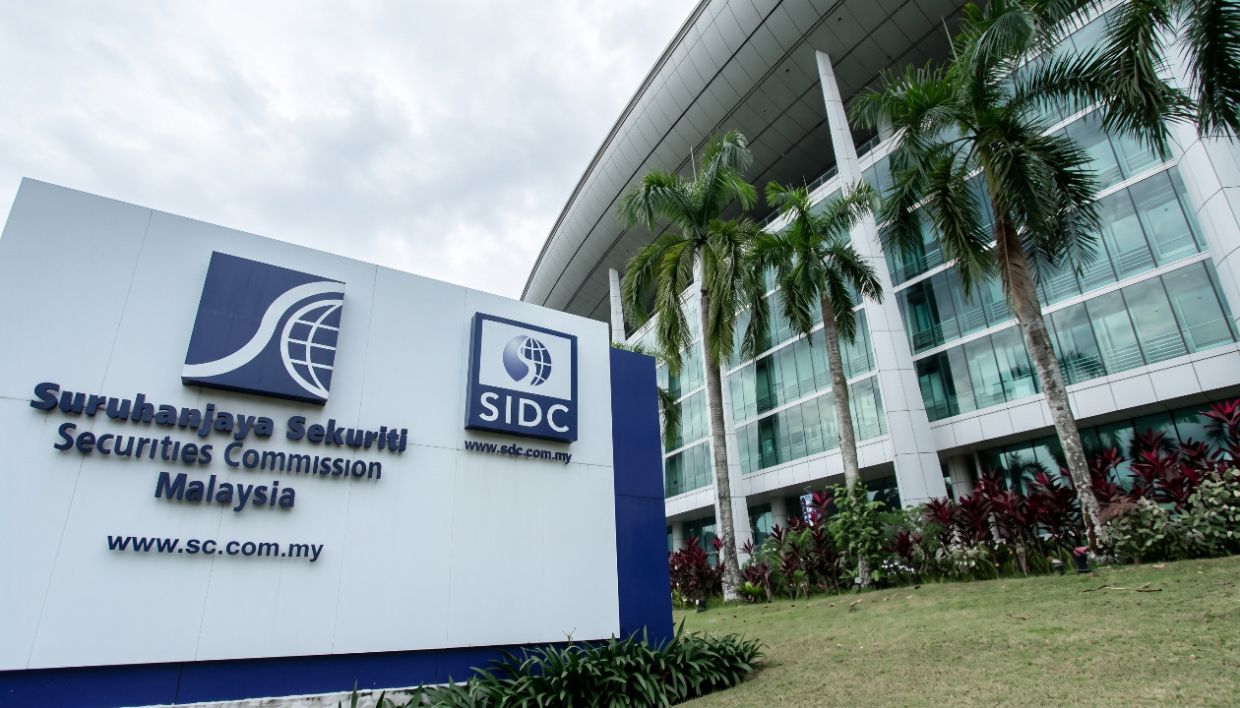
Malaysia's Court of Appeal has delivered a significant setback to businessman Wong Shee Kai, better known as Ricky Wong, by rejecting his challenge against a substantial asset freeze imposed by the Securities Commission Malaysia. The three-judge appellate bench, comprising Justices Datuk Ravinthran N. Paramaguru, Datuk Dr Choo Kah Sing and Datuk Leonard David Shim, dismissed the appeals brought by Wong, his associate Teh Sew Wan, and their corporate entity Wong SK Holdings Sdn Bhd. The court's decision means that assets and properties worth up to RM169.2mil will remain frozen pending the outcome of the underlying civil proceedings, a ruling that underscores the judiciary's support for regulatory intervention in financial misconduct cases.
The appellate decision reinforces an earlier High Court determination made in April 2022, which had imposed the inter partes injunction freezing the disputed assets. This followed an ex parte injunction granted in May 2020, which the appellants had sought to overturn on appeal. By dismissing both the challenge to set aside the earlier ex parte order and the broader appeal against the subsequent inter partes injunction, the Court of Appeal has validated the entire enforcement timeline initiated by the SC. The court also ordered Wong, Teh, and their company to pay RM200,000 in costs to the Securities Commission, adding a financial penalty to the substantive loss of asset access.
The underlying civil suit, filed by the SC in 2020, centres on alleged contraventions of securities law under Section 179 of the Capital Markets and Services Act 2007. While the original source material does not elaborate on the specific nature of the securities fraud allegations, such cases typically involve unauthorized trading, misrepresentation of investment opportunities, market manipulation, or breach of fiduciary duties. The breadth of the asset freeze—reaching RM169.2mil—suggests the SC identified substantial sums potentially connected to the alleged unlawful conduct. The injunction itself extends beyond merely preventing asset disposal; it also prohibits any third party from knowingly facilitating transactions involving the frozen assets, thereby creating a comprehensive barrier against dissipation of potentially ill-gotten gains.
For Malaysian investors and the broader financial services sector, this appellate outcome carries important implications regarding regulatory enforcement capabilities. The Court of Appeal's decision affirms that the judiciary will support preventative asset-freezing measures even during the investigative and early litigation phases, recognizing that allowing asset movement could frustrate eventual remedies. This jurisprudential position strengthens the SC's hand in pursuing complex financial crime cases where evidence gathering may be lengthy and sophisticated schemes may span multiple jurisdictions. The case also demonstrates that high-profile defendants, regardless of their resources or legal representation, cannot easily overturn such injunctions through appellate review.
The trial phase of the civil suit has not yet concluded, with proceedings scheduled to resume on September 1, 2026. This extended timeline is not uncommon in complex securities fraud cases involving substantial sums and multiple parties. During this interim period, the asset freeze will remain in place, effectively immobilizing Wong and his associates' financial resources. The separation of the civil case from criminal proceedings, which the SC has also initiated, creates parallel legal vulnerabilities for the defendants. This dual-track approach—civil asset recovery alongside criminal prosecution—has become a standard enforcement methodology for financial regulators internationally and increasingly across Southeast Asia.
A particularly significant aspect of the SC's enforcement efforts is that Wong remains at large. The regulator has publicized that Wong is wanted in connection with criminal charges under the Anti-Money Laundering, Anti-Terrorism Financing and Proceeds of Unlawful Activities Act 2001, in addition to the CMSA violations. This suggests the authorities believe the underlying conduct extended beyond mere securities violations into money laundering or terrorist financing contexts, elevating the gravity of the alleged offences. The fact that Wong has evaded apprehension indicates potential flight risk and reinforces the necessity of the asset freeze as a means of preventing further harm or the movement of proceeds to safe jurisdictions. The SC's public appeal for information regarding Wong's whereabouts reflects recognition that locating him may require public assistance, suggesting he may have left Malaysia or is in deep concealment.
The legal teams involved in this appellate hearing showcase the seriousness with which all parties approached the matter. The SC deployed both in-house counsel and high-profile external advocates, including Datuk Lim Chee Wee, a senior commercial silks. Wong retained Tan Sri Muhammad Shafee Abdullah of Messrs Shafee & Co, one of Malaysia's most prominent and expensive criminal and commercial defence advocates, while Teh engaged Tan Sri Cecil W. M. Abraham. The concentration of senior counsel on both sides underscores the complexity and financial significance of the dispute. Yet despite the calibre of appellate advocacy available to the defendants, they could not persuade the Court of Appeal to overturn the lower court's injunction.
From a Southeast Asian regulatory perspective, this case reflects the region's increasing sophistication in financial crime enforcement. Malaysian authorities have progressively aligned their anti-fraud mechanisms with international best practices, including asset-freezing orders that parallel civil recovery techniques used by authorities in Singapore, Hong Kong, and Australia. The Securities Commission's multi-pronged approach—combining regulatory injunctions, civil asset recovery, and criminal prosecution—mirrors enforcement models adopted by peers such as the Monetary Authority of Singapore. For Malaysian financial institutions and professional advisers, cases like this serve as cautionary examples of the legal and reputational consequences of facilitating questionable financial transactions.
The case also illustrates an important procedural principle: that appellate courts will generally defer to trial judges' discretionary decisions regarding asset-freezing orders unless patently unreasonable. By declining to overturn the High Court's injunction, the Court of Appeal signalled confidence in the lower court's assessment of flight risk, dissipation risk, and the balance of convenience favouring asset preservation. This doctrine protects the integrity of ongoing proceedings and prevents extended litigation regarding preliminary remedies from consuming judicial resources. For future defendants facing similar enforcement actions, the message is clear: once a trial judge grants an asset-freezing injunction with detailed reasoning, the appellate threshold for reversal is exceptionally high.
Looking forward, the September 2026 trial date represents a critical juncture where the substantive merits of the SC's allegations will be tested. The court will examine whether Wong, Teh, and their corporate vehicle engaged in the alleged securities contraventions, and if so, what remedies are appropriate. Given that assets remain frozen, any judgment in the SC's favour would likely result in orders to disgorge unlawfully obtained profits and potentially impose civil penalties. The extended pre-trial period also provides an opportunity for the defendants to negotiate settlement, though Wong's absence from Malaysia complicates such discussions. For Malaysian regulators and the investing public, this case represents a vindication of enforcement principles and demonstrates that even well-resourced defendants cannot simply litigate their way past preliminary safeguards designed to protect the integrity of financial markets and the assets of defrauded investors.

