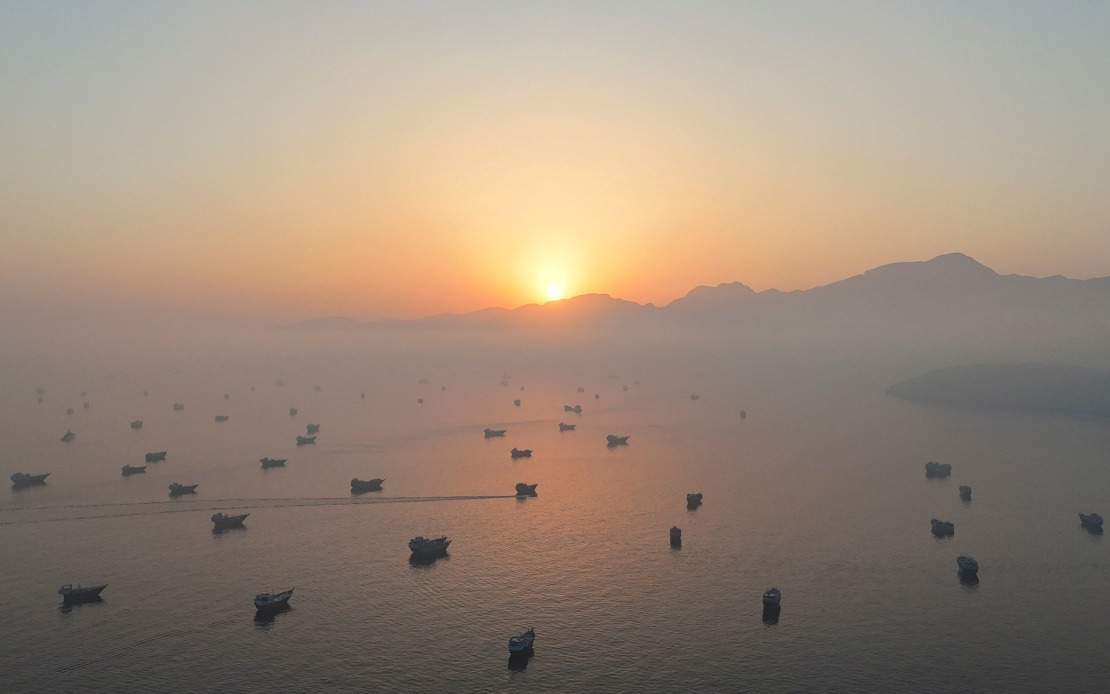
The Comprehensive and Progressive Agreement for Trans-Pacific Partnership (CPTPP) has thrown its weight behind the recent US-Iran agreement and accompanying moves to reopen the Strait of Hormuz, signalling broad international support for restoring stable maritime commerce in one of the world's most strategically vital waterways. The endorsement comes as the 12-member bloc grapples with the cascading effects of supply chain disruptions and energy market volatility that have reverberated across the Asia-Pacific region and beyond.
Ministerial representatives from Australia, Brunei, Canada, Chile, Japan, Malaysia, Mexico, New Zealand, Peru, Singapore, the United Kingdom and Vietnam convened virtually on Friday to discuss the geopolitical and commercial implications of the agreement. Their joint statement reflects a consensus view that the resumption of stable, secure navigation through the Hormuz Strait is essential not only for energy security but for the broader functioning of global trade networks that underpin prosperity across member economies.
The statement emphasises that the bloc recognises the Strait of Hormuz as a critical artery for international commerce. Beyond crude oil and refined petroleum products like diesel, the ministers highlighted the vulnerability of trade flows for natural gas, petrochemical products, and fertilisers—commodities whose supply disruptions can trigger cascading price shocks and economic dislocation across multiple sectors. For many CPTPP members, particularly smaller economies and island nations, interruptions to these supply chains pose existential challenges to food security and industrial competitiveness.
Central to the ministers' position is their affirmation of freedom of navigation and overflight as fundamental principles underpinning international maritime law. By explicitly referencing the United Nations Convention on the Law of the Sea (UNCLOS), the CPTPP demonstrates commitment to rules-based international order rather than unilateral action. This stance reflects deep concern among member states about the precedent set when major powers weaponise chokepoints or restrict access to sea lanes, a practice that threatens the predictability and stability that businesses require to make long-term investment decisions.
For Malaysia and other Southeast Asian members, the implications are particularly acute. The region's economies are heavily dependent on energy imports and serve as crucial nodes in global supply chains. Any prolonged disruption to Hormuz shipping directly elevates fuel costs for manufacturers, increases electricity tariffs for consumers, and disrupts the movement of petrochemical feedstocks upon which much of the region's downstream industry depends. The CPTPP statement thus reflects not abstract principles but concrete economic interests shared among member nations.
The bloc also signalled support for regional initiatives aimed at building more resilient energy infrastructure, specifically endorsing the Partnership On Wide Energy and Resources Resilience Asia (POWERR Asia). This mechanism facilitates coordination between energy producer and consumer nations, allowing for more flexible supply arrangements and reducing over-dependence on any single shipping route or supplier. For CPTPP members in Asia-Pacific, participation in such frameworks offers pathways to diversify sourcing and reduce vulnerability to geopolitical shocks.
Particularly noteworthy is the ministers' explicit acknowledgment of the unique vulnerabilities facing small-island developing states, especially in the Pacific. These nations, many of which face existential threats from climate change and rising sea levels, are disproportionately affected by energy price volatility and supply chain disruptions. The CPTPP's commitment to supporting trade diversification for these economies demonstrates recognition that rules-based commerce must include mechanisms to protect the most vulnerable participants.
The statement's call for members to refrain from imposing unjustified trade restrictive measures carries particular weight in the current geopolitical climate. Implicit in this language is a caution against the use of unilateral sanctions or export controls that circumvent established international legal frameworks. Such measures, while sometimes presented as necessary for national security, can destabilise entire markets and undermine the predictability that enables commerce. By reaffirming this commitment collectively, CPTPP members are reinforcing expectations of restraint and multilateral decision-making.
The timing of this statement reflects the urgency with which member nations view current global challenges. Supply chain disruptions triggered by pandemic-related lockdowns, geopolitical tensions, and energy market volatility have exposed structural weaknesses in just-in-time manufacturing systems and highlighted the risks of over-concentration in single suppliers or routes. The CPTPP's emphasis on resilience and crisis response mechanisms signals recognition that member economies must work collaboratively to build redundancy and flexibility into their trading networks.
For Malaysian policymakers and businesses, the CPTPP statement reinforces several strategic imperatives. First, maintaining open and secure sea lanes remains non-negotiable for national economic stability. Second, the bloc's commitment to rules-based trade suggests that Malaysia can rely on multilateral mechanisms to address grievances rather than resorting to unilateral measures. Third, participation in energy resilience frameworks like POWERR Asia offers concrete opportunities to reduce supply chain vulnerability. These priorities align closely with Malaysia's position as a mid-sized trading nation with significant energy import requirements and exposure to global value chains.
The ministers' emphasis on collective action in addressing supply chain crises also underscores a broader shift in how CPTPP members view trade governance. Rather than treating commerce as a zero-sum competition, the statement positions trade as a shared interest requiring coordinated policy responses. This philosophy contrasts sharply with more protectionist or nationalist approaches that have gained traction in recent years, suggesting that within the CPTPP framework at least, there remains meaningful commitment to liberal trade principles.
Looking forward, the bloc's endorsement of the US-Iran agreement and Hormuz reopening efforts represents a significant diplomatic moment. It signals that major trading nations, despite their other differences, recognise the mutual benefits of maritime stability and open commerce. For Southeast Asian economies embedded in complex regional supply chains, this consensus creates space for the kind of predictable, rule-based international environment necessary for sustained growth and development.

