Cuba's President Miguel Diaz-Canel has launched a forceful rebuke of the latest American sanctions against his country, weaponizing historical comparisons to frame current US policy as a resurgence of ideological persecution on a global scale. Speaking from Hamilton, Canada, the Cuban leader characterized Washington's approach on social media as a revival of McCarthyism—the infamous 1950s anti-communist witch hunts that targeted alleged communist sympathisers in American society—but coupled with what he describes as contemporary far-right transnational networks that harken back to Hitlerite fascism and the Cold War's Operation Condor.
Diaz-Canel's rhetoric carries particular weight in the Latin American context, where Operation Condor—the coordinated campaign of political repression, torture, and disappearances orchestrated by right-wing military dictatorships throughout the 1970s and 1980s—remains a deeply scarring historical memory. By invoking these references, the Cuban president is positioning his country as a victim of Washington's ideological warfare and attempting to build solidarity among leftist and anti-imperialist movements across the Global South. His invocation of fascism alongside McCarthyism suggests a deliberate strategy to alarm international observers about what he characterizes as a coordinated attack on progressive governance models worldwide.
The underlying question Diaz-Canel poses—whether allegations against the left serve as convenient pretexts for justifying further American aggression—reflects a longstanding Cuban grievance about the asymmetry of power in international relations. From Havana's perspective, the island has endured not merely sanctions but a comprehensive economic blockade for over six decades, yet Western capitals rarely face comparable consequences for their own foreign policy decisions. This narrative of victimization resonates across much of the developing world, particularly among nations that have experienced American military interventions or have pursued independent foreign policies contrary to Washington's interests.
The Cuban leader extended his criticism beyond bilateral US-Cuba relations, attributing broader global miseries to what he terms the "philosophy of dispossession" guiding transnational far-right movements. In his enumeration of grievances, Diaz-Canel linked American foreign policy to the Israel-Gaza conflict, extrajudicial killings, migrant persecution, and even the bombing of a girls' school in Iran. This expansive indictment serves a rhetorical function: it positions Cuba's struggles within a larger narrative of Western imperialism and right-wing authoritarianism, suggesting that resistance to American sanctions is part of a larger civilizational struggle rather than merely a bilateral dispute.
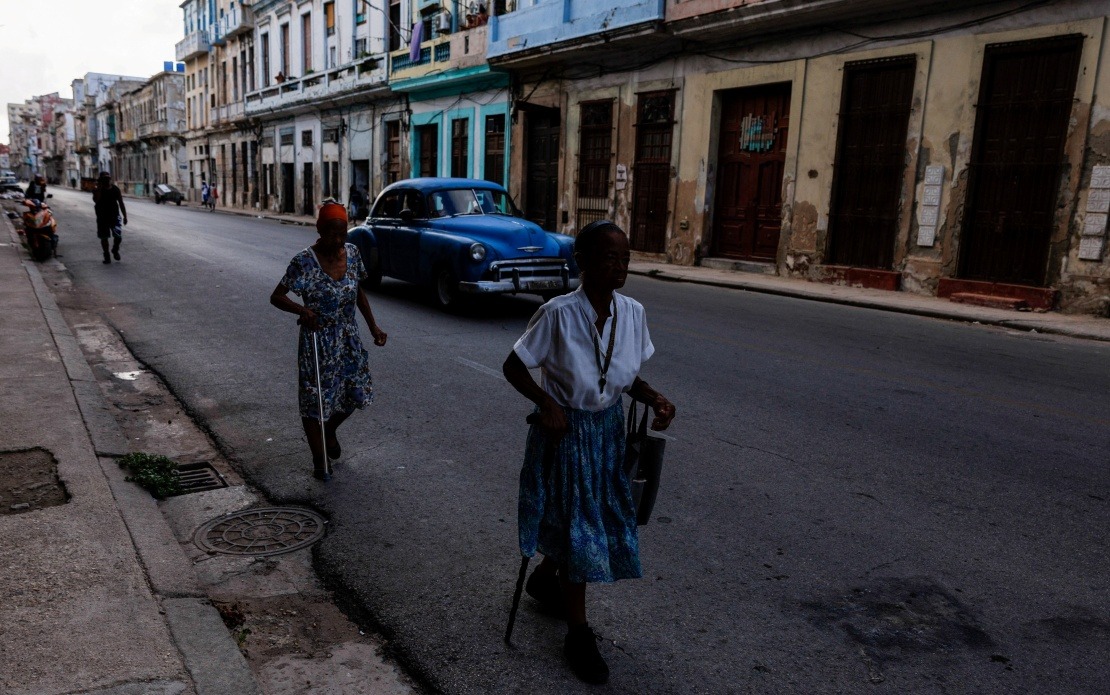
The concrete context animating this diplomatic confrontation is Cuba's unprecedented economic catastrophe. The island is experiencing its worst economic downturn in decades, characterized by crippling fuel shortages and electricity deficits so severe that residents endure approximately twenty hours of daily blackouts. Official statistics reveal that the national economy contracted sharply during the first half of 2026, with the electricity shortfall reaching 1,955 megawatts—a deficit so substantial that it fundamentally constrains industrial production, healthcare delivery, and basic services across the archipelago. These material privations are not abstract; they translate into reduced hospital capacity, spoiled food, compromised water treatment, and deteriorating living conditions for ordinary Cubans.
Havana attributes much of this crisis to tightened American measures, arguing that Washington has systematically disrupted oil supplies reaching the island, leveraged diplomatic pressure on international companies conducting business with Cuba, and restricted the country's access to global credit markets and financing mechanisms. These claims contain substantial factual basis; the United States has indeed used secondary sanctions and regulatory mechanisms to penalize third-country companies that facilitate trade with Cuba, and American banks' dominance in global financial systems creates significant barriers to Cuban economic participation. The cumulative effect resembles not merely traditional sanctions but rather a comprehensive exclusion from international economic structures.
The Trump administration has escalated these measures substantially. In May, President Donald Trump signed an executive order imposing fresh sanctions targeting Cuban officials and government entities, justifying the action through claims of internal repression and alleged threats to American national security and foreign policy interests. More expansively, in January Trump declared a national emergency and established a mechanism to impose tariffs against any nation selling or supplying oil to Cuba—an extraordinary assertion of extraterritorial economic power designed to eliminate alternative fuel sources that might otherwise alleviate the island's energy crisis. These moves signal Washington's determination to maintain maximum pressure on the Castro government.
For Southeast Asian observers, the Cuba dispute offers a window into broader patterns of American economic statecraft in the contemporary era. Like several Association of Southeast Asian Nations member-states, Cuba represents a nation pursuing strategic autonomy and resisting what it perceives as hegemonic pressure. Vietnam, Myanmar, and other regional actors have similarly navigated sanctions regimes and American pressure campaigns. The parallels are imperfect—Cuba's Cold War alignment differs from Southeast Asia's colonial legacy—yet the fundamental dynamic of smaller nations asserting independence against great-power coercion resonates across the Global South.
Diaz-Canel's McCarthyism reference also carries contemporary resonance in Southeast Asia, where several governments face Western pressure regarding governance standards, human rights records, and foreign policy alignment. Thailand, Myanmar, and other nations have occasionally framed international criticism as foreign interference or ideological warfare. The Cuban president's rhetorical strategy—reframing sanctions as persecution rather than legitimate responses to governance concerns—reflects a broader diplomatic playbook increasingly deployed across the developing world to mobilize domestic support and international solidarity.
The fundamental tension at play involves competing visions of international legitimacy and state sovereignty. Washington's framework emphasizes governance standards, human rights compliance, and alignment with American strategic interests as legitimate bases for economic coercion. Havana's counter-framework privileges national sovereignty and self-determination, portraying sanctions as illegitimate punishment for refusing ideological capitulation. This collision between humanitarian internationalism and nationalist sovereignty continues to structure many conflicts within the contemporary international system.
Cuba's economic crisis, regardless of culpability attribution, creates genuine humanitarian pressures that complicate neat ideological narratives. The blackouts, food shortages, and economic contraction impose real suffering on ordinary citizens who did not choose their government or geopolitical alignments. This human dimension—often lost in diplomatic rhetoric—remains central to understanding why sanctions regimes generate such visceral opposition across the Global South, where populations frequently bear immediate costs while elites retain substantial insulation from economic deprivation.
Moving forward, the trajectory of US-Cuba relations depends partly on American political calculations and partly on Cuba's capacity to navigate its economic crisis through alternative partnerships, particularly with China and Russia. The island's diplomatic intensity also reflects its limited options; lacking substantial economic leverage, Cuba must weaponize rhetoric and historical memory to contest American dominance. Whether such appeals resonate beyond sympathetic audiences in the Global South remains an open question in an international system where material power ultimately conditions diplomatic outcomes.

