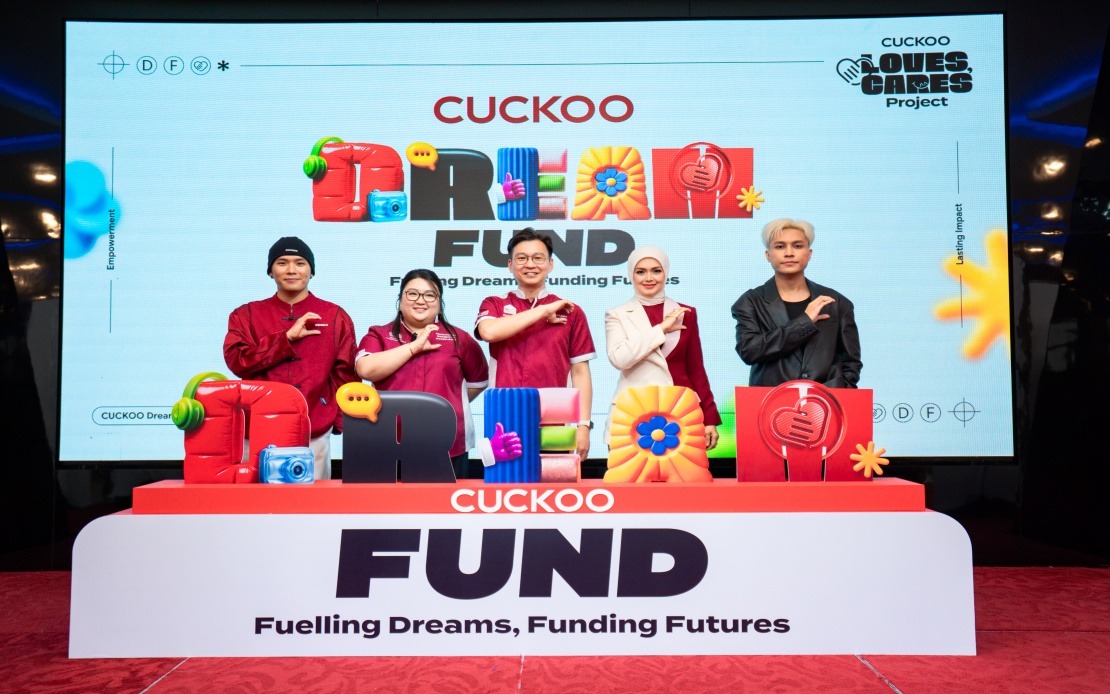
CUCKOO International (MAL) Berhad has unveiled an ambitious funding initiative aimed at channelling the creative energy of Malaysia's youth towards addressing genuine social challenges. The company's newly launched RM100,000 CUCKOO Dream Fund represents a significant commitment to nurturing emerging talent while simultaneously tackling community issues through artistic expression and cultural innovation. The scheme is open to Malaysians between 15 and 30 years old until September 30, marking a notable corporate foray into youth empowerment through creative entrepreneurship.
The fund operates under the banner "Fuelling Dreams, Funding Futures" and forms a cornerstone component of CUCKOO's broader #SAMASAMAEmpower corporate social responsibility framework, known internally as the CUCKOO Loves, Cares Project. Rather than functioning as a straightforward grant programme, the initiative positions itself as a comprehensive social empowerment ecosystem designed to equip aspiring creators with both financial resources and professional guidance. This layered approach recognises that funding alone cannot guarantee project success; emerging talents require structured mentorship and industry exposure to transform raw ideas into professionally executed, community-serving initiatives.
Applications will be processed across two distinct cycles, with RM50,000 allocated to each phase. Within each cycle, successful applicants stand to receive up to RM10,000 per project, a substantial sum designed to move concepts from planning stages into tangible execution. The grant structure itself reveals careful consideration of project economics: recipients can access up to RM5,000 in creative grants specifically earmarked for original artistic work and core project delivery, complemented by a separate RM5,000 stream designated for social impact alignment. This bifurcated funding model encourages applicants to think strategically about both artistic excellence and measurable community benefit, preventing projects from becoming either financially unfeasible or socially disconnected from genuine need.
The fund welcomes submissions across five creative domains that reflect contemporary modes of expression and communication. Digital content and storytelling submissions might encompass podcasts, documentaries, or multimedia narratives addressing social issues; music and sound applications could involve protest songs, community soundscapes, or audio installations; design and visual arts entries might include graphic advocacy, installation art, or public murals; performance and movement covers theatre, dance, and live spectacle with social messaging; while creative workshops enable applicants to establish community learning spaces in artistic disciplines. This categorical breadth demonstrates sophisticated understanding of how different demographic groups consume and create media, ensuring accessibility across generational and cultural divides within Malaysia's diverse youth population.
A critical differentiator of the CUCKOO Dream Fund lies in its engagement of professional mentorship. The company has enlisted singer-songwriter Firdhaus Farmizi, a recognised figure in Malaysia's contemporary music scene, as CSR Friend and Dream Fund Mentor. Farmizi's role extends beyond ceremonial approval; he will actively participate in candidate shortlisting and provide direct guidance to grant recipients throughout project execution. His involvement signals that mentorship here carries genuine industry weight—applicants gain access to someone operating within creative professional networks, capable of offering practical advice on artistic direction, audience engagement, and sustainable project outcomes. For emerging creators in Malaysia's underfunded creative sector, such mentorship often proves as valuable as the financial component.
The application process has been streamlined to accommodate younger applicants who may lack experience with formal grant submissions. Rather than demanding extensive written proposals, CUCKOO requires a two-minute pitch video alongside a project proposal outlining both creative vision and intended social impact. The video requirement represents an astute pedagogical choice: it compels applicants to communicate persuasively and concisely while allowing evaluators to assess personality, passion, and articulation simultaneously. For participants, the exercise itself constitutes valuable training in pitching, a fundamental skill across creative industries. The submission portal operates through the CUCKOO Dream Fund official webpage, ensuring centralised, transparent processing.
The initiative arrives at a moment when Malaysia's creative economy, though growing, remains constrained by limited accessible funding mechanisms for grassroots creators. Unlike traditional venture capital-focused startup ecosystems, funding streams specifically supporting art, music, design, and cultural projects remain comparatively scarce. Government-backed schemes exist but often involve bureaucratic complexity; private corporate funding typically concentrates on established artists or commercial properties. CUCKOO's intervention addresses this gap, specifically targeting the 15-30 age cohort—individuals still in education, early career stages, or self-taught pathways who might otherwise lack institutional support. This demographic focus recognises that creative careers frequently face early-stage barriers that determine whether aspiring talents persist or abandon pursuits due to resource scarcity.
The emphasis on social impact alongside artistic merit reflects evolving expectations regarding corporate social responsibility in Malaysia. Rather than purely philanthropic gestures divorced from business operations, contemporary CSR increasingly integrates company values with community development objectives. For CUCKOO, an appliance manufacturer not obviously connected to the creative sector, the Dream Fund repositions the brand as concerned with cultural vitality and youth empowerment beyond consumption. This positioning strategy simultaneously generates goodwill and authentic brand differentiation in increasingly competitive home appliance markets where product features alone cannot sustain competitive advantage.
The RM100,000 allocation, while significant for individual creators, deserves contextual perspective. Across two cycles, this modest sum—distributed among potentially dozens of projects—reflects genuine commitment constrained by realistic corporate budgetary allocations. For Malaysian youth accustomed to limited funding access, however, even RM5,000 to RM10,000 can mean the difference between developing ideas into presentations or portfolio pieces versus abandoning projects entirely. The fund thereby functions as a catalyst, enabling initial project realisation that participants can then leverage for subsequent larger funding or commercial opportunities. Several recipients will likely use grant completion as portfolio demonstration when approaching other funders, creating multiplier effects beyond the RM100,000 initial investment.
The fund's emphasis on addressing community needs and raising awareness for social causes positions participating creators as agents of social messaging rather than purely commercial entertainers. This framing potentially influences how participants conceptualise their work, encouraging integration of advocacy, consciousness-raising, or community service into artistic practices. In a media landscape where commercial entertainment dominates, such support for socially purposeful creativity carries democratic importance. Young Malaysians exploring social justice issues, environmental concerns, minority community experiences, or public health matters through creative expression gain institutional validation and financial infrastructure. The Dream Fund thereby participates in expanding the range of narratives and perspectives circulating through Malaysian cultural production.
Firdhaus Farmizi's appointment as mentor carries particular significance given his career trajectory within Malaysia's independent music scene. As someone who has navigated creative industries without major label backing or institutional privilege, Farmizi embodies the possibility of sustainable creative careers built on artistic integrity and audience connection. His mentorship could therefore transmit not merely technical skills but philosophical approaches to creative practice that prioritise authenticity and social consciousness over commercial expediency. Mentees gain access to someone who has already negotiated many obstacles they will encounter, providing both practical roadmaps and emotional encouragement during the frequently discouraging early stages of creative development.
For Malaysian readers following the creative economy, corporate funding trends, or youth empowerment initiatives, the CUCKOO Dream Fund represents a noteworthy intervention worth monitoring. Beyond immediate grant opportunities, the initiative's structural design—the dual-track funding, the video pitch methodology, the mentorship integration, and the emphasis on social impact—offers a replicable model that other corporations might emulate. Should the programme generate demonstrable creative outputs with measurable community benefit, it could establish precedent encouraging similar commitments from other private sector entities. This potential systemic influence may ultimately prove more valuable than the current funding round, by establishing expectations and infrastructure supporting youth-driven creative expression throughout Malaysia's corporate landscape.

