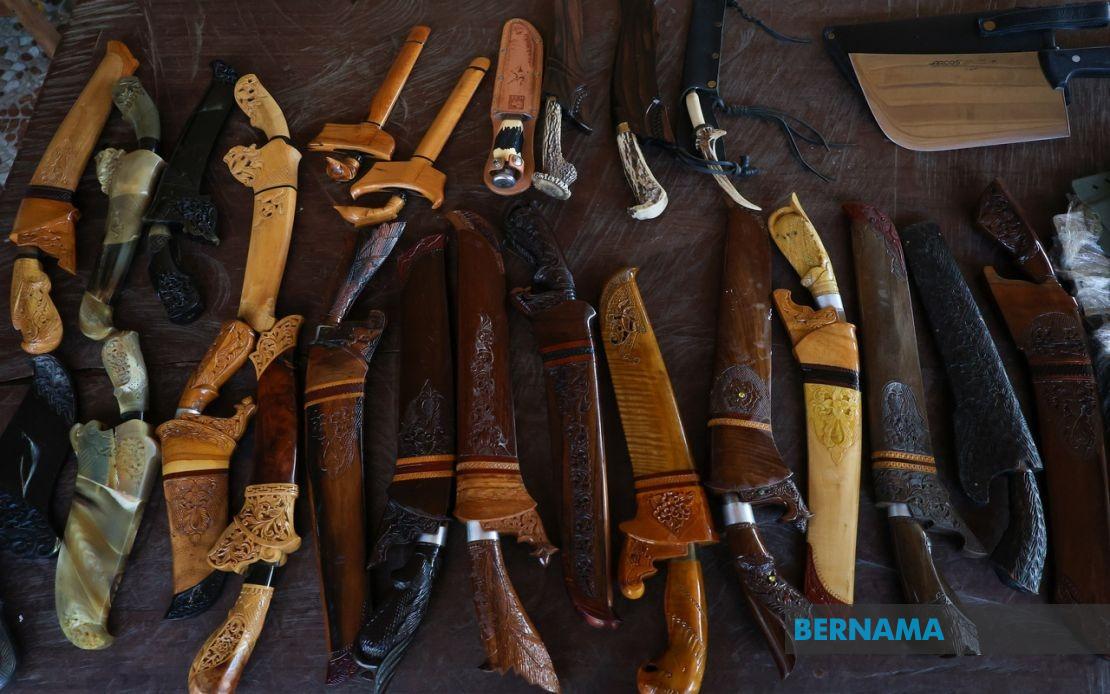
The bird-headed golok represents far more than a blade—it embodies the slowly eroding legacy of Kelantan's master blacksmiths, a tradition that faces extinction as veteran craftspeople pass away without sufficient apprentices to inherit their knowledge and expertise. Ahmad, 71, has emerged as an unlikely guardian of this endangered heritage, dedicating decades to understanding and preserving the mechanical and artistic dimensions of weapon-making that once flourished across the Malay Sultanate.
The significance of the bird motif that adorns traditional Kelantan blades runs deeper than mere decoration. According to Ahmad, the design references the Petalawali bird figure that historically graced the vessels of the Kelantan Sultanate, connecting contemporary craft to the maritime traditions of a distant era. This artistic continuity demonstrates how traditional weapons served not merely as functional tools but as repositories of cultural memory and dynastic symbolism. Each bird-shaped hilt transforms an ordinary grip into a historical statement, linking the wielder to centuries of Kelantanese identity and statecraft.
What makes handcrafted pieces increasingly precious in modern times is precisely their uniqueness and the personal artistic signature each blacksmith imprints upon their work. Unlike mass-produced items churned out by industrial methods, every golok or keris that emerges from a master craftsman's forge carries the distinctive fingerprint of its maker. Ahmad recognizes that when a blacksmith dies, an irreplaceable repository of technical knowledge—the specific techniques, material preferences, tempering methods, and design innovations developed over a lifetime—vanishes with them. The apprenticeship system that once sustained these skills has largely collapsed in contemporary Malaysia, leaving knowledge scattered and unrecorded.
Ahmad's path into this world of traditional weapons began organically some two decades ago, when he assisted a friend who worked as a blacksmith. What started as a casual collaboration gradually evolved into a consuming passion for understanding the craft. Through this hands-on introduction, he developed both practical knowledge and a profound respect for the intellectual and physical demands of the profession. His entry point through collaboration rather than formal training reflects the informal channels through which much traditional knowledge historically transmitted across generations in Malaysian communities.
Over the years, Ahmad has accumulated more than 100 traditional and modern weapons with a combined estimated value of RM20,000, assembled from diverse geographic sources spanning Germany, Sweden, Denmark, England, the United States, Japan, China, Spain, and Portugal. This international scope reveals how traditional metalworking traditions transcend national boundaries, with master craftspeople worldwide employing similar principles and aesthetics. His collection encompasses machetes, knives, swords, and keris, including particularly prized specimens such as a Sarawakian knife featuring a deer-antler hilt and a keris constructed from black kemuning wood with golden kemuning wood ornamentation. Such diversity demonstrates both Ahmad's scholarly approach to weapon-making traditions and the universal appreciation for handcrafted metalwork across cultures.
Preserving these artifacts requires meticulous attention and rigorous protocols. Ahmad maintains his collection in a climate-controlled cabinet, conducting comprehensive inspections every three months and systematically applying protective oils to prevent corrosion and deterioration. This conservation regimen reflects the same dedication to craftsmanship that the original makers brought to their forges. Rust and decay represent not merely cosmetic concerns but threats to irreplaceable historical artifacts that cannot be replicated without the original artisans. His methodical approach to preservation mirrors museum-standard practices, suggesting that serious collectors function as informal custodians of national cultural patrimony.
Despite receiving approaches from collectors willing to pay for pieces in his possession, Ahmad has consistently refused to sell. This resolute stance stems from his understanding that many items in his collection represent the terminal examples of deceased blacksmiths' work—the last tangible manifestations of their artistic vision and technical mastery. Selling these pieces would scatter them among private collectors, potentially removing them from public knowledge and academic study. His refusal to commodify his holdings demonstrates a philosophy that treats these weapons as cultural treasures rather than investment instruments.
The broader implications of Ahmad's preservation efforts extend beyond individual artifacts to encompass fundamental questions about Malaysia's cultural continuity in an increasingly globalized economy. Traditional blacksmithing represents one of many artisanal trades facing obsolescence as younger generations pursue more lucrative and socially prestigious professions. Without deliberate intervention—through documentation, apprenticeship programs, institutional support, or public recognition—these skills will disappear within a generation. The Kelantan case particularly matters because the state maintains distinctive weapon-making traditions tied to royal patronage and sultanate identity, making their loss a regional cultural catastrophe.
Ahmad's vision encompasses both preservation and evolution, recognizing that cultural traditions need not remain static to remain authentic. He advocates for innovation within the blacksmithing craft while maintaining the identity, artistic vision, and cultural values that define the tradition. This balanced perspective acknowledges that contemporary practitioners need freedom to experiment and adapt to modern contexts, rather than merely reproducing historical models. Supporting traditional crafts requires creating viable economic models that allow artisans to earn sustainable livelihoods, not consigning them to museum exhibits or romantic nostalgia.
The future of Kelantan's blacksmith heritage ultimately depends on broader societal choices about cultural transmission and economic priorities. Ahmad's personal collection represents an individual's commitment to preservation, but institutional frameworks—government craft guilds, educational programs, heritage museum partnerships, and market development initiatives—would ensure sustainability. Malaysia possesses the institutional capacity to document dying crafts, train new practitioners, and create markets for traditional weapons, preventing the irreversible loss of knowledge that occurs each time a master craftsperson passes away. Ahmad's work illuminates both the urgency of this challenge and the possibility that dedicated guardians can keep endangered traditions alive through the present era.

