In the quiet Czech countryside, approximately 90 kilometres east of Prague, stands an unusual monument to football fandom. The three-storey residence of Miloslav "Curby" Urbanec in Bukovka bears the unmistakable marks of a man whose passion for Argentine football has transcended mere hobby into lifestyle. The exterior walls display the distinctive sky-blue and white of Argentina's national colours, while the centrepiece features the golden sun emblem from the Argentine flag—a declaration of allegiance that would be difficult to miss even from a considerable distance.
Urbanec's commitment to his adopted nation's football culture extends far beyond aesthetic choices. The Czech music promoter has populated his property with tributes to the sport's greatest figures. A life-size statue of Diego Maradona presides over the courtyard, whilst a monumental mural of Lionel Messi dominates the rear facade of the house. These installations represent more than decorative choices; they symbolise the continuity of excellence that has defined Argentine football across generations. Behind the residence, an all-weather pitch—presumably constructed for personal use—is surrounded by signage celebrating players from Boca Juniors, the Buenos Aires club most famously associated with Maradona's career.
The origins of Urbanec's devotion date to his childhood during the 1978 World Cup, when he watched Argentina's triumphant campaign alongside his father. That formative experience, witnessed when he was merely four years old, crystallised into a lifelong attachment. The aesthetic of Argentine football during that era particularly captivated the young Czech: the flowing long hair of players like Mario Kempes embodied a romantic vision of the sport that contrasted sharply with the more regimented approaches dominant elsewhere in Europe at the time. From that moment forward, his allegiance extended beyond the national team to encompass Boca Juniors, embedding himself within the broader ecosystem of Argentine football culture.
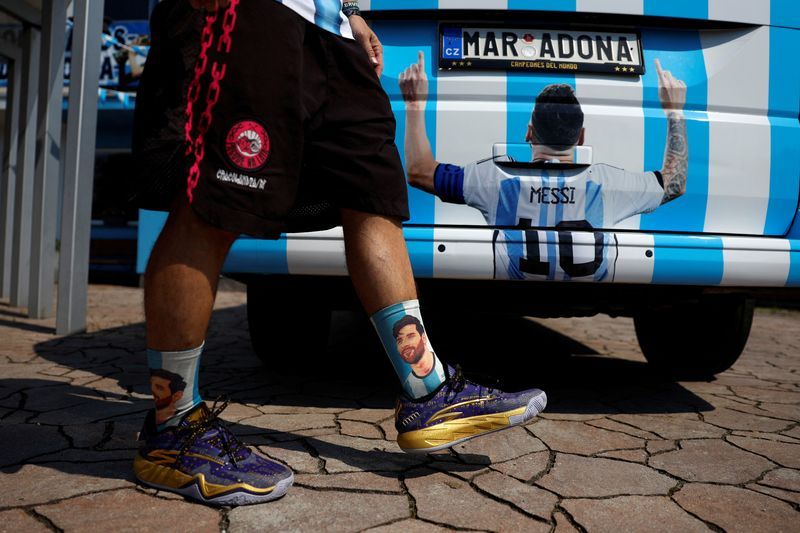
This dedication has manifested in deeply personal ways. Urbanec's van serves as a mobile advertisement for his beliefs, painted in the familiar sky-blue and white whilst displaying portraits of Maradona cradling the World Cup trophy alongside images of Messi. The vehicle bears a custom registration plate reading "MARADONA" and features the motto "In Messi We Trust"—a playful reference that combines religious devotion language with secular sport fanaticism, capturing the quasi-spiritual nature of football loyalty for committed supporters worldwide.
Perhaps most strikingly, Urbanec's commitment extends into his family decisions. He named his second son, now seven years old, Lionel in honour of Messi. When asked about this choice, Urbanec explained that seven years ago—roughly 2016—it had become abundantly evident that "this guy is absolutely special." The decision reflects not merely fatherly admiration but a conviction that Messi represented something transcendent within the sport, worthy of being immortalised through his own son's identity. For many supporters, such naming practices represent the ultimate compliment, embedding sporting heroes into the family genealogy.
Urbanec's enthusiasm for Argentina's prospects remained undiminished at the time of this account. He expressed absolute confidence that La Selección would secure victory, proclaiming a "100%" certainty whilst emphasising the exceptional quality of the current squad. His assessment carried the conviction of someone who had followed the team through multiple cycles and recognised something distinctive about the contemporary iteration. Beyond merely winning, Urbanec believed Argentina would achieve success through the medium he most admired: beautiful, aesthetically pleasing football that would captivate global audiences.
This optimism was not unfounded groundless speculation but rooted in tangible recent achievements. Argentina's dominance in South American football had been reestablished through multiple Copa América victories, and the team displayed the cohesion and attacking flair that Urbanec referenced. The squad balanced experienced leadership with emerging talent, possessing both the creative brilliance and tactical discipline necessary for sustained success at the highest level. For supporters like Urbanec, these objective observations merged seamlessly with emotional attachment, creating a conviction that transcended typical sporting speculation.
The anticipation built toward an upcoming fixture scheduled for July 3, when Argentina would face Cape Verde in the round of 32. This matchup represented an opportunity for the team to advance through the tournament stages whilst demonstrating the calibre of football that Urbanec believed defined the nation's style. For him, each match served as validation of his half-century-long commitment, proof that his faith in Argentine football remained well-placed and justified.
Urbanec's story illuminates a broader phenomenon within global football culture: the capacity of the sport to inspire intense, sustained devotion that transcends geographical boundaries and national origin. A Czech citizen had transformed his material environment and family structure around loyalty to a South American nation, creating something between shrine and home. This phenomenon reflects football's unique position as a universal language capable of generating authentic emotional connections across continents and cultures. For millions of supporters worldwide, the sport provides meaning, community, and continuity that extends far beyond the ninety minutes of match play. Urbanec's Bukovka residence stands as physical manifestation of this spiritual dimension that football occupies within human experience.

