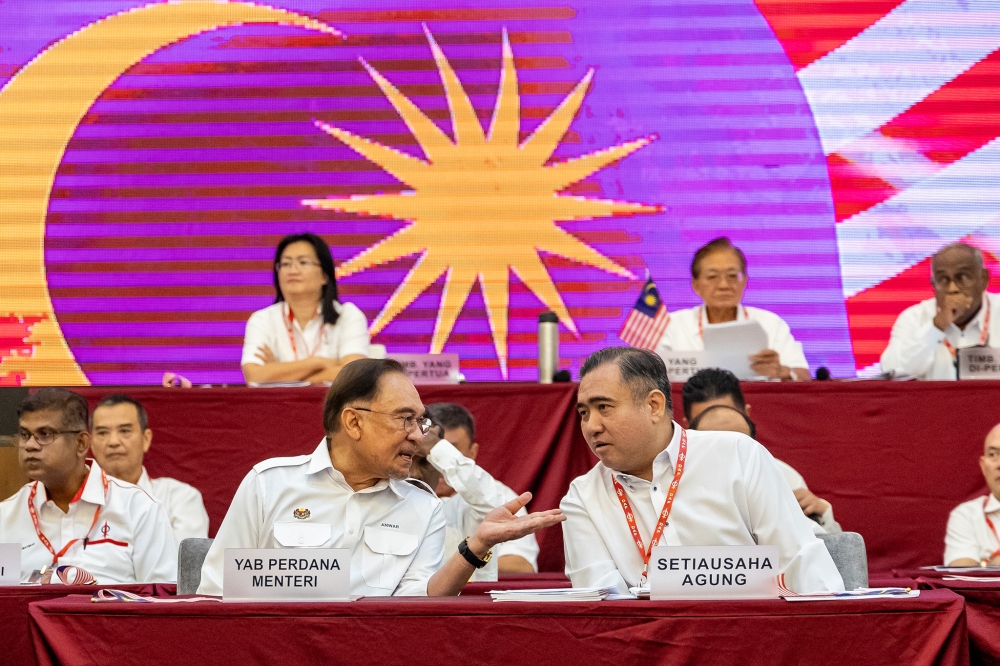
The Democratic Action Party has moved to quell persistent rumours about its political future by publicly committing to continued membership within Prime Minister Datuk Seri Anwar Ibrahim's Pakatan Harapan coalition, signalling stability within the ruling alliance even as questions linger about the pace of promised reforms. The clarity offered by DAP leadership acknowledges a fundamental tension that has characterised Malaysian coalition politics: the gap between electoral promises and the practical constraints of governing alongside ideologically diverse partners with competing priorities.
DAP's reaffirmation comes at a moment when the Pakatan coalition faces mounting scrutiny from its own grassroots over the speed and scope of transformative measures, particularly regarding institutional reform and anti-corruption efforts that formed the backbone of the 2022 electoral mandate. For a party that has historically positioned itself as a vanguard of institutional reform and good governance, the willingness to accept slower-paced change reflects a pragmatic reckoning with the realities of coalition politics in Malaysia's complex political environment.
The party's stance addresses an undercurrent of dissatisfaction within Pakatan ranks, where some quarters have questioned whether the coalition's tripartite structure—comprising Pakatan Harapan, Barisan Nasional-aligned members, and supporting partners—inevitably dilutes the transformative agenda that brought the alliance to power. In particular, the need to maintain support from conservative constituencies and regional powerbrokers has required compromises on several fronts, from the pace of judicial reform to the handling of civil service modernisation.
For Malaysian observers monitoring the stability of the current government, DAP's commitment to Pakatan matters significantly. The party commands substantial representation in Parliament and wields considerable influence within urban constituencies, particularly in Penang and Selangor where it holds state-level power. An exodus of DAP from the coalition would fundamentally alter the mathematical basis of Anwar's government and potentially trigger a major political realignment.
The broader context here extends beyond internal coalition management. Malaysian politics has historically oscillated between periods of dominant-party rule and coalition governance, each model presenting distinct trade-offs. Single-party dominance permits faster decision-making but can concentrate power dangerously; coalitions distribute authority but require constant negotiation that slows implementation. DAP's decision implicitly accepts that the benefits of shared governance—including the moderating influence of multiple parties and the broader representation it provides—justify accepting a decelerated reform timeline.
The question of reform velocity has become increasingly salient for urban middle-class voters and civil society organisations that form DAP's core constituency. These groups invested considerable political capital in supporting Pakatan's 2022 campaign, motivated by specific promises around transparency, institutional independence, and the removal of kleptocratic practices embedded during the preceding decades of one-party rule. The gap between those expectations and the incremental pace of actual change has created tension that threatens to erode enthusiasm for the coalition among its most mobilised supporters.
Several factors explain why reforms have proceeded more gradually than anticipated. The financial inheritance from the previous administration proved far worse than pre-election estimates suggested, consuming government attention and forcing reallocation of resources toward macroeconomic stabilisation. Additionally, entrenched bureaucratic interests have resisted changes to institutional structures that would diminish their autonomy or expose past misconduct. The need to maintain support from political partners whose constituencies depend on patronage networks has further constrained reform ambitions in areas like civil service rationalisation and subsidy restructuring.
DAP's position also reflects the party's calculation that internal stability within Pakatan serves its longer-term interests. Should the coalition fracture prematurely, it would likely trigger a political crisis that could either facilitate Anwar's replacement or precipitate a return of the prior power configurations. Either scenario would undermine DAP's institutional position and constrain its ability to influence policy outcomes, particularly at federal level where it holds fewer seats than its coalition partners.
The implications for Southeast Asian observers warrant consideration. Malaysia's experience demonstrates that coalition governments managing ideologically disparate members face inherent difficulties in pursuing transformative agendas. This pattern appears across the region, from Thailand's fractious coalition attempts to Indonesia's complex multi-party arrangements. The ability of leaders like Anwar to maintain coalition coherence while managing expectations about reform pace will significantly influence the feasibility of ambitious governance agendas elsewhere.
For Malaysian voters assessing Pakatan's track record ahead of potential future elections, DAP's commitment represents both reassurance and acknowledgement of limitation. The party guarantees continuity and prevents the political instability that would accompany coalition dissolution, but simultaneously signals that aspirations for rapid institutional transformation may require recalibration. Whether voters ultimately view this trade-off as acceptable will likely depend on whether incremental reforms accumulate into perceptible improvements in governance quality and whether alternative political options present credible promises of superior outcomes.

