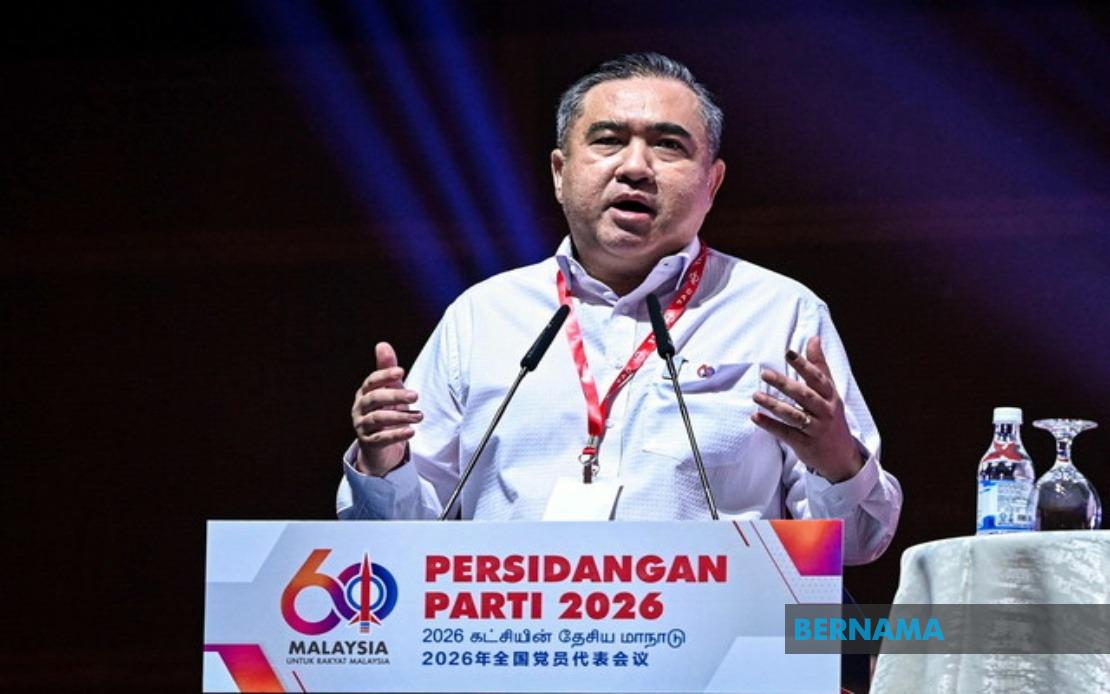
The Democratic Action Party has made a decisive commitment to remain part of Malaysia's federal government throughout the remainder of the 15th Parliament's term, reinforcing political stability within the ruling coalition. The decision, reached through a secret ballot at the party's 2026 conference in Putrajaya on Friday, demonstrates strong internal consensus among party delegates regarding continued participation in the administration led by Prime Minister Anwar Ibrahim.
Party secretary-general Anthony Loke introduced the motion at the gathering held at the Putrajaya International Convention Centre, seeking explicit approval from the broader party membership for the government partnership to continue uninterrupted. The use of confidential voting rather than traditional voice or show-of-hands methods underscores the DAP's commitment to procedural transparency and preventing any perception of leadership pressure on individual delegates.
The voting outcome reflected decisive backing for the party leadership's government strategy. Of the 2,106 ballot papers distributed, 1,857 delegates voted to remain within the coalition whilst 242 opted for departure, with seven ballots spoilt. The 88.2 per cent support rate among attending delegates, drawn from 4,264 eligible party members representing 1,704 branches nationwide, indicates substantial agreement across the party's grassroots and mid-tier leadership structures regarding the benefits of continued ministerial participation.
DAP's representation within the cabinet spans five ministerial portfolios, with Loke serving as Transport Minister whilst Steven Sim oversees Entrepreneur and Cooperatives Development, Gobind Singh Deo manages Digital affairs, Nga Kor Ming leads Housing and Local Government, and Hannah Yeoh holds a Prime Minister's Department position overseeing Federal Territories. This distribution across diverse policy areas grants the party meaningful influence over significant government initiatives affecting urban development, digital infrastructure, and economic development pathways.
Beyond cabinet-level positions, the party maintains substantial presence through seven deputy ministerial appointments spanning critical government functions. Teo Nie Ching's role in Communications, Datuk Chan Foong Hin's position within Agriculture and Food Security, Wong Kah Woh's Education portfolio, and Liew Chin Tong's Finance responsibilities demonstrate DAP's engagement across economic, social, and infrastructure domains. Additional deputy ministers including M. Kulasegaran in the Prime Minister's Department's Law and Institutional Reform section, Lim Hui Ying overseeing Women, Family and Community Development, and Mordi Bimol heading Youth and Sports complete a comprehensive representation across government machinery.
For Malaysian voters and observers, DAP's reaffirmation carries implications for government continuity and coalition stability. Coalition governments in Malaysia have historically faced internal tensions, with coalition partners occasionally withdrawing support or threatening to do so as leverage for policy concessions or ministerial positions. DAP's explicit parliamentary-term commitment reduces uncertainty around potential early coalitional collapse, providing businesses, civil society, and foreign investors greater confidence in policy implementation across multi-year initiatives.
The decision also reflects DAP's calculation regarding the political costs and benefits of government participation versus opposition positioning. Whilst government participation provides direct policy influence and ministerial visibility, it also exposes the party to responsibility for unpopular policies or economic challenges. The delegate vote suggests that DAP's leadership successfully argued that ministerial representation in critical portfolios outweighs the electoral risks of being associated with coalition governance through 2028, when the next general election would normally occur.
From a Southeast Asian perspective, Malaysia's coalition stability matters for regional economic integration and ASEAN coordination. Stable government coalitions facilitate consistent foreign policy positions, predictable regulatory environments for cross-border business, and reliable participation in regional forums. DAP's commitment to term-long participation helps cement broader government policy coherence on matters ranging from trade relationships to climate commitments.
The party's conference decision also reflects broader dynamics within Malaysia's pluralist political system, where major political actors increasingly seek formal, transparent mechanisms for legitimating significant strategic decisions rather than relying solely on top-down leadership pronouncements. The secret ballot methodology, whilst procedurally unremarkable by international standards, demonstrates Malaysian parties' gradual internalization of democratic transparency expectations from their own rank-and-file members, a development with implications for internal party dynamics across the political spectrum.
Looking forward, DAP's formal commitment through parliamentary term-end provides the coalition with projected stability until Parliament's anticipated dissolution around 2028. However, political trajectories remain contingent on policy implementation success, economic conditions, and potential electoral by-elections or defections. The delegate vote essentially establishes the default coalition position absent major intervening crises, whilst leaving room for reassessment should circumstances materially deteriorate or coalition dynamics fundamentally shift.
For observers tracking Malaysian political developments, the conference outcome signals that DAP's government partnership remains strategically attractive to the party's broader membership base, at least as assessed in mid-2026. The 88.2 per cent support threshold substantially exceeds minimum requirements for governance purposes, suggesting genuine rank-and-file belief that continued ministerial participation serves the party's medium-term political interests and policy objectives across the urban constituencies and communities comprising its electoral base.

