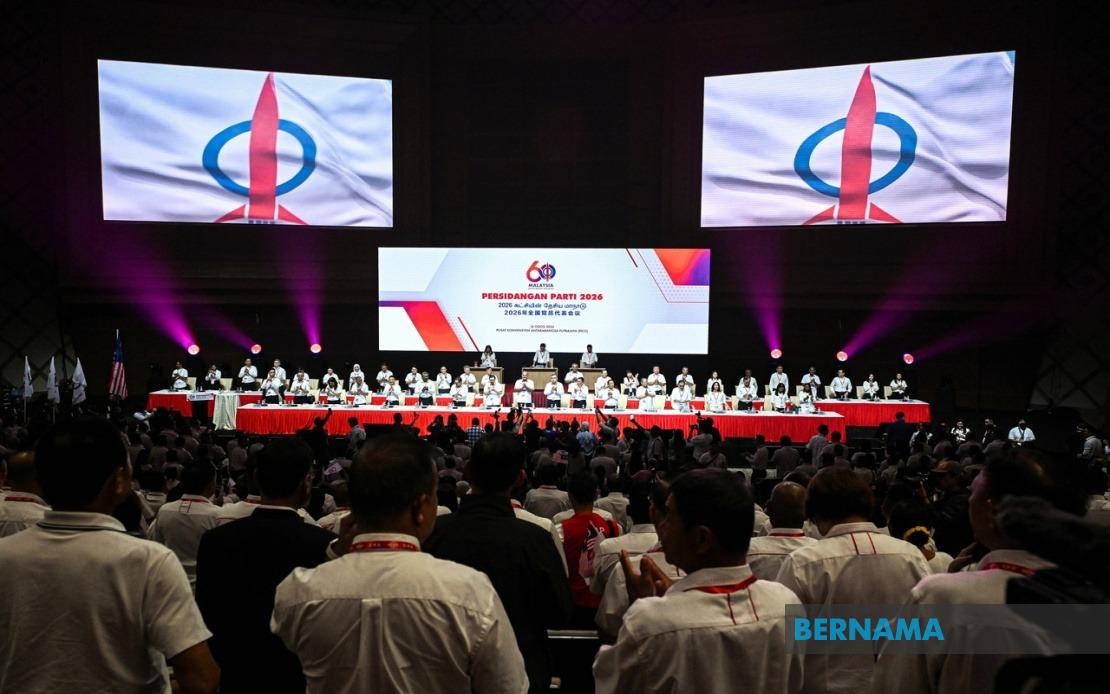
The Democratic Action Party has received strong backing from its grassroots leadership to remain part of the federal administration, with delegates citing the importance of completing institutional reforms and protecting Malaysia's political landscape. At the DAP 2026 National Conference held in Putrajaya on August 16, a total of 14 state delegates expressed their support for the party to stay within the Unity Government through the conclusion of the current parliamentary term, reinforcing the coalition's stability after the 2022 general election brought the bloc to power.
The debate surrounding DAP's continued participation in government highlighted a strategic tension within Malaysian politics. While the party and its coalition partners have pursued reformist agendas and anti-corruption initiatives, critics have questioned whether staying in government compromises the opposition credentials that helped bring these parties to power. Supporters countered that withdrawal would abandon the people's mandate and the opportunity to embed systemic changes that could benefit Malaysians across ethnic and religious lines. The discussion reflected broader questions about how reformist parties balance ideological purity with practical governance responsibility.
Perak delegate Jason Ng Thien Yong articulated a pragmatic rationale for continued participation, noting that despite electoral setbacks in certain state contests, the party's best path forward involved remaining in the federal administration and designing comprehensive reform initiatives that could restore voter confidence. Ng acknowledged that the Unity Government faces structural limitations but argued that transformation must proceed from within institutional frameworks rather than from opposition benches. This perspective underscores a calculation common among governing parties in Southeast Asia: that the leverage of ministerial positions outweighs the symbolic appeal of outsider status.
Veteran DAP representative Leong Ngah Ngah from Pahang emphasised that delegates must exercise mature judgment in evaluating the government's track record under Prime Minister Datuk Seri Anwar Ibrahim. Over three years in office, Leong contended, the administration has demonstrated tangible accomplishments and initiated genuine reforms in areas ranging from parliamentary transparency to fiscal discipline. This appeal to maturity signals DAP's desire to position itself as a responsible governing force rather than a protest movement, a shift that reflects the party's evolution since its founding in 1966 and its growing integration into Malaysia's mainstream political establishment.
The cost of living emerged as a central justification for maintaining coalition participation, with delegates highlighting the government's capacity to address affordability challenges through policy mechanisms inaccessible to opposition parties. This resonates particularly in Malaysia's urban centres and among younger voters, where purchasing power has become a defining electoral concern. Delegates argued that abandoning government would mean surrendering practical tools to tackle inflation and household expenses, a potentially damaging political concession given the economic anxieties that shape voter behaviour across the region.
Selangor delegate Muhammad Shakir Amerr Mohideen expressed confidence in DAP's ability to rebuild support in constituencies where recent elections proved disappointing, suggesting that strong governance performance and institutional reforms could reverse electoral losses. This perspective assumes that Malaysian voters reward competent administration over time, a hypothesis that remains contested among political analysts. The party's credibility in delivering tangible improvements—whether through reduced bureaucratic corruption, improved public services, or transparent budgeting—will significantly influence whether such confidence proves justified in future electoral contests.
Melaka delegate Jason Tze-Xi Nathan reframed the choice in terms of messaging and political vulnerability. From this vantage point, withdrawing from government would force DAP into the uncomfortable position of explaining to voters why the party abandoned opportunities to implement its platform, potentially ceding narrative control to coalition rivals who might characterise the withdrawal as ideological rigidity. This concern reflects the competitive dynamics within the Unity Government, where component parties must maintain distinct identities while operating within a shared framework.
The rights framework enshrined in the Malaysia Agreement 1963 featured prominently in arguments from Sabah delegate Yap Wui Lip, who contended that remaining in government provided a platform to advance constitutional protections and regional autonomy concerns. This perspective highlights how federal participation intersects with East Malaysian interests, particularly regarding the special status accorded to Sabah and Sarawak under the 1963 agreement. For delegates representing Borneo constituencies, the calculation involves not only national reform agendas but also the advancement of state-specific constitutional claims that require leverage within federal structures.
The broader coalition context proves critical to understanding DAP's deliberations. As one of three major components within Pakatan Harapan alongside PKR and Amanah, DAP must balance its own institutional interests with those of coalition partners while maintaining the bloc's fragile unity. Withdrawal would carry implications extending far beyond the party itself, potentially destabilising the government and triggering early elections that could dismantle the reform agenda altogether. This systemic interdependence constrains individual party decision-making in ways that sometimes frustrate grassroots members seeking clearer differentiation.
Secretary-General Anthony Loke clarified during the debate's conclusion that continued participation, should delegates approve the motion through secret ballot, would not constitute a blank cheque to either the executive leadership or Prime Minister Anwar Ibrahim. Instead, Loke reaffirmed that DAP's commitment to reform, renewal, and rebuilding voter confidence represents the essential precondition for sustained coalition participation. This framing attempts to address concerns that staying in government necessarily means compromising oversight or abandoning the party's reform mandate.
The broader significance of this conference extends beyond immediate coalition mechanics. Held in conjunction with DAP's 60th anniversary celebrations, the proceedings marked a historical inflection point for a party that evolved from 1960s radical beginnings toward institutional accommodation within Malaysia's federal system. The overwhelming delegate support for continued participation suggests that the party's membership has largely accepted this trajectory, viewing integration into mainstream governance as compatible with—rather than contradictory to—the pursuit of substantive reform.
The secret ballot vote involving 4,264 delegates from 1,704 branches would formally determine the party's direction, but the debate preceding the vote had already signalled likely support for continuation. Among the additional state delegates backing continued participation were representatives from Kelantan, Terengganu, Sarawak, Kedah, Negeri Sembilan, Johor, Kuala Lumpur, Perlis and Penang, indicating broad geographical support for the unity government position. This geographic spread suggests that pro-continuation sentiment transcends regional variations in political culture and party strength.
For Malaysian politics more broadly, DAP's decision carries implications extending beyond the party's immediate interests. The Democratic Action Party has historically positioned itself at the forefront of institutional reform and anti-corruption efforts, and its choices regarding government participation shape the feasibility of broader reform agendas. Should the party remain in government and pursue substantive reforms over the next parliamentary term, the precedent could influence how other opposition-turned-ruling parties across Southeast Asia calculate the benefits and costs of sustained executive participation. Conversely, visible failures in reform implementation could reinforce arguments that genuine institutional transformation proves impossible from within existing power structures, potentially emboldening anti-establishment movements in future electoral cycles.

