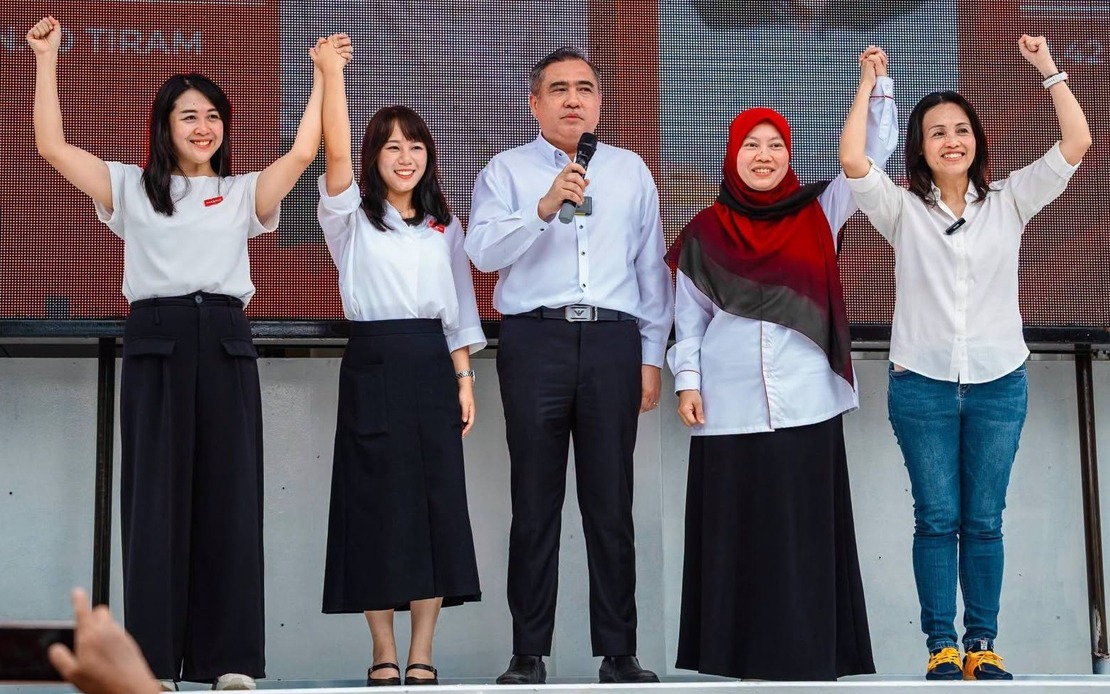
The Democratic Action Party has officially named four candidates for the Johor state assembly election scheduled for July 11, signalling a strategic expansion in one of the country's most politically significant states. The announcement, made by DAP secretary-general and Transport Minister Anthony Loke Siew Fook at a ceremony in Johor Bahru, reflects the opposition coalition's determination to strengthen its foothold in the southern peninsula ahead of what is expected to be a closely contested election.
Among the nominated candidates is Nor Zulaila Abd Ghani, a 38-year-old private secretary to the Deputy Finance Minister, who has been tasked with contesting the Tiram state seat. Her candidacy carries particular significance, as this represents the first occasion on which DAP has fielded a contestant in this Malay-majority mixed constituency, indicating the party's willingness to venture into previously untested electoral territory. Loke expressed optimism regarding her prospects, suggesting that the party's internal polling and ground assessments have identified sufficient support to justify the nomination.
Another nominee is Lee Wern Yiing, the 30-year-old chief of Johor DAP Socialist Youth, who will stand for the Johor Jaya seat. Her candidacy brings youth representation to the party's ticket in the state, aligning with broader efforts by opposition parties to appeal to younger voters who have demonstrated shifting voting preferences in recent electoral cycles. At the other end of the experience spectrum, incumbent Senai assemblyman Wong Bor Yang, aged 40, will seek to retain his seat, providing continuity in an area where DAP has already established an electoral presence.
The fourth nominee is Mohamad Shafwan Ani, a 33-year-old special assistant to the Kulai Member of Parliament, who will contest the Bukit Permai state seat. Loke highlighted Shafwan's deep familiarity with the constituency, noting that he has maintained an active presence in the area for the preceding nine years. This appointment underscores DAP's preference for candidates who possess established ground networks and community connections, rather than parachuting inexperienced newcomers into competitive races.
The candidacy announcements must be understood within the context of Pakatan Harapan's overarching electoral strategy in Johor. The Kulai parliamentary constituency encompasses three state assembly seats: Bukit Batu, Senai, and Bukit Permai. Loke outlined the coalition's ambition to secure all three seats, positioning this as essential to consolidating opposition strength in a traditionally competitive region. Presently, DAP and PKR hold seats within this constituency, with PKR contesting Bukit Batu and DAP defending Senai. By deploying Shafwan in Bukit Permai, DAP seeks to expand the coalition's territorial control while bringing a candidate with genuine local expertise.
The strategic rationale extends beyond simple seat maximisation. By contesting in Tiram—a constituency with a predominantly Malay electorate—DAP is attempting to broaden its appeal beyond its traditional urban and non-Malay constituencies. This reflects a broader opposition strategy to contest across diverse demographic segments, challenging the notion that certain communities remain automatically locked into supporting particular political camps. The party's willingness to invest resources in such constituencies suggests confidence in its messaging and candidate quality.
The electoral calendar has now become concrete, with the Election Commission designating July 11 as polling day. Nomination day falls on June 27, providing parties a brief ten-day window to register their final candidate lists and mobilise campaign machinery. Early voting is scheduled for July 7, a format that has become standard in Malaysian elections to facilitate participation among security personnel and other designated groups. These dates represent relatively compressed timelines, requiring all contesting parties to accelerate their ground preparations immediately following the formal nomination period.
Johor's state election carries implications beyond the state boundaries. As the second-largest state by population and a crucial electoral prize, outcomes here influence the broader national political balance. The state has historically swung between opposition and government control, reflecting the fluidity of Malaysian electoral politics. A strong DAP performance would boost Pakatan Harapan's confidence heading into potential national elections, while setbacks could reinforce perceptions that opposition consolidation remains incomplete.
The timing of these nominations also reflects practical organisational realities. With nomination day arriving in early July, parties must finalise their candidate selections now to allow for campaign preparations. Unlike federal elections, which often feature drawn-out nomination processes, state elections typically compress timelines significantly. DAP's decision to announce simultaneously across multiple seats suggests the party has concluded its internal deliberations and stands ready for the electoral contest ahead.

%22%2F%3E%3C%2Fpattern%3E%3C%2Fdefs%3E%3Crect%20width%3D%22100%25%22%20height%3D%22100%25%22%20fill%3D%22url(%23ph2mpo7g)%22%2F%3E%3Crect%20width%3D%22100%25%22%20height%3D%22100%25%22%20fill%3D%22url(%23ph2mpo7p)%22%2F%3E%3Ctext%20x%3D%2250%25%22%20y%3D%2250%25%22%20text-anchor%3D%22middle%22%20dominant-baseline%3D%22central%22%20fill%3D%22rgba(255%2C255%2C255%2C0.95)%22%20font-family%3D%22Georgia%2C%20'Times%20New%20Roman'%2C%20serif%22%20font-weight%3D%22700%22%20font-size%3D%22272%22%20letter-spacing%3D%22-0.02em%22%3EISTAF%3C%2Ftext%3E%3C%2Fsvg%3E)