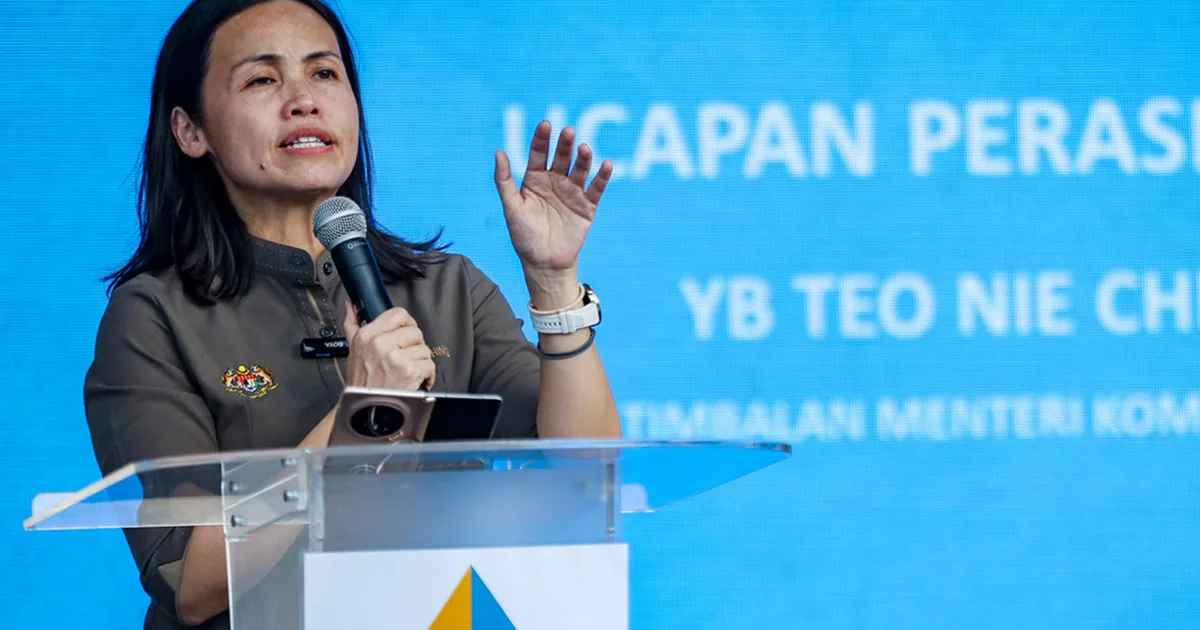
A prominent DAP leader serving as deputy minister has come forward with allegations that newly created social media accounts have been systematically used to launch damaging attacks against her through false claims. According to the politician, the accounts were established with the explicit purpose of disseminating unsubstantiated allegations linking her to gang-related criminal activities—accusations she firmly denies.
The deputy minister's complaint underscores an increasingly troubling trend in Malaysian politics, where social media platforms have become weaponised for personal attacks and character assassination. Rather than engaging in policy disputes through traditional political channels, critics and opponents have reportedly resorted to creating multiple coordinated accounts to amplify false narratives and damage reputations. This shift represents a concerning departure from substantive political debate toward what analysts describe as organised disinformation campaigns.
The timing of these attacks carries particular significance given the current political climate in Malaysia. As political coalitions continue to shift and power dynamics remain fluid at both federal and state levels, different factions have increasingly turned to digital platforms to undermine rivals. The allegations against the DAP deputy minister appear consistent with patterns observers have documented elsewhere in Southeast Asia, where social media has become a primary battleground for political actors seeking to influence public perception without engaging in verifiable evidence or transparent discourse.
The false allegations specifically linking the politician to gang activity represent a particularly serious form of defamation. Such claims, if left unchallenged, can irreparably damage a political career and erode public trust. The specificity of targeting gang-related accusations suggests a deliberate strategy to delegitimise her authority and influence, playing into broader narratives that might resonate emotionally with certain voter demographics. This tactical choice demonstrates the sophisticated nature of the campaign against her.
The creation of multiple dedicated accounts to execute this attack strategy indicates organisational capacity and resources beyond what random online critics would typically possess. Coordinated disinformation campaigns of this nature usually require planning, funding, and access to technical knowledge about platform algorithms and content amplification. The deputy minister's public statement about these newly created accounts is therefore significant—it suggests she and her team have conducted analysis tracking the accounts' origins, creation dates, and posting patterns to establish that they were purpose-built for attacking her specifically.
For Malaysian readers and political observers, this incident raises uncomfortable questions about the vulnerability of public figures to organised online harassment campaigns. Unlike traditional media, where editorial standards and legal liability create certain guardrails, social media platforms operate with minimal accountability for false content. Victims of coordinated attacks often find themselves in reactive positions, forced to spend political capital and time defending themselves against allegations rather than advancing their policy agenda or constituent services.
The DAP, as a significant component of Malaysia's political opposition, has previously been subjected to various online attacks and misinformation campaigns. However, this latest incident targeting a party leader in a government position reflects the complex dynamics of Malaysia's current political arrangement, where DAP members hold ministerial roles within a federal administration. Such positioning may make them appealing targets for actors seeking to undermine the stability of current governing arrangements or sow division within the coalition.
From a Southeast Asian perspective, Malaysia's experience with coordinated social media attacks mirrors challenges faced across the region. Thailand, Indonesia, and the Philippines have all documented similar phenomena, where political actors utilise automated accounts, false information, and coordinated posting to manipulate online discourse. The relatively low cost of launching such campaigns, combined with the difficulty of enforcement against them, makes social media an attractive tool for political operatives with questionable scruples.
The implications extend beyond the individual politician facing attack. When social media becomes a standard vector for political warfare, it undermines democratic discourse by making substantive policy discussion more difficult. Voters and constituents become confused by contradictory information, making informed decision-making more challenging. Furthermore, the normalisation of coordinated harassment campaigns may deter qualified individuals from entering public service, knowing they will face orchestrated attacks on their reputation and character.
Responding to such campaigns presents genuine difficulties for targeted politicians. Public rebuttals can amplify the original false allegations, giving them greater circulation. Ignoring them risks allowing falsehoods to circulate unchallenged. Legal remedies, while theoretically available, move slowly and often attract additional attention to the original accusations. The deputy minister's decision to publicly identify the pattern of coordinated attack accounts represents one approach—by exposing the mechanism, she seeks to help observers recognise this as an organised campaign rather than independent expressions of concern.
Looking forward, the incident highlights the need for Malaysian policymakers, platform operators, and civil society to develop more effective responses to coordinated disinformation. This might include clearer terms of service enforcement against coordinated inauthentic behaviour, greater transparency from platforms about content moderation decisions, and media literacy initiatives helping citizens identify organised campaigns. Without such interventions, social media's potential as a tool for democratic participation will continue diminishing as a vehicle for political manipulation expands.

