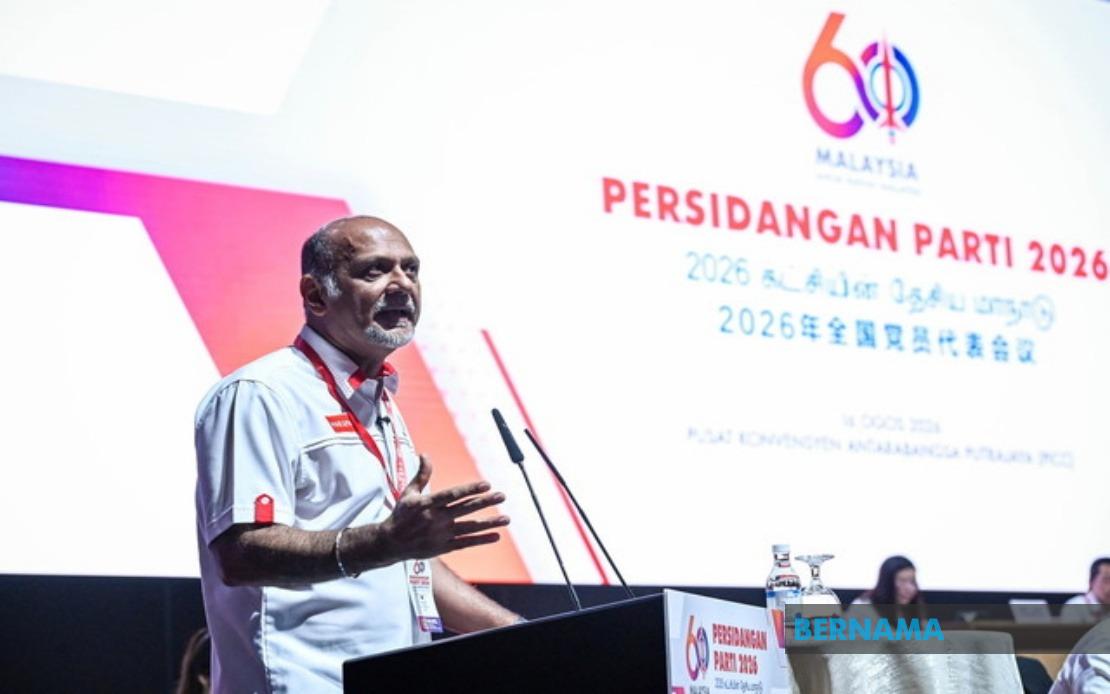
The Democratic Action Party has been called upon to undertake a fundamental review of its strategic direction in response to disappointing performances in recent state elections, according to the party's national chairman Gobind Singh Deo. Speaking at the DAP Party Conference 2026 held at the Putrajaya International Convention Centre, Gobind suggested that three and a half years within Malaysia's Unity Government coalition presented an ideal opportunity for the party to examine both its successes and failures during this period, enabling it to chart a more effective path forward. The acknowledgment of the people's electoral verdict marks a significant moment for a party that has long positioned itself as a reformist force within Malaysian politics, signalling a willingness to engage in critical self-examination rather than dismiss public sentiment.
Gobind's remarks carry particular weight given Malaysia's complex political environment, where coalition governments demand constant negotiation and compromise among ideologically diverse partners. The DAP chairman emphasised that maintaining relevance in the country's shifting political landscape requires more than simply pursuing the party's own policy preferences in isolation. Instead, he advocated for a recalibrated approach that prioritises reforms capable of securing genuine consensus among all coalition members. This pragmatic stance reflects the reality that minority parties within multi-party administrations must balance their ideological commitments with the practical constraints of governance, a lesson the DAP appears to have absorbed from its Unity Government experience.
The proposal to concentrate on achievable reforms rather than attempting to implement the entire party manifesto unilaterally represents a significant shift in thinking for an opposition party that spent decades criticising government inaction. Gobind articulated this philosophy by stating that the DAP must identify what measures can genuinely win approval from partner parties and be successfully executed, thereby ensuring that institutional and policy changes are not merely announced but actually implemented. This emphasis on deliverables over grand promises suggests the party has learned that failed reform initiatives damage credibility more severely than modest successes ever could, a consideration increasingly important to Malaysian voters fatigued by unfulfilled political pledges.
Among the specific institutional reforms the DAP chairman championed was a call for a special parliamentary sitting to debate and approve amendments to several critical pieces of legislation. These include the Security Offences (Special Measures) Act 2012 (SOSMA), a statute that human rights groups and civil society organisations have long criticised for granting excessive executive authority and insufficient judicial oversight. The party also advocates for amendments to the Peaceful Assembly Act 2012, a law that civil liberties advocates argue imposes unnecessary restrictions on lawful public protest and assembly. Additionally, Gobind proposed separating the powers of the Attorney General and Public Prosecutor, a structural reform many legal scholars contend would strengthen judicial independence and reduce opportunities for political interference in prosecutorial decisions.
The proposal to limit the Prime Minister's tenure to two terms addresses longstanding concerns within Malaysia's democratic framework regarding concentrated executive power. Such constitutional limits exist in numerous democracies and are designed to prevent indefinite accumulation of power by individual leaders whilst ensuring regular opportunities for political renewal. Gobind framed these initiatives as essential demonstrations of the government's commitment to genuine institutional reform that would enhance transparency, accountability, and safeguards against power abuse. For Malaysian readers, these proposals carry significance as they directly address weaknesses in governance structures that have historically enabled authoritarian practices and executive overreach.
The emphasis on economic governance and public welfare formed another substantial component of Gobind's address to the assembled DAP delegates. He acknowledged that the government must develop deeper understanding of the specific economic pressures affecting ordinary Malaysians and implement targeted measures to alleviate these burdens. This focus on economic hardship reflects broader regional challenges affecting Southeast Asia, including rising living costs, wage stagnation, and employment insecurity that have increasingly animated political discourse across the region. The DAP chairman's argument that the government must address these material concerns whilst simultaneously maintaining political stability that attracts foreign investment presents a classic policy tension between redistribution and growth.
Gobind's assertion that political stability serves as a prerequisite for attracting foreign direct investment carries particular relevance for Malaysia, a nation historically reliant on external capital flows to drive economic expansion and employment creation. The Unity Government's relative political stability compared to the turbulent periods preceding its formation has indeed created an environment somewhat more conducive to business confidence, though ongoing questions about coalition durability continue to temper investor enthusiasm. The DAP chairman's linkage between stable governance, investment attraction, and job creation implicitly acknowledges that the party's coalition participation, despite electoral setbacks, provides tangible benefits to ordinary Malaysians through economic opportunity creation.
The conference proceedings are expected to feature Anthony Loke, the party's secretary-general, tabling a motion regarding the DAP's continued participation in the Unity Government bloc through the remainder of the 16th Parliament's term. This constitutional deadline falls in 2028, and the motion's placement at the party conference indicates significant internal discussion about the merits of continued coalition membership versus alternative political positioning. More than 4,200 delegates representing nearly 1,700 eligible branches will determine the motion's outcome through secret ballot following formal debate, a process ensuring that grassroots members exercise genuine influence over this consequential strategic decision.
The DAP's deliberations carry implications extending beyond the party itself, as it remains one of three principal components of the Pakatan Harapan coalition alongside Parti Keadilan Rakyat and Parti Amanah Negara. The coalition's cohesion significantly affects Malaysia's political stability and the government's capacity to implement coordinated policy agendas. Defection or withdrawal by any major component would dramatically alter the parliamentary mathematics and potentially destabilise the administration. For this reason, the DAP's internal debate about continued participation effectively becomes a matter of national political consequence that other coalition partners, the government's opponents, and foreign observers monitor carefully.
The conference's backdrop of the DAP's 60th anniversary provided occasion for reflecting on the party's historical evolution from underground resistance to mainstream governance participant. This transformation over six decades encapsulates broader changes in Malaysian politics, from emergency rule to competitive democracy to the present era of coalition governance. The party that once existed primarily as an opposition voice now grapples with the complexities of wielding actual governmental power whilst respecting coalition constraints and responding to electoral verdicts that suggest the public appetite for change may be diminishing. This institutional maturation, whilst perhaps reducing the DAP's capacity to pursue radical agendas, has positioned it as a stabilising force within Malaysia's political system.
The emphasis placed by Gobind on realistic assessments of what the Unity Government can collectively achieve reflects a maturation in Malaysian political discourse away from transformational rhetoric toward incremental pragmatism. Southeast Asian democracies generally, and Malaysia particularly, have experienced numerous cycles of grand reform promises followed by disappointing implementation. The DAP's apparent recalibration toward focusing on consensus-based, deliverable reforms rather than comprehensive manifestos suggests the party is attempting to break this cycle by managing public expectations more carefully and prioritising concrete achievements over expansive commitments. Whether this approach will prove electorally advantageous or whether Malaysian voters fundamentally prefer parties offering transformational visions remains an open question that the DAP's strategic reassessment will help test.

