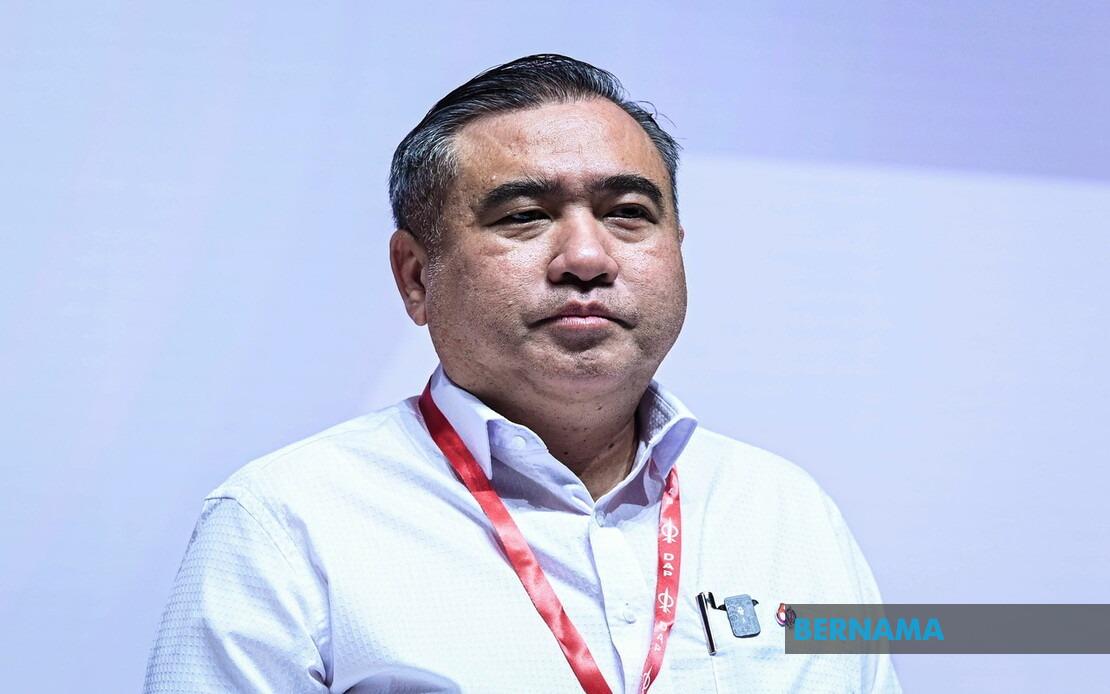
The Democratic Action Party will formally present its members' demands for a more assertive and decisive government to the cabinet, signalling that the party plans to use its ministerial positions as leverage to push for policy changes within the coalition. Secretary-general Anthony Loke made this commitment after the party's national conference in Putrajaya, where delegates voted overwhelmingly to maintain DAP's participation in the Unity Government despite pockets of internal dissatisfaction.
The decision to remain part of the federal coalition represents a crucial juncture for DAP, which has faced mounting criticism from within its own ranks over the party's willingness to compromise on key reform initiatives. At the 2026 DAP Party Conference held at the Putrajaya International Convention Centre, the party conducted an unusually transparent deliberation, permitting delegates to voice concerns about both party direction and government performance without fear of disciplinary action. This openness, while demonstrating internal democratic practices, also exposed genuine fault lines within the party's support base regarding its commitment to substantive reform.
When the votes were tallied, 1,857 delegates—representing 88 per cent of those who cast ballots—voted to remain in the Unity Government, while 242 delegates opposed continued participation and seven ballot papers were spoilt out of 2,106 distributed. Though the outcome was decidedly in favour of staying, the 242 dissenting votes and Loke's explicit acknowledgment of this minority perspective underscore the depth of frustration among some party members who question whether DAP can effectively advance its agenda from within a coalition government that includes ideologically divergent partners.
Loke's undertaking to relay grassroots feedback through cabinet channels represents an attempt to transform internal party discontent into concrete policy pressure. By framing these demands as coming from the party's democratic base rather than unilateral party leadership positions, DAP intends to lend greater legitimacy and weight to its positions in coalition negotiations. This strategy is particularly significant in a Malaysian context where cabinet decision-making often involves prolonged negotiation between coalition partners with competing interests. For DAP, leveraging its delegate mandate allows the party to claim it represents genuine grassroots concern rather than elite political maneuvering.
The party leadership has been careful to respect the democratic verdict while simultaneously honouring minority concerns. Loke explicitly stated that there would be no repercussions for the 12 per cent of delegates who voted against remaining in government, emphasising that DAP's commitment to internal pluralism extends beyond mere rhetorical flourish. This approach stands in contrast to more authoritarian political cultures where dissent, even at internal party conferences, can trigger consequences. For Malaysian democracy, DAP's transparent handling of internal disagreement offers a model of how major political parties can navigate legitimate policy disputes without fracturing or resorting to punitive measures against dissenters.
The substantive concerns raised by delegates centred on perceptions that the government and party lack sufficient decisiveness and assertiveness in pursuing transformative agendas. Within the context of Malaysia's reform trajectory since the 2022 elections, this sentiment reflects growing impatience among opposition-aligned voters and party activists who question whether incremental progress suffices or whether more aggressive reform strategies are warranted. Issues ranging from judicial independence to anti-corruption measures have seen mixed results under the Unity Government, creating genuine anxiety among DAP's reform-minded base that coalition constraints may be limiting the party's capacity to drive change.
Loke moved to counter criticism from opposition parties that DAP is using its party conference to unilaterally impose its agenda on the government. Instead, he reframed the reform items under discussion—including the separation of the Attorney-General and Public Prosecutor roles, limiting prime ministerial tenure to two terms, and intensified anti-corruption efforts—as shared objectives already embedded in Pakatan Harapan coalition policy and the broader Unity Government framework. This reframing is tactically important because it insulates DAP from accusations of acting as a destabilising faction within the coalition while simultaneously demonstrating that the party is pursuing reforms that command cross-coalition support.
The inclusion of these reforms in the election manifestos that preceded the formation of the Unity Government lends credibility to Loke's argument that DAP is not introducing novel demands but rather pressing for implementation of commitments already publicly endorsed. However, the gap between electoral promises and governmental delivery remains substantial in Malaysian politics, and delegates' frustration likely stems from the slower-than-expected pace of reform implementation. By emphasising that these reforms were jointly agreed, Loke seeks to maintain coalition cohesion while signalling to DAP's base that the party remains committed to delivering on foundational reform objectives.
The decision to hold an open debate allowing critical voices at a national party conference reflects shifting norms within Malaysian political parties regarding internal governance. Rather than suppressing dissent, DAP's leadership chose to institutionalise it, thereby transforming potential factional conflict into a structured democratic process. This approach carries risks—public acknowledgment of internal disagreement can fuel perceptions of weakness—but it also generates legitimacy and demonstrates the party's commitment to the democratic values it espouses publicly. For Malaysian politics, where party discipline has historically been enforced through hierarchical control, DAP's model suggests alternative approaches to managing internal diversity.
The implications of DAP's conference decision extend beyond party-internal dynamics to shape the trajectory of the Unity Government itself. A more assertive DAP, armed with a clear 88 per cent mandate to press for reforms, may accelerate efforts to implement previously stalled initiatives. Conversely, other coalition partners may resist what they perceive as excessive DAP pressure, potentially creating friction within a government that already manages competing visions of Malaysia's political future. The extent to which Loke succeeds in channelling delegate demands through cabinet mechanisms without precipitating broader coalition tensions will significantly influence the government's reform agenda over the coming months.
For Malaysia's broader political landscape, DAP's conference represents a critical moment in the opposition-turned-government party's evolution. The party must balance its reform commitments to its base with the pragmatic necessities of governing within a multi-ethnic, ideologically diverse coalition. The 242 delegates who voted against continued Unity Government participation represent a constituency within DAP that warrants serious attention; their concerns about the government's decisiveness and assertiveness will not disappear simply because they were outvoted. Managing these internal expectations while delivering tangible reform outcomes will determine whether DAP can sustain both coalition unity and grassroots confidence over the medium term.

