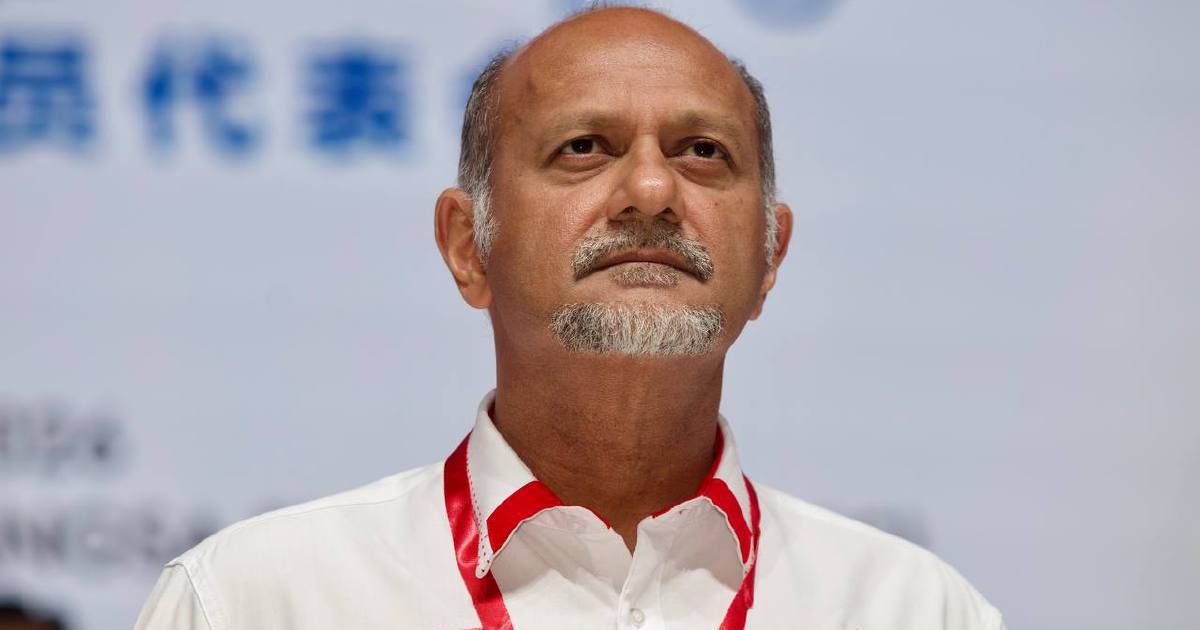
DAP national chairman Gobind Singh Deo has renewed pressure on Prime Minister Datuk Seri Anwar Ibrahim to intensify efforts on institutional restructuring and economic modernisation, arguing that the coalition government needs to move faster after more than three years in power. Speaking from Putrajaya, the Democratic Action Party leader has become increasingly vocal about what he perceives as sluggish progress on the reformist agenda that underpinned the unity government's formation following the 2022 general election.
The timing of Gobind Singh's intervention reflects mounting frustration within sections of the coalition regarding implementation timelines. The unity government, formed in November 2022 as a broad multi-party alliance involving Pakatan Harapan, Barisan Nasional, and Gabungan Parti Sarawak, has been navigating competing priorities and political sensitivities across its constituent parties. For DAP, a historically reform-minded party with a strong base in urban and Chinese-majority areas, the perceived lack of decisive action represents a departure from pre-election positioning.
Institutional reform constitutes one of the more contentious areas for the coalition. This encompasses everything from civil service restructuring and anti-corruption frameworks to judicial independence and legislative processes. DAP has consistently advocated for more aggressive changes to combat entrenched bureaucratic practices and eliminate what the party views as corrupt structural incentives. However, other coalition partners, particularly those with deeper historical roots in government administration, have urged more cautious and gradual approaches to institutional change.
Economic reform demands carry different urgency. Malaysia faces slowing growth, rising inflation pressures that peaked in 2023, elevated household and corporate debt levels, and questions about the competitiveness of key sectors. The unity government initially positioned itself as committed to modernising the economy through digital transformation, financial sector development, and more transparent governance frameworks. Yet real-world progress on translating these commitments into concrete policy outcomes has been uneven, partly due to resource constraints and partly due to disagreement between coalition partners on approach.
Gobind Singh's remarks carry particular weight given DAP's role as one of the largest opposition parties before the unity government's formation. The party had campaigned on a platform of systemic reform and good governance, making efficiency and institutional effectiveness core components of its identity. From DAP's perspective, slower-than-expected implementation raises questions about the party's ability to deliver on those promises through its coalition participation, potentially affecting its standing with urban voters and anti-corruption advocates who form a significant portion of its electoral base.
The DAP chairman's intervention also reflects broader tensions within the unity government regarding power distribution and policy influence. As a Pakatan Harapan component alongside PKR and Amanah, DAP operates within a coalition where parties representing more traditional political constituencies hold substantial sway. This creates friction when DAP seeks to push agendas perceived as challenging existing power structures or benefiting constituencies aligned with other parties.
For Malaysian investors and business leaders, the pace of economic reform carries direct implications. Foreign direct investment decisions often depend on perceived governance quality, regulatory clarity, and institutional reliability. Potential investors watching from Singapore, Hong Kong, and beyond assess whether Malaysia is implementing the reforms necessary to remain competitive within the Southeast Asian region. Delayed action on economic modernisation risks reinforcing perceptions that Malaysia is not moving decisively enough to address structural economic challenges.
The political dynamics Gobind Singh's appeal highlights extend beyond DAP's particular concerns. Citizens across the political spectrum have questioned whether the unity government represents a genuine change agenda or primarily a power-sharing arrangement among elites. The government's inability or unwillingness to move faster on reforms invites scepticism about its transformation credentials, potentially fuelling both opposition narratives and disengagement among reform-minded voters.
Anwar Ibrahim's government faces genuine constraints. Managing a coalition encompassing parties with conflicting worldviews requires compromise, and aggressive reform in certain areas could fracture the alliance. Additionally, the government inherited economic challenges, inherited institutional legacies, and operates with limited fiscal flexibility given debt levels. These realities complicate rapid transformation. Nevertheless, the perception of insufficient momentum creates political vulnerability, particularly for DAP and other coalition members whose political identity rests substantially on reform credentials.
The immediate question centres on whether Prime Minister Anwar will respond to DAP's pressure by announcing concrete timelines and resource commitments for specific reforms, or whether coalition management considerations will lead to muted responses. Either outcome carries implications: decisive action satisfies reform advocates but risks alienating more conservative coalition partners; continued gradualism sustains coalition unity but undermines the government's transformation narrative.
Looking forward, DAP's public advocacy may signal shifting internal coalition dynamics and potentially foreshadow more robust policy positioning by the party on both institutional and economic fronts. For Malaysian observers tracking governance questions, these pressures reflect an ongoing struggle between competing visions for the country's development trajectory. The resolution of this tension will likely shape both Malaysia's institutional trajectory and the coalition's political durability heading toward future electoral cycles.

