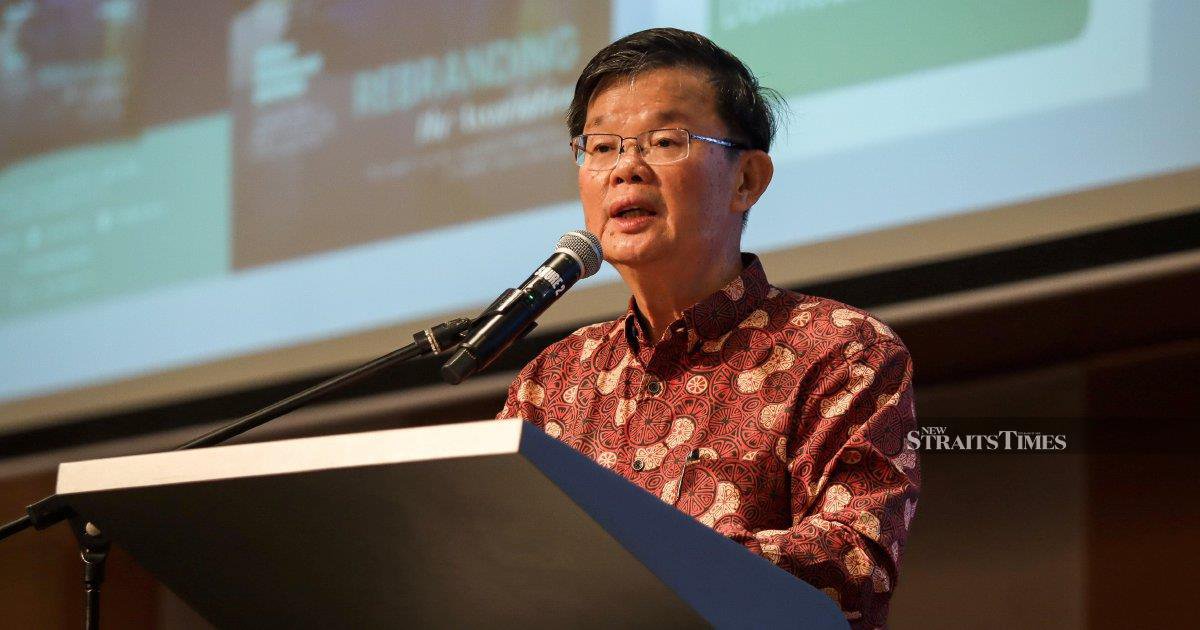
Penang Chief Minister Chow Kon Yeow has characterised the Democratic Action Party's ongoing participation in Malaysia's unity government framework as a strategic manifestation of its dedication to delivering substantive political and administrative reforms. Speaking from his position as a senior figure within the party's central executive committee, Chow underscored that the DAP's choice to maintain its presence in the coalition government extends beyond simple coalition management, instead representing a principled commitment to translating campaign promises into concrete policy outcomes that benefit ordinary Malaysians.
The unity government concept, which emerged in the aftermath of Malaysia's 2022 general election, represented a significant departure from traditional adversarial politics. Rather than fragmenting along strict partisan lines, multiple political blocs committed to a framework emphasising shared governance responsibilities and collaborative policymaking. For the DAP, which had long positioned itself as an opposition force championing reform agendas, the decision to participate in such an arrangement required reconciling its historical identity with the pragmatic demands of holding executive power at the national level.
Chow's statement carries particular weight given the persistent internal and external pressures surrounding the unity government's stability. Since its inception, the coalition has faced recurring questions about its durability, with various parties occasionally threatening to withdraw their support or signalling dissatisfaction with particular policy directions. Against this backdrop, Chow's assertion that DAP's continued participation reflects determination rather than mere political convenience suggests the party views ongoing engagement as instrumental to achieving longer-term objectives.
The broader context of DAP's involvement in federal governance proves instructive for understanding Malaysian politics during this period. As a predominantly Chinese-based political party with strong urban support, the DAP had historically focused on local and state-level administration while maintaining a critical distance from national executive responsibilities. The shift toward active participation in federal coalition arrangements marked a notable evolution in the party's political strategy and ambitions, opening new avenues for influence while simultaneously exposing the party to critiques from both within its traditional support base and from rival opposition quarters.
Reforms pursued under the unity government framework have encompassed diverse policy domains, ranging from institutional governance improvements and transparency mechanisms to substantive economic and social initiatives. These efforts respond to widespread public expectations for demonstrable change following years of political turmoil that had characterised Malaysian governance. The COVID-19 pandemic's overlapping timeline further complicated the reform agenda, as pandemic-related exigencies frequently took precedence over longer-term structural adjustments.
From a regional perspective, Malaysia's unity government experiment holds significance beyond its immediate national context. Across Southeast Asia, political fragmentation and polarisation have created governance challenges in multiple nations. Malaysia's attempt to forge collaborative frameworks across traditional political divides offers both instructive lessons and cautionary tales for neighbouring countries grappling with similar democratic governance questions. The DAP's willingness to engage constructively within such arrangements demonstrates one approach to managing Malaysia's particular ethnic and religious complexities through inclusive coalition mechanisms.
For Penang specifically, Chow's articulation of DAP's federal-level commitment carries implications for the state's ongoing development trajectory. The state has historically served as a laboratory for DAP governance approaches, with various policy innovations tested locally before potential broader application. Chow's emphasis on reform dedication suggests Penang will likely continue functioning as an experimental space for progressive governance models while the party navigates its expanded federal responsibilities.
The relationship between Penang's state-level administration and the party's federal involvement creates an interesting dynamic worth monitoring. When local leaders like Chow articulate party positions on national governance, they simultaneously reinforce their authority within internal party hierarchies while addressing external audiences including opposition critics and sceptical voters. This multilayered communication serves both immediate political purposes and longer-term strategic positioning.
Public perception of the unity government's performance remains decidedly mixed. While some Malaysians appreciate the reduction in partisan bickering and the focus on policy substance rather than political theatre, others view the arrangement as insufficiently ambitious in pursuing genuine systemic transformation. Chow's framing of DAP's continued participation as evidence of serious reformist intent directly addresses such scepticism, attempting to reposition coalition participation from appearing as mere political compromise toward presenting it as a platform for advancing principled change agendas.
The sustainability of Malaysia's unity government structure will ultimately depend on whether participating parties, including the DAP, can demonstrate tangible progress on reform initiatives that resonate with broader public constituencies. Chow's statement represents the party's effort to maintain narrative control around its strategic choices, particularly as the framework faces periodic stress tests and as ordinary voters continue assessing whether coalition governance delivers meaningfully improved governance quality and responsiveness to their concerns.

