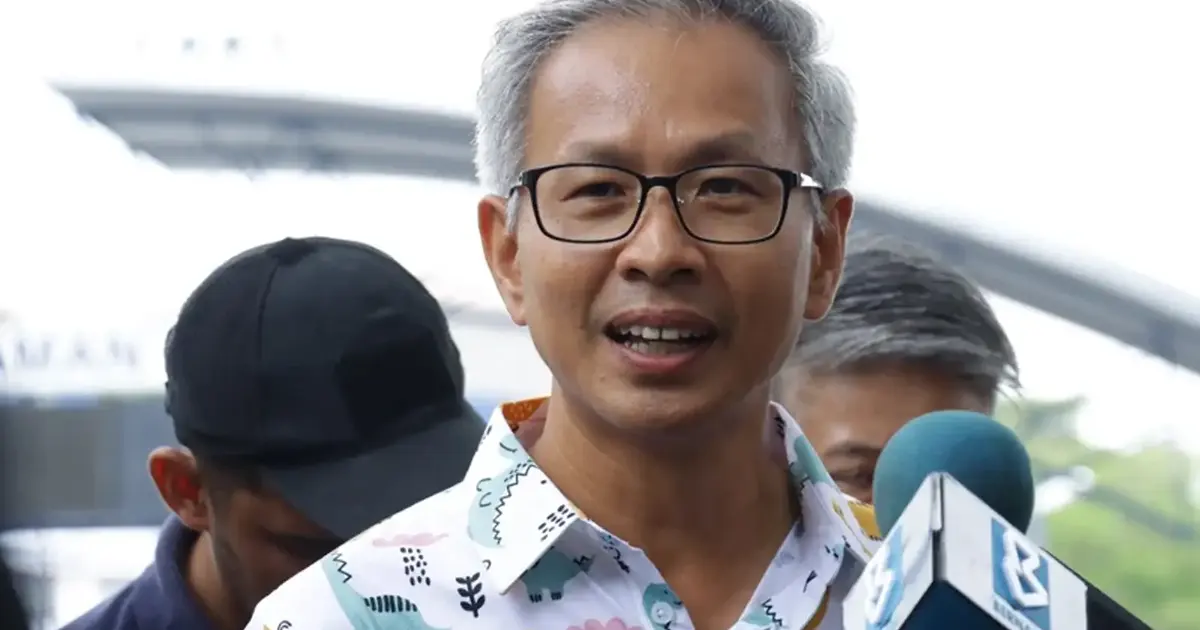
The investigation into Democratic Action Party leader Tony Pua continues, according to a statement from the Home Minister, as authorities work through a substantial volume of public complaints directed at the politician. The ongoing probe stems from social media activity that has triggered significant public reaction and raised questions about the boundaries of political discourse in Malaysia regarding sensitive constitutional matters.
Over 140 police reports have been lodged against Pua by members of the public, centring on a Facebook post in which he made comments touching on Malaysia's constitutional monarchy framework and the Rukun Negara, the nation's five principles of state philosophy. The accumulation of complaints demonstrates the emotional intensity surrounding discussions about these foundational institutions, which remain subjects of considerable sensitivity in Malaysian public discourse.
The constitutional monarchy holds a particularly important position in Malaysia's political architecture, enshrined in the Federal Constitution as a cornerstone of national identity and governance. The Rukun Negara, adopted in 1970 following the aftermath of racial tensions, similarly represents a unifying framework that has long been treated with reverence across the political spectrum. When public figures engage with these topics, their words often attract heightened scrutiny and passionate responses from citizens who view them as sacred to the nation's cohesion.
For Southeast Asian observers, Malaysia's handling of political speech involving constitutional symbols offers instructive lessons about the relationship between democratic freedoms and national sensitivities. The region encompasses multiple constitutional monarchies and multi-racial societies grappling with comparable questions about where the line between legitimate political criticism and inflammatory speech should be drawn. How Malaysian authorities navigate this case may influence approaches elsewhere in the region.
The timing of the investigation underscores broader tensions within Malaysian politics between different conceptions of free speech and patriotic obligation. Opposition politicians argue that robust discussion of constitutional arrangements is essential to democratic governance, while others contend that certain national symbols warrant special protection from public scrutiny. This fundamental disagreement reflects deeper philosophical divides about what Malaysian democracy should accommodate.
Pua's background as an economist and member of parliament for Petaling Jaya gives his comments particular weight, as his statements carry the implicit authority of elected office. This distinction may factor into how police assess the nature and intent of his Facebook post, since remarks by public officials concerning constitutional matters often receive different treatment than comparable statements by private citizens in legal and investigative frameworks.
The investigation's continuation suggests that authorities are conducting a methodical review of the complaints rather than moving swiftly toward charges or closure. The Home Minister's confirmation that the probe remains active signals that police have not yet determined what action, if any, should follow from the accumulated reports. This deliberative approach may reflect genuine complexity in assessing whether the post crossed legal boundaries or represents the kind of political commentary that, while controversial, remains protected expression.
Malaysian law contains several provisions that could potentially apply to politically sensitive speech, including provisions related to sedition and statements that might be construed as contempt toward constitutional institutions. The precise wording of Pua's post, the context in which he made his remarks, and the stated intent behind them would all factor into any determination of whether legal violations occurred. The investigation likely involves careful examination of these elements before authorities decide upon next steps.
For the DAP, which has long positioned itself as a champion of constitutional reform and democratic expansion, the investigation represents a test of how seriously the party is willing to push debates about institutional change. The party's response to the probe against one of its senior figures will likely influence how other opposition politicians assess the political risks of engaging publicly with constitutional questions going forward, potentially creating a chilling effect on political discourse.
The broader Malaysian public remains divided on whether such investigations constitute appropriate state response to provocative political speech or represent an inappropriate use of investigative machinery to silence legitimate opposition voices. This division itself reflects the fundamental political disagreement that underlies the controversy, with interpretations of the investigation's propriety largely tracking existing partisan alignments.
As the police investigation proceeds, the case illustrates how questions that might be addressed through parliamentary debate or public discourse in other democracies often become criminal matters in Malaysia, reflecting the distinct constitutional and legal framework within which Malaysian politics operates. Understanding this context is essential for observers seeking to grasp how Malaysia's political system processes challenges to its foundational institutions.
The Home Minister's statement provides minimal additional detail about the investigation's scope or timeline, leaving uncertainty about when authorities might conclude their review or what recommendations they might ultimately make. This ambiguity itself becomes part of the political environment, affecting calculations by other public figures contemplating whether to engage with similar topics.

