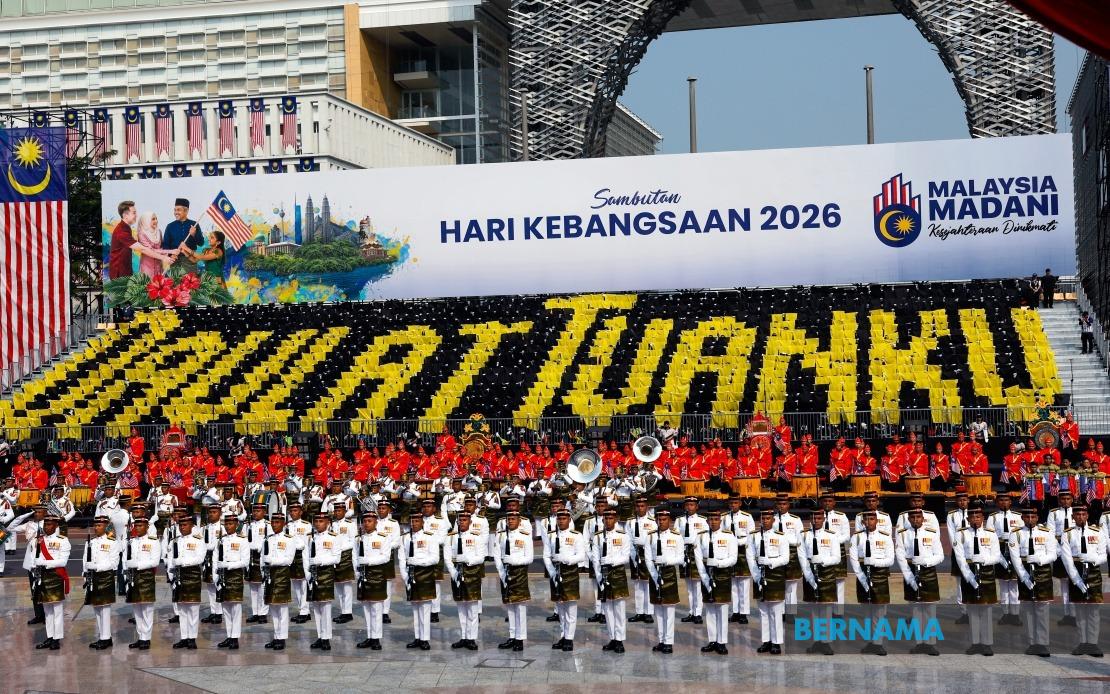
Tomorrow's 69th National Day celebration at Dataran Putrajaya promises to be a defining moment for Malaysia, with the nation's administrative heart transforming into a stage for patriotic expression and national pride. The carefully choreographed event, carrying the theme Malaysia MADANI: Kesejahteraan Dinikmati, will draw thousands of participants to demonstrate the values of unity, cultural heritage, and national identity that underpin Malaysian independence. His Majesty Sultan Ibrahim, King of Malaysia, and Her Majesty Raja Zarith Sofiah, Queen of Malaysia, will grace the proceedings, lending royal authority to an occasion that resonates deeply with the government's vision of inclusive development and collective wellbeing.
The scale of tomorrow's undertaking reflects the ambition behind Malaysia MADANI, the government's governance framework emphasising prosperity for all citizens. Commencing at 8:00 am, the parade will mobilise an unprecedented logistical operation encompassing 10,819 participants organised into 76 contingents, supported by 22 marching bands and 11 specially designed float vehicles. The display of national capability extends to 328 military assets spanning land, naval, and air components, complemented by 112 working animals and 22 electric vehicles—a subtle nod toward Malaysia's sustainability commitments. Prime Minister Datuk Seri Anwar Ibrahim and Cabinet members will witness the proceedings, underscoring the celebration's status as a key political and cultural moment for the administration.
The ceremonial programme deliberately weaves together different dimensions of national life, beginning with statehood representation through military contingents, including participants from the National Resilience Leadership Academy and National Defence University of Malaysia. Athletes and medalists from the Glasgow 2026 Commonwealth Games will carry the torch for sporting excellence, embodying Malaysia's competitive spirit on the international stage. This layering of narratives—from security and defence to sport and economic participation—demonstrates how the government frames National Day not merely as historical commemoration but as a platform for showcasing contemporary national achievements across multiple sectors.
The opening performance, titled Gema Inovasi MADANI, represents a particularly thoughtful expression of the celebration's underlying message. Coordinated by the National Department for Culture and Arts, the 700-strong ensemble of traditional kompang frame drum players will create a sonic tapestry drawing from Malaysia's main ethnic communities. By deploying 150 musical instruments in fusion arrangements pairing heritage percussion with contemporary innovation, the organisers signal that cultural preservation and modernisation need not be opposing forces. This artistic choice resonates with younger Malaysians who often navigate between traditional identity and global influences, offering a cultural vocabulary that legitimates both dimensions of their experience.
Public and private sector participation broadens the celebration's constituency beyond government institutions. Companies including Munchy's Malaysia, ZUS Coffee, Carsome Sdn Bhd, and the Malaysian Security Industry Association will participate, illustrating how National Day functions as a unifying occasion transcending commercial boundaries. This inclusion of business entities reflects Malaysia's mixed economy model and suggests that national pride encompasses economic dynamism and entrepreneurial achievement. The participation of the Malaysian Cooperation Federation demonstrates outreach to grassroots economic actors, while major airline partners—Malaysia Airlines, AirAsia, Batik Air, and Air Borneo—project Malaysia's regional connectivity and aviation leadership.
Security and emergency services receive prominent recognition through dedicated parade contingents representing the Malaysia Civil Defence Force, Road Transport Department, and Malaysian Fire and Rescue Department. Their participation underlines how contemporary patriotism extends beyond ceremonial symbols to encompass the institutions safeguarding citizen welfare. The inclusion of Johor Military Force, identified as Malaysia's oldest military unit, adds historical depth, anchoring the celebration to institutional continuity and sovereignty. This architectural approach—layering contemporary governance structures alongside historical institutions—communicates that national identity rests on stable foundational pillars rather than ephemeral political messaging.
Visit Malaysia Year 2026-2027 floats will traverse the parade route showcasing diverse state tourism assets, regional flora and fauna, and traditional attire representative of Malaysia's ethnic plurality. This tourism-focused component serves dual purposes: celebrating Malaysia's natural and cultural richness while promoting the nation as a regional destination during an economically important campaign year. The inclusion of popular animation characters Upin and Ipin by national animation leader Les' Copaque demonstrates strategic efforts to engage younger demographics and families, recognising that National Day celebrations must speak across generational divides to maintain relevance and emotional resonance.
A human graphics performance mobilising 1,500 students from 36 Selangor schools will create synchronised visual formations responding to musical cues, exemplifying how contemporary performance techniques amplify patriotic messaging. This choreographed participation of youth signals investment in cultivating national consciousness among younger generations, who will inherit stewardship of Malaysian society. The scale of student involvement—thousands of young people taking active rather than passive roles—transforms the parade from spectacle into participatory civic engagement, creating embodied memories of collective national purpose.
The celebration's climax features a dramatic aerial display by Royal Malaysian Air Force fighter jets executing manoeuvres above Putrajaya's skyline, projecting defence capability and national sovereignty to assembled spectators. This militarised conclusion, following hours of cultural, economic, and social representation, ensures that the programme concludes with unmistakable imagery of state power and security apparatus. The concluding theme song, Aku Berjanji, composed and performed by renowned artist Faizal Tahir, provides emotional punctuation—a personal, affective statement about love for country that contrasts with the institutional grandeur preceding it. The event is scheduled to conclude around 10:00 am, allowing ceremonial completion within a single morning, maximising public attendance and media coverage.
Practical considerations reveal how security concerns and environmental hazards shape contemporary National Day planning. Communications Minister Datuk Seri Fahmi Fadzil, chairing the main organising committee, has advised attendees to wear N95 face masks due to current haze conditions, with organisers providing masks to over 10,000 parade participants. This precautionary measure, aligned with Ministry of Health guidance, acknowledges that Malaysia's environmental challenges—including transboundary air pollution episodes—now constitute routine considerations for large public gatherings. The decision reflects public health integration into event planning, where protecting participant wellbeing takes priority alongside celebratory objectives.
Operational logistics will substantially disrupt Putrajaya's usual functioning, with full closure of the Core Island area beginning August 30 at 5:00 am and extending until August 31 at 6:00 pm. Five major bridges—Seri Wawasan, Seri Saujana, Seri Gemilang, Putra, and Seri Ehsan—will be inaccessible, alongside multiple surrounding routes. The Ministry of Home Affairs has advised the public to utilise public transport and plan travel accordingly, tacit acknowledgment that the celebration's scale necessitates significant infrastructure reallocation. For Putrajaya residents and regular commuters, this represents temporary sacrifice of normal mobility for the sake of national commemoration—a practical manifestation of how individual convenience yields to collective ceremonial needs during moments of national significance.
The comprehensive nature of tomorrow's celebration—integrating military displays, cultural performances, economic participation, youth engagement, and international projections of Malaysian capability—illustrates how contemporary National Day celebrations function as political and social events serving multiple audiences simultaneously. For international observers, the display communicates Malaysian stability, defence readiness, and multicultural cohesion. For domestic audiences, particularly younger Malaysians navigating questions of identity and belonging, the celebration offers sanctioned spaces for patriotic expression and collective participation. For the government and organising institutions, the event provides opportunity to frame the Malaysia MADANI narrative through tangible, memorable experience rather than abstract policy language, translating governance frameworks into emotional and visceral national sentiment.

