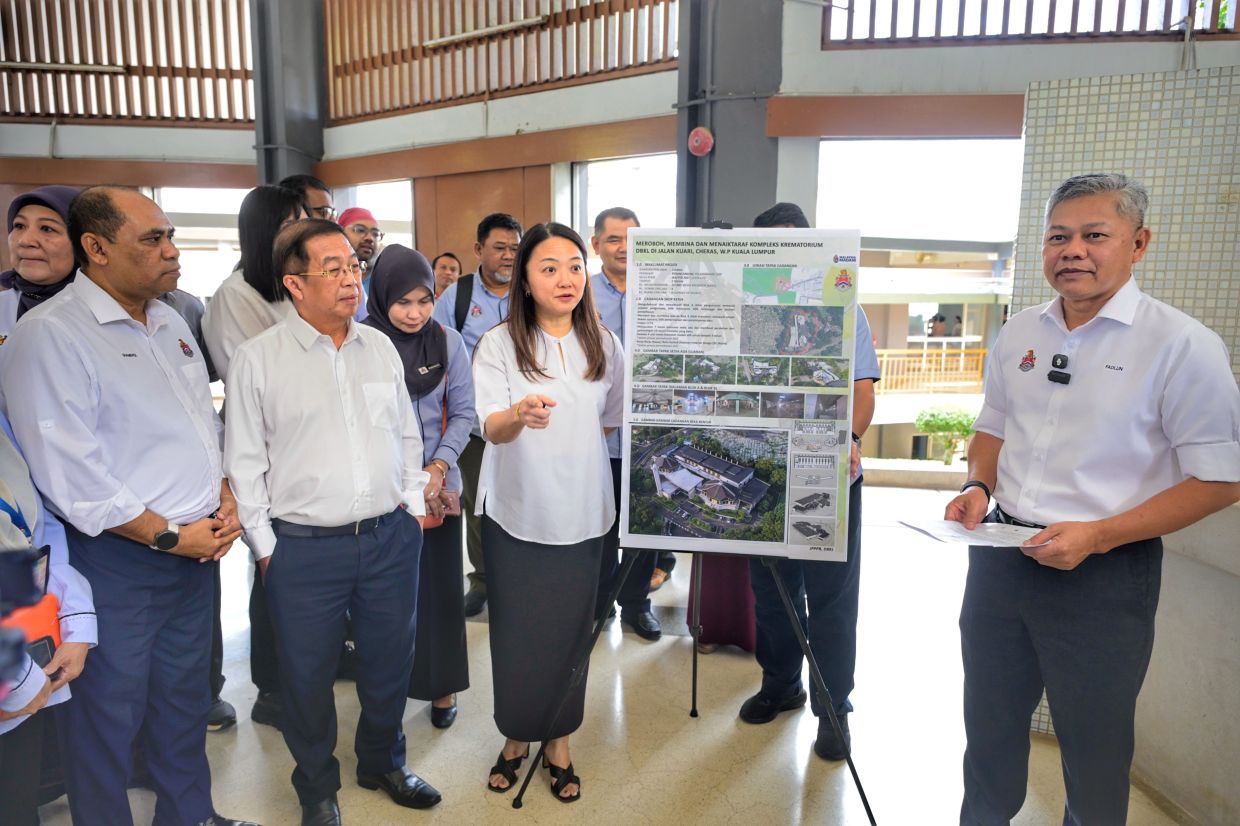
Kuala Lumpur City Hall (DBKL) has committed RM45 million to a comprehensive upgrade of its crematorium facility in Cheras, signalling the municipal authority's recognition that essential public infrastructure must evolve alongside the city's demographic changes. The expansion project at the Jalan Kuari complex, scheduled to commence in February 2026, represents a significant investment in death-care services for Kuala Lumpur's Hindu, Buddhist, Sikh, and Christian populations, whose funeral practices depend on cremation facilities.
The expansion will add three additional cremation units to supplement the seven currently in operation at the complex, which has served the capital since its establishment in 1977. DBKL reports that the facility processes more than 5,800 cremations annually, placing considerable strain on infrastructure approaching five decades of use. By maintaining four units in service throughout the construction period, the local authority aims to prevent service disruptions at a time when the community's reliance on these facilities remains constant. The entire upgrade programme is projected to take two years to finalise.
Mayor Datuk Seri Fadlun Mak Ujud described the initiative as part of City Hall's commitment to addressing changing public requirements, emphasising that the project secured approval within the framework of Malaysia's 13th Malaysia Plan. His comments, made during an inspection of the complex on Wednesday, July 8, underscore growing municipal recognition that adequate death-care infrastructure represents a fundamental civic responsibility. In multicultural Kuala Lumpur, where significant Hindu, Buddhist, and Christian communities maintain long-established ties to the city, such facilities carry particular cultural and religious significance.
The upgrade assumes particular urgency given the facility's advanced age and the capital's continuing population expansion. Cheras Member of Parliament Tan Kok Wai, who attended the mayoral visit, advocated for accelerating the project timeline, noting that a crematorium serving a city of Kuala Lumpur's scale and diversity cannot indefinitely rely on half-century-old infrastructure. His advocacy reflects broader frustrations among representatives of non-Muslim communities regarding the adequacy of death-care services relative to population requirements. The political support from both local and federal representatives suggests recognition across administrative levels that this infrastructure gap requires prompt resolution.
Minister in the Prime Minister's Department (Federal Territories) Hannah Yeoh's presence at the complex inspection reflected federal government investment in ensuring Kuala Lumpur's municipal services remain fit for purpose. Her attendance highlighted that cemetery and crematorium provision transcends ordinary municipal housekeeping, rising to the level of federal policy concern. Yeoh's simultaneous disclosure that the federal government and Selangor state authorities are negotiating potential sites in Semenyih for Muslim cemeteries demonstrates that the infrastructure challenge extends across religious communities throughout the Klang Valley metropolitan area.
The capacity constraints affecting Kuala Lumpur's death-care infrastructure mirror broader challenges confronting Malaysia's major urban centres as populations concentrate and municipal services face mounting pressure. While Muslim burial grounds command particular attention in national discourse, the crematorium expansion underscores that non-Muslim communities equally require adequately resourced facilities. The Cheras complex's annual processing of over 5,800 cremations demonstrates substantial demand from communities whose members increasingly choose urban residency and urban funeral arrangements.
The RM45 million allocation represents a considered response to identified community needs rather than speculative infrastructure expansion. DBKL's decision to retain partial operational capacity during renovation indicates the authority's understanding that cremation services cannot simply pause for maintenance. The scheduling of construction phases to preserve four functioning units reflects lessons learned from previous municipal infrastructure projects where service discontinuity generated substantial public inconvenience and complaint.
Infrastructure adequacy carries particular weight in death-care contexts, where service failures directly impact grieving families during religiously and emotionally significant moments. Communities without prompt access to cremation facilities may encounter unacceptable delays in conducting funeral rites according to their traditions, generating both spiritual and practical distress. Municipal provision of these services therefore transcends administrative efficiency, engaging core questions of religious accommodation and community dignity.
The Cheras crematorium expansion, whilst geographically specific to the federal capital, carries implications for Southeast Asian cities generally as they navigate increasingly diverse populations and mounting infrastructure demands. Kuala Lumpur's deliberate investment in expanding facilities serving non-Muslim communities demonstrates municipal recognition that secular governance demands equitable resource allocation across religious populations. The project signals that adequate death-care infrastructure, like water supply or waste management, represents a standard public service rather than a specialist accommodation.
The two-year completion timeline positions the expanded facility to serve Kuala Lumpur through the remainder of this decade and beyond, providing temporary relief from current constraints. However, continued population growth may necessitate further expansion or additional facilities in subsequent years, particularly in outer suburbs where demographic growth accelerates. DBKL's investment thus represents a necessary but potentially interim response to structural demand pressures that urban planners and municipal authorities will likely confront repeatedly as Malaysia's cities continue expanding.

