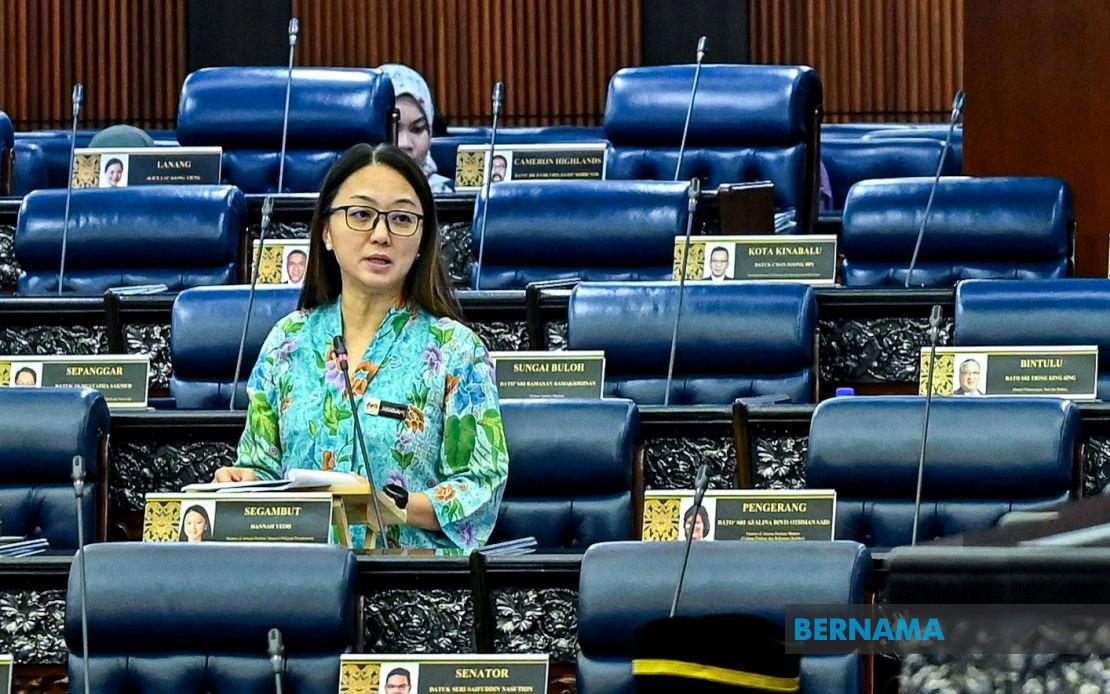
Kuala Lumpur City Hall (DBKL) has embarked on an ambitious governance overhaul, implementing 16 separate reform measures within the past six months in response to a critically low anti-corruption assessment score. The initiative represents a significant institutional recalibration at Malaysia's premier city administration, driven by accountability pressures and federal oversight. Minister in the Prime Minister's Department (Federal Territories) Hannah Yeoh disclosed the sweeping measures in parliamentary response, signalling both the seriousness of DBKL's earlier performance lapses and the government's determination to rehabilitate public confidence in municipal administration.
The catalyst for this institutional reset was stark: DBKL achieved merely 0.08 per cent out of a possible 5 per cent allocation in the Public Service Corruption Ranking assessment under the newly implemented 2025 Local Authority Star Rating System. This dramatically low score—representing less than two per cent of the available marks—triggered urgent internal diagnostics and external review. The severity of the rating prompted DBKL leadership to recognise that incremental adjustments would prove insufficient, necessitating instead a comprehensive reimagining of administrative processes and decision-making architecture.
The analytical foundation for the reform agenda emerged from a structured study undertaken by the International Islamic University Malaysia (IIUM), which conducted engagement sessions with Federal Territory Members of Parliament on 2 March. From these consultations and preliminary investigations, four core recommendations crystallised around strengthening DBKL's administrative processes, governance structures, integrity frameworks, and service delivery mechanisms. These recommendations were not theoretical pronouncements but rather targeted interventions addressing demonstrable institutional vulnerabilities that the Malaysian Anti-Corruption Commission (MACC) had previously flagged.
The MACC investigation identified five specific procedural weakness zones that became priority remediation targets. These operational pinch-points ranged across diverse municipal functions: the governance of a radio studio broadcast content production initiative; the allocation mechanisms for Ramadan Bazaar trading sites; contract management oversight for business licensing service providers; administration of the Malaysian Statutory Bodies Association Sports Championship; and rent collection procedures for DBKL's public and people's housing portfolio. Each domain represented areas where discretionary decision-making or inadequate separation of responsibilities had created potential vulnerabilities to improper influence or opacity.
Among the most structurally significant interventions, DBKL abolished its Special One Stop Centre (OSC) Committee, a move fundamentally reshaping institutional power distribution. This dissolution addressed political interference risks and reinforced the separation of powers principle—recognising that development approval pathways had become subject to inappropriate influence. Complementing this reform, access to the OSC 3.0 Plus Portal has been extended to all Federal Territory Members of Parliament, enabling legislative representatives to review pending development applications and formally submit parliamentary input before mayoral approvals proceed. This transparent portal access mechanism institutionalises community scrutiny while limiting individual discretion.
Financial controls have been simultaneously tightened through explicit authority ceilings on mayoral expenditure. The mayor's unilateral approval authority for financial contributions has been capped at RM3,000, with all requests exceeding this threshold now requiring Top Management Committee deliberation and collective decision-making. This structural constraint eliminates the possibility of large discretionary disbursements flowing from a single individual's judgment, creating multiple decision-making touchpoints that collectively reduce corruption risk exposure.
Institutional architecture itself has undergone renovation through the establishment of three new governance bodies: an Audit Committee, a Governance and Integrity Committee, and a Mayor's Contributions Committee. These specialist bodies introduce layered oversight mechanisms and distribute accountability across multiple institutional nodes rather than concentrating power. Crucially, the Audit Committee chair position has been deliberately separated from the mayor's office, eliminating the problematic scenario where the most senior administrator could oversee investigations into their own administration.
Operational procedures have been reconfigured to reduce corruption opportunity through mandatory job rotation for officers occupying sensitive administrative positions. This rotation strategy prevents individuals from accumulating excessive institutional knowledge within high-risk roles or developing inappropriate relationships with external stakeholders. Additionally, DBKL is implementing phased deployment of body-worn cameras for enforcement personnel commencing in the fourth quarter of 2024, introducing technological accountability measures that create contemporaneous records of official interactions.
Serviceability and transparency have been substantially advanced through aggressive digitalisation of municipal functions. As of July 2024, DBKL had introduced 170 online application services, with an end-of-year target of 180 fully automated end-to-end online services. This digital transformation eliminates intermediaries and paper-based discretionary processes that historically enabled bribery or favour-trading. By 2030, DBKL envisions complete digitalisation of all application processing, effectively automating corruption opportunities away.
The licensing renewal system exemplifies this modernisation approach. Implementation of the e-Lesen digital licensing platform has obviated reliance on external brokers or "runners"—intermediaries who historically facilitated illicit payments. Integration of e-Lesen with the Departmental Enforcement System (SPJ) creates seamless digitised workflows. A reformed licensing renewal policy effective from 1 July 2024 extends licence validity periods to three years, reducing frequency of renewal interactions and thereby limiting interaction points where corruption could occur.
These cumulative reforms represent a deliberate institutional pivot from personalised, discretion-heavy administration toward systematised, digitalised, rule-bound governance. Rather than empowering individuals to make consequential decisions in isolation, the reformed DBKL distributes decision-making authority across multiple committees, introduces technological mediation, and creates transparency mechanisms enabling parliamentary and public scrutiny. The reform agenda implicitly acknowledges that the prior institutional culture centred on individual decision-making authority had created pathways for corruption, and that robust governance requires structural constraints on discretion.
For Malaysian readers and regional observers, DBKL's institutional recalibration offers both cautionary and hopeful signals. It demonstrates that even Malaysia's premier city administration can experience significant corruption vulnerabilities requiring decisive federal intervention. Simultaneously, the comprehensive nature of the reform response—spanning governance architecture, technological infrastructure, and transparency mechanisms—suggests that systematic institutional engineering can effectively reduce corruption risk. The success of DBKL's transformative agenda will determine whether other local authorities adopt similar frameworks, potentially catalysing broader improvements in municipal governance across Malaysia.

