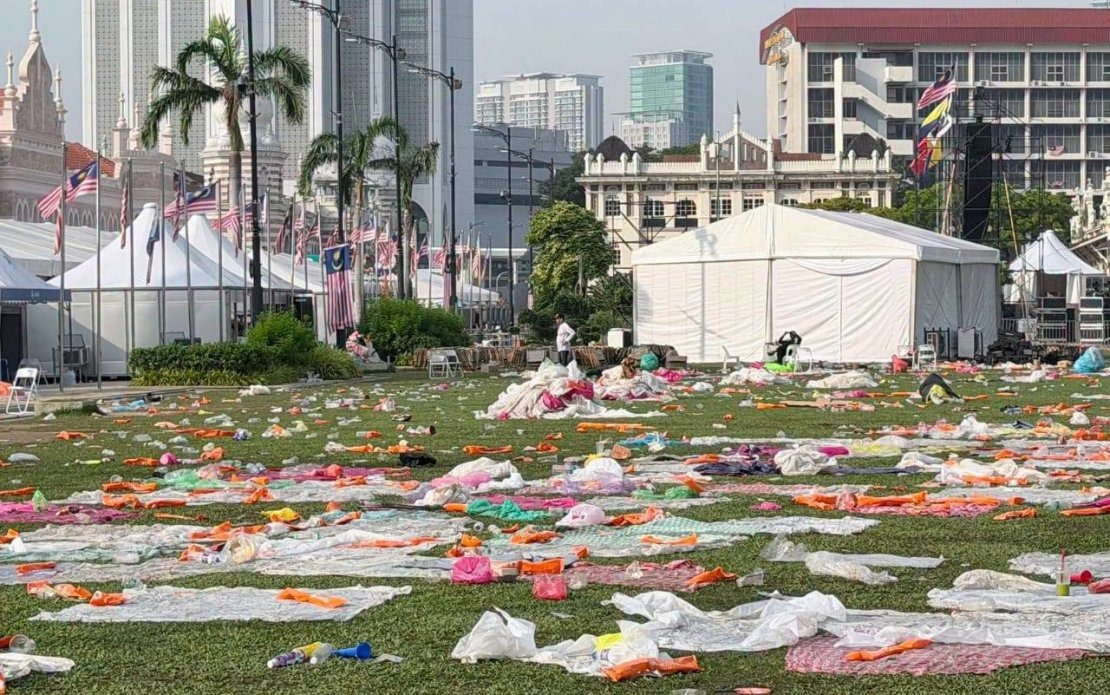
Kuala Lumpur City Hall (DBKL) has announced plans for a comprehensive cleanup operation at Dataran Merdeka following the early morning broadcast of the 2026 FIFA World Cup final, which drew over 25,000 football enthusiasts to the iconic national venue. The gathering, which saw Spain defeat Argentina 1-0, transformed the open space into an impromptu stadium, but left behind significant amounts of waste that required urgent attention from city authorities.
The scale of the littering problem has prompted DBKL to issue a broader statement about public responsibility and civic consciousness. Through a Facebook post, the municipal authority acknowledged that while its cleaning teams would undertake the necessary remedial work, the onus ultimately rests with citizens to maintain standards at shared spaces. The message reflects growing frustration among city managers across Southeast Asia regarding post-event environmental degradation at public gathering points.
DATARAN MERDEKA holds profound historical and cultural significance for Malaysia, serving as the symbolic heart of the nation's independence and democratic heritage. The venue regularly hosts major national celebrations, commemorations, and public events, making its upkeep a matter of national pride. DBKL's statement emphasized that the condition in which citizens leave such spaces directly reflects the value they place on national landmarks and collective identity.
The authority's communications highlight a recurring tension in urban management: the challenge of balancing public enjoyment with environmental stewardship. Thousands of fans gathered to celebrate football, share communal joy, and participate in a global sporting moment. Yet the departure of these crowds left behind discarded food containers, beverages, packaging materials, and other refuse scattered across the grounds. This pattern mirrors similar post-event situations witnessed at gathering spaces throughout Kuala Lumpur and other major regional cities.
DBKL's statement carried an implicit critique of public behaviour, noting that the freedom to celebrate enthusiastically does not extend to the freedom to compromise shared environments. This messaging suggests that city authorities are attempting to reshape civic culture through public awareness campaigns rather than relying solely on enforcement mechanisms. The approach reflects international best practices in urban management, where behavioral change initiatives often prove more effective than reactive penalties.
The cleanup operation itself will require substantial resources and labour. DBKL has committed its teams to restoration work, though the authority made clear that such efforts represent a supplementary responsibility rather than the primary obligation. The framing places responsibility squarely on individual citizens and collective social consciousness, positioning environmental stewardship as integral to national identity and urban pride.
For Malaysian readers, this incident at Dataran Merdeka carries implications beyond simple littering concerns. As the nation hosts or participates in increasingly prominent international sporting events, questions about public behaviour and environmental management become increasingly relevant. The 2026 FIFA World Cup broadcast gathering demonstrates the enthusiasm for global sports among Malaysian audiences, yet also exposes challenges in managing large, spontaneous public assemblies.
The incident also contextualizes ongoing discussions about cleanliness standards in Southeast Asian cities. Metropolitan centres throughout the region face similar challenges when major events draw unprecedented crowds to public spaces. How authorities respond—through enforcement, education, infrastructure investment, or cultural messaging—shapes long-term urban development and public perception of city management effectiveness.
DBKL's appeal for citizens to view Kuala Lumpur as a shared home requiring collective care reflects a broader aspirational message about urban citizenship. Rather than treating public spaces as temporary venues for individual enjoyment, the authority encourages viewing them as permanent common assets deserving respect. This frames environmental responsibility not as inconvenience but as practical expression of national pride and community membership.
The World Cup final broadcast itself underscores Malaysia's integration into global sporting culture and the capacity of international events to mobilize large public gatherings. The over 25,000 attendees demonstrated substantial appetite for communal sports viewing experiences. As such events proliferate, developing sustainable management practices becomes increasingly important for cities seeking to accommodate public enthusiasm without environmental degradation.
Looking forward, the Dataran Merdeka incident may catalyze discussions about event infrastructure at public venues. This could include temporary waste management systems, clearly marked disposal facilities, and public education campaigns preceding major broadcasts or gatherings. Cities throughout Southeast Asia grappling with similar challenges might learn from how Kuala Lumpur addresses both the immediate cleanup and longer-term preventative approaches.
The response from DBKL ultimately reflects a balance between pragmatic management and aspirational messaging. The authority must address immediate environmental concerns while cultivating cultural shifts toward greater public responsibility. Success in this domain depends not on municipal capacity alone, but on genuine participation by citizens in maintaining standards at spaces they collectively use and value.

