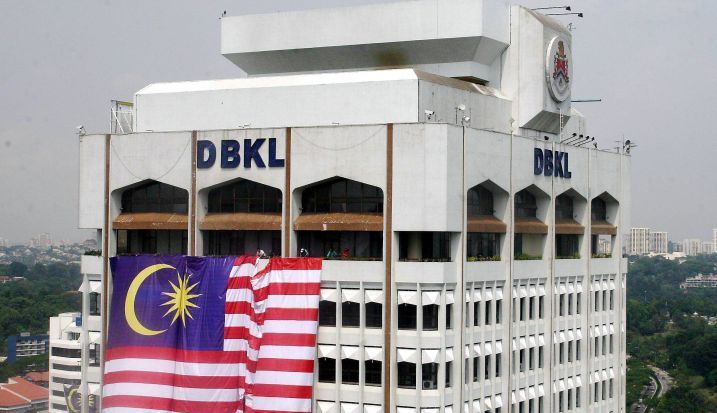
Kuala Lumpur City Hall (DBKL) has escalated its long-running dispute with the Taman Desa Phase 1 Residents Association by issuing a formal two-week enforcement notice requiring the removal of facial-recognition scanners and boom gates that have been installed on public roads without official approval. The action represents a significant step in DBKL's campaign to restore uncontrolled public access to roads within the neighbourhood and signals the municipal authority's determination to enforce planning regulations despite community resistance.
Enforcement officers from DBKL visited the residential estate on Thursday, August 27, affixing red notice papers directly to facial-recognition scanners stationed at Guard Posts 1 and 4. The officers simultaneously cordoned off the scanning equipment and associated boom-gate infrastructure with yellow enforcement tape, a visual signal that the installations remain in violation of municipal ordinances. The notices themselves cited Section 70 of the Street, Drainage and Building Act 1974, the statutory provision that prohibits obstruction of public thoroughfares and requires prior mayoral consent for any structures placed on public roads.
When approached for comment, a spokesperson from DBKL confirmed that the two-week deadline was established following careful legal consultation within the municipal authority. The official statement indicated that DBKL had given the residents association a reasonable opportunity to comply voluntarily before resorting to enforcement action. The spokesperson added that if the Taman Desa Phase 1 Residents Association fails to act within the prescribed timeframe, DBKL will exercise its statutory authority to physically remove the structures itself, a prospect that would likely generate further community backlash and media attention.
This enforcement action culminates a protracted administrative struggle that has festered for several months. The underlying conflict centres on the residents association's decision to implement a gated neighbourhood scheme featuring controlled access points and technological surveillance measures designed to restrict vehicle entry. During an inspection conducted on August 17, DBKL officials discovered that the association had failed to remedy the scheme's non-compliance with municipal standards, despite being granted an additional 30-day grace period to make corrections. The August 18 letter that followed issued clear directives: Posts 2, 5, and 6 must be opened fully to vehicular traffic, all unapproved structures must be dismantled, and the affected public roads must be restored to their original open-access status.
The residents association's installation of facial-recognition technology compounds the regulatory breach. According to DBKL's March 5 correspondence, neither the closed-circuit television camera system nor the facial-recognition biometric scanning apparatus received municipal approval prior to installation. Such technological security measures raise significant questions about data privacy, resident consent, and the appropriateness of deploying such surveillance infrastructure in a neighbourhood where many residents have expressed discomfort with the practice.
Growing community discontent crystallised on August 24, when more than forty residents, predominantly aged 50 and above, staged a protest at Gate 5 on Jalan Desa Ria to voice opposition to the access restrictions. The gate in question remains permanently closed to vehicles and is locked to pedestrians until 6 in the morning, a situation that forces early-morning walkers to undertake significantly longer journeys along busier, more dangerous roads merely to reach a public park. This particular grievance reveals how the residents association's security measures have introduced unintended consequences that undermine the quality of life for sections of the community, particularly elderly residents whose mobility and safety concerns make longer detours problematic.
Concerns voiced by protesters extend beyond mere inconvenience. Residents have articulated worries that the barrier infrastructure could impede the rapid passage of emergency response vehicles during medical crises or other urgent situations. The facial-recognition system itself has attracted criticism as invasive and unnecessarily intrusive, raising broader questions about whether such surveillance technology is proportionate to the legitimate security concerns within a residential neighbourhood. These critiques reflect growing unease across Malaysian residential communities regarding the balance between gated security measures and the preservation of reasonable access to public amenities.
The residents association's leadership has maintained that its implementation of the guarded neighbourhood scheme followed all required procedures and secured substantial community backing. Frank Yeh, the Taman Desa Phase 1 Residents Association president, has contended that the association obtained support from 81 percent of residents before proceeding with the security installations. This claim, however, sits uneasily alongside the August 24 protest and broader questions about whether those who supported the scheme understood its full implications for community access and surveillance.
The DBKL enforcement action reflects a broader tension across Malaysian urban areas between residents' desires for gated security and municipal authorities' responsibility to maintain public access to roads and communal spaces. While neighbourhoods have legitimate security interests, the Street, Drainage and Building Act 1974 establishes clear hierarchies: public roads remain public assets that cannot be unilaterally converted into private or controlled-access spaces, regardless of majority resident preferences. DBKL's enforcement position essentially reasserts municipal sovereignty over public infrastructure against encroachment by private associations.
This dispute carries implications extending beyond Taman Desa itself. Numerous Malaysian residential communities have implemented similar gating and access-control measures, many operating in regulatory grey zones where municipal oversight remains inconsistent. The DBKL action signals that authorities may be tightening enforcement against such schemes, particularly where surveillance technology or barrier infrastructure obstruct public roads. Resident associations that have installed unauthorised structures may face similar notices in coming months.
The practical resolution of the Taman Desa situation remains uncertain. The residents association could comply within the two-week window, dismantling the offending equipment and accepting the open-access model that DBKL demands. Alternatively, the association might seek legal remedies or attempt to negotiate a compromise arrangement with DBKL that preserves some security features while restoring public access. The precedent that emerges from this case will likely influence how other Malaysian municipalities handle similar disputes between resident associations and municipal authorities regarding the control of public thoroughfares.

