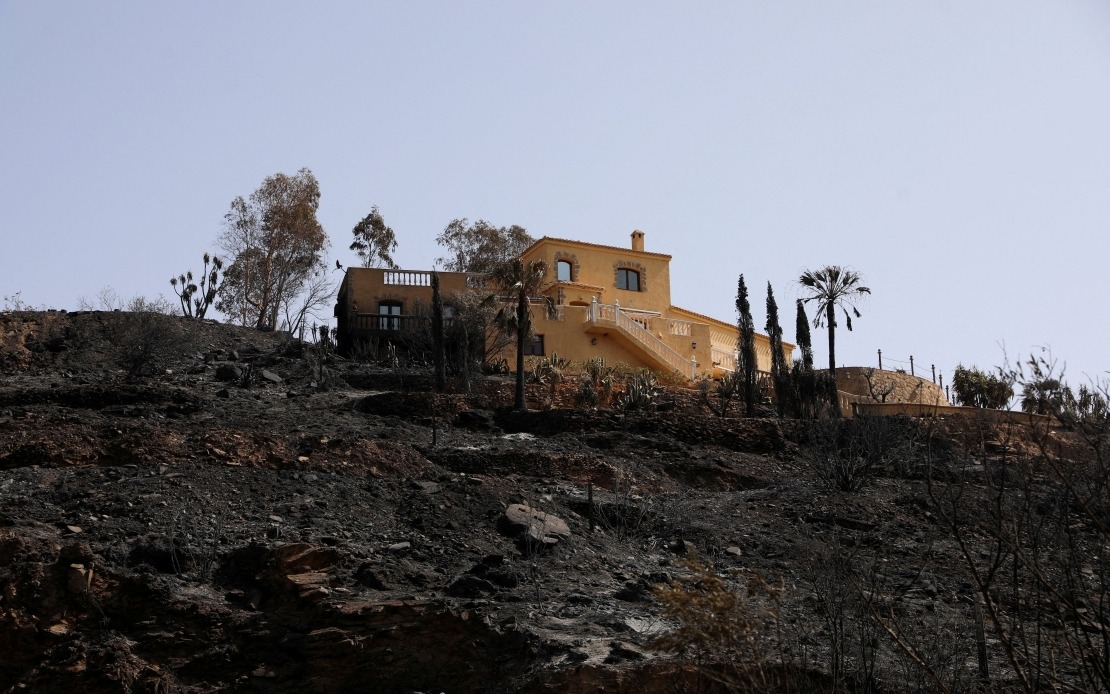
A catastrophic wildfire ravaging Spain's southeastern province of Almeria has claimed 13 lives, with regional authorities declaring the blaze stabilised as rescue and containment operations enter a new phase. The tragedy underscores the mounting toll of extreme weather events across southern Europe and raises critical questions about disaster preparedness in the Mediterranean region—concerns that resonate across Southeast Asia as nations grapple with their own climate-related crises.
The fire, which erupted on Thursday in the vicinity of Los Gallardos municipality within Andalusia, has consumed approximately 7,000 hectares of landscape, making it among the most destructive incidents the autonomous community has experienced in recent memory. Seven additional individuals remain hospitalised, including three in serious condition, according to the latest official data released by regional authorities. Beyond the confirmed fatalities, ten people remain officially missing and unaccounted for, a figure that underscores the chaos and destruction wrought by the rapidly spreading flames.
Regional officials have noted that many of those impacted by the disaster are foreign nationals, a demographic reality reflecting Almeria's position as a major tourist and residential destination for international visitors. The stabilisation of the fire has enabled authorities to progressively restore normalcy, with approximately 600 residents authorised to return to their homes on Saturday, followed by the remaining thousand or so evacuees permitted to rebuild their lives as emergency response levels were scaled back. This phased reopening suggests improving conditions, though lingering dangers and ongoing investigative work continue to shape the recovery landscape.
Investigators are actively examining the fire's origins, with preliminary findings pointing toward a potential collapse of electrical infrastructure as the likely ignition source. The hypothesis suggests that either a utility pole or electrical cable failure may have initiated the conflagration, a troubling prospect that raises broader concerns about the vulnerability of ageing infrastructure to climate-related stresses and extreme weather conditions. For Malaysian policymakers and infrastructure managers, such incidents abroad serve as cautionary tales about the necessity of proactive maintenance and modernisation programmes.
Juanma Moreno, the head of Andalusia's regional government, addressed the public on Sunday with characteristically measured language, confirming that the wildfire had ceased its advance and remained contained within its perimeter. Nevertheless, he cautioned that considerable work remains before authorities can declare the situation fully controlled and the flames entirely extinguished. His statement reflected the delicate balance between offering reassurance to traumatised communities and maintaining realistic expectations about the ongoing challenges confronting emergency personnel.
Moreno seized upon the disaster as an opportunity to elevate discussion about climate change, urging both the general public and government institutions to treat the existential threat with the gravity it warrants. He articulated a sobering assessment of contemporary conditions, noting that shifting climate patterns are generating increasingly unpredictable and complex circumstances that amplify the scale and ferocity of natural disasters. Wildfires, he argued, have become unprecedented in their magnitude and substantially more challenging to contain using conventional firefighting methodologies—an observation with profound implications for resource allocation and disaster management frameworks across the Mediterranean and beyond.
The Almeria catastrophe exemplifies a broader pattern emerging across southern Europe, where rising temperatures, prolonged droughts, and shifting precipitation patterns have converged to create an environment exceptionally conducive to rapid wildfire propagation. Spain, Greece, and Portugal have all experienced record-breaking fire seasons in recent years, straining emergency response systems and claiming hundreds of lives. These developments carry particular significance for Southeast Asian nations, where tropical and subtropical climates present their own wildfire hazards, intensified by deforestation, agricultural burning, and climate volatility.
For Malaysia and its neighbours, the Spanish experience offers valuable lessons about the interconnection between climate dynamics, infrastructure resilience, and emergency preparedness. The Almeria fire demonstrates how quickly a single incident can escalate into a regional catastrophe, displacing thousands and overwhelming local resources. Southeast Asian countries, many of which face their own vulnerability to seasonal burning, transboundary haze, and extreme weather, might well invest in enhanced early warning systems, cross-border coordination mechanisms, and modernised firefighting infrastructure informed by European experiences.
The international dimensions of the disaster—particularly the involvement of foreign nationals among both victims and affected populations—highlight the reality that modern calamities transcend national boundaries in their human impact. Tourism-dependent regions across Southeast Asia, paralleling Almeria's demographic profile, face similar vulnerabilities when natural disasters strike. The incident therefore carries implications extending far beyond southern Spain, serving as a reminder of the urgent necessity for comprehensive climate adaptation strategies and disaster resilience planning across the globe.

