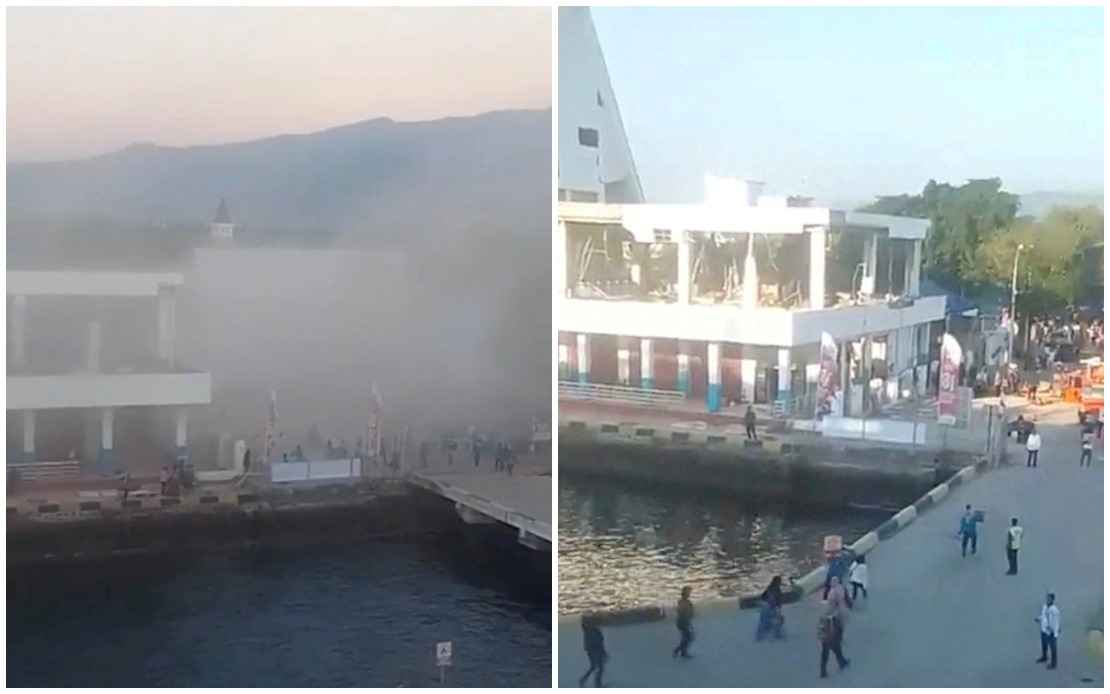
Eastern Indonesia was struck by a severe magnitude 7.7 earthquake early Saturday morning, with the tremor originating near Mbay town in Nagekeo Regency off the coast of Flores Island. The initial quake and a series of powerful aftershocks have claimed at least 20 lives, according to rescue officials coordinating response efforts across the affected region. Six individuals sustained injuries, while search operations continue for two others still unaccounted for in the rubble.
Fathur Rahman, a senior official with the Maumere Search and Rescue Office, confirmed these casualty figures on Saturday, revealing the growing toll as damage assessments progressed throughout the day. The seismic event triggered widespread destruction across multiple municipalities in East Nusa Tenggara, prompting immediate mobilisation of emergency response teams and humanitarian assistance workers to affected communities.
Melki Laka Lena, the governor of East Nusa Tenggara province, addressed media personnel at a press conference held in Kupang, reporting that residential and commercial structures sustained severe damage across the impacted zone. Significant stretches of road infrastructure either collapsed or became impassable following landslides triggered by ground movement, severely hindering initial rescue and assessment operations. Local authorities acknowledged they were still compiling comprehensive data to determine the complete scope of destruction affecting the region.
Social media footage captured shocking scenes of building structures disintegrating, with debris scattered across streets as panicked residents fled to open spaces. Video recordings documented the chaos and confusion among affected populations as the initial tremor struck, followed by sustained fear during the succession of powerful aftershocks that rattled the region throughout Saturday morning and afternoon.
Transportation links serving the province were immediately disrupted, with multiple commercial flights to East Nusa Tenggara being cancelled as airlines suspended operations pending safety assessments. The suspension of air services complicated efforts to deploy additional rescue personnel and humanitarian supplies to the disaster zone, forcing authorities to coordinate relief efforts through alternative transportation channels.
The Chinese Consulate General in Denpasar issued an urgent advisory to citizens within its consular jurisdiction on Saturday morning, particularly targeting tourists visiting the popular holiday destination of Labuan Bajo. The consulate directed all Chinese nationals in the affected regions to maintain heightened vigilance and remain informed through official disaster warning systems. Specific instructions emphasised the need to monitor earthquake and tsunami advisories issued by Indonesian authorities, while urging residents and visitors to exercise extreme caution regarding aftershock risks and potential tsunami activity affecting coastal regions.
Indonesia's Meteorology, Climatology and Geophysics Agency initially issued a tsunami warning following the primary earthquake but subsequently lifted the alert after determining that ocean hazards did not pose an immediate threat to populated coastal communities. Nevertheless, the agency continued issuing warnings to residents and emergency personnel, urging sustained vigilance against the possibility of additional significant aftershocks that commonly follow major seismic events. Such guidance reflected standard protocols for managing earthquake responses in tectonically active regions prone to cascading seismic activity.
The disaster underscores Indonesia's vulnerability to natural hazards stemming from its position along the Pacific Ring of Fire, where numerous tectonic plates converge and generate frequent seismic activity. East Nusa Tenggara, situated in the nation's eastern periphery, remains particularly susceptible to earthquakes given its complex geological setting. This latest event represents a reminder of the ongoing risks facing island communities across the archipelago, where millions of residents live in earthquake-prone areas with varying degrees of disaster preparedness infrastructure.
For Malaysia and other Southeast Asian nations, the Flores earthquake serves as a sobering reminder of regional seismic hazards and the importance of maintaining robust emergency response capabilities. The incident demonstrates how major tremors can rapidly overwhelm local resources and necessitate rapid coordination between government agencies, international partners, and humanitarian organisations. Malaysian authorities regularly coordinate with Indonesian counterparts on disaster management protocols, recognising that significant natural disasters in neighbouring countries can have spillover effects affecting regional stability and cross-border populations.
Rescue operations were expected to continue throughout the following days as teams systematically searched through damaged structures for survivors and retrieved deceased individuals. Emergency coordinators indicated that ongoing aftershock activity complicated rescue efforts, as teams had to balance the urgency of locating survivors with ensuring personnel safety amidst unstable structures and continuing ground movement. International assistance was anticipated as the full scale of damage became apparent and local capacity constraints emerged.

