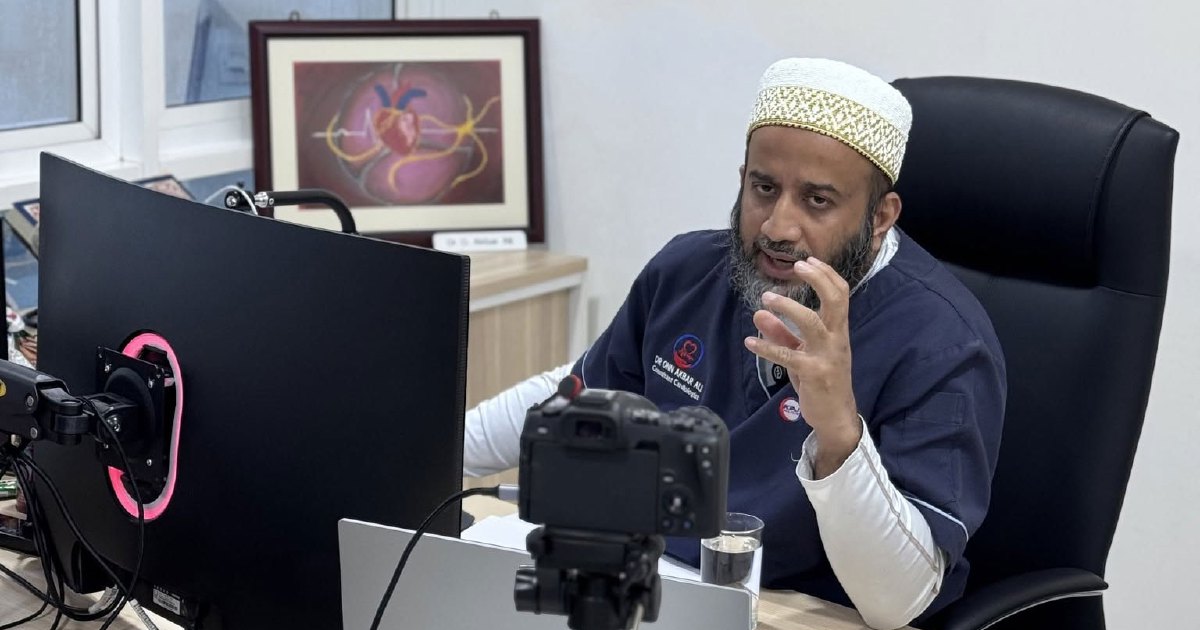
When consultant cardiologist Dr Onn Akbar Ali searched his name online, he made a troubling discovery: a fabricated video circulating on social media featuring his likeness and voice endorsing herbal tea as a diabetes remedy. The deepfake was so convincing that unsuspecting patients might reasonably have believed he personally stood behind the product—a false attribution that could carry serious health consequences for vulnerable people seeking genuine medical guidance.
The incident involving Dr Onn Akbar Ali represents a watershed moment in how fraud is conducted within Malaysia's healthcare ecosystem. Rather than targeting consumers directly with crude sales pitches, criminal networks are now deploying sophisticated artificial intelligence to impersonate trusted medical professionals. This approach lends false legitimacy to unverified treatments and exploits the implicit trust Malaysians place in their doctors. The targeting of established physicians—those with verified credentials and public visibility—amplifies the deception's effectiveness across digital platforms where health misinformation spreads rapidly.
Deepfake technology relies on machine learning algorithms that can synthesise video and audio with remarkable fidelity. By training neural networks on publicly available footage of real doctors, fraudsters can generate convincing impersonations in a matter of hours. The barrier to entry has collapsed: sophisticated deepfake tools now exist at minimal cost, requiring only basic technical knowledge rather than film production expertise. This democratisation of manipulative technology means criminal enterprises can scale their operations across multiple jurisdictions simultaneously, targeting dozens of respected medical practitioners in coordinated campaigns.
The implications for Malaysia's healthcare landscape are profound. Patients who encounter such deepfakes may lose confidence in their own doctors or abandon prescribed treatments in favour of unproven alternatives. Regulatory bodies like the Medical Device Authority and the National Pharmaceutical Regulatory Agency face an upstream challenge: these fabricated endorsements circulate faster than traditional enforcement mechanisms can respond. By the time investigators identify a fraudulent video, it may have already influenced purchasing decisions across thousands of households. The economic harm extends beyond individual victims to erosion of institutional trust in Malaysia's entire medical establishment.
Criminal operators behind these scams are typically targeting chronic disease sufferers—people with diabetes, hypertension, or arthritis—who experience genuine frustration with expensive conventional treatments. By leveraging AI-generated medical credibility, perpetrators bypass psychological defences that citizens might otherwise maintain against online sales pitches. A video purporting to show a cardiologist recommending a herbal supplement carries far more persuasive weight than an anonymous testimonial. This targeting of vulnerable populations for fraudulent health products represents a particularly insidious evolution in cybercrime, one where artificial intelligence amplifies predatory intent.
The Southeast Asian context adds urgency to this problem. Across the region, rapidly expanding internet penetration and growing e-commerce adoption have created ideal conditions for health fraud. Malaysia's digital economy is largely unregulated at the point of content creation; social media platforms operate with minimal local oversight of health claims. Meanwhile, populations in neighbouring countries like Indonesia and the Philippines face even fewer regulatory safeguards, making them attractive targets for criminal networks that simply redirect the same deepfakes across borders. A video generated in one country can trigger massive fraud campaigns throughout Southeast Asia within days.
Healthcare professionals like Dr Onn Akbar Ali bear an unfair burden in this new threat environment. Their professional reputation—accumulated over years of education, practice, and patient trust—can be weaponised against them without their knowledge or consent. Beyond reputational damage, doctors may face patient complaints or regulatory scrutiny when patients claim they followed the deepfake's false medical advice. Some physicians may resort to legal action, but the speed and scale of digital dissemination means they're often pursuing accountability after the damage has already spread irreversibly.
Malaysia's regulatory response has lagged behind the technological threat. The Malaysian Medical Council and the Communications and Multimedia Content Forum lack clear protocols for identifying and removing deepfake medical content. Existing legislation addresses fraud and defamation but not the specific phenomenon of synthetic media impersonation. Unlike some countries that have begun classifying deepfake creation as a specific criminal offence, Malaysia's legal framework remains inadequate for prosecuting perpetrators who operate across international jurisdictions.
Social media platforms operating in Malaysia—Facebook, Instagram, TikTok, and YouTube—have developed general deepfake policies, but enforcement remains inconsistent and largely reactive. Platforms rely heavily on user reports rather than proactive detection. The commercial incentive structures of social media companies mean health misinformation often remains visible longer than other fraudulent content, as engagement metrics reward controversial claims. A fabricated medical endorsement that generates outrage will reach far larger audiences than legitimate health communication posted by actual doctors.
The solution requires coordination across multiple sectors. Malaysia's health ministry should collaborate with the Malaysian Communications and Multimedia Authority to establish rapid-response protocols for identifying and removing synthetic media medical fraud. Legislation should specifically criminalise the creation and distribution of deepfakes impersonating healthcare workers, with provisions for international cooperation. Technology companies should invest in detection systems capable of identifying AI-generated medical content before it circulates widely. Medical professionals themselves might consider registering distinctive voice and biometric signatures with platforms, creating verifiable markers that distinguish authentic communications from fabrications.
For Malaysian patients, the immediate lesson is skepticism toward health advice encountered on social media, even when purportedly delivered by recognisable medical figures. Patients should verify major health claims through direct consultation with healthcare providers, independent medical authorities, or published clinical evidence. The appearance of a doctor endorsing a product online should never substitute for informed discussion with one's own physician. As deepfake technology advances, maintaining this cognitive firewall becomes increasingly essential.
The targeting of Dr Onn Akbar Ali and other healthcare professionals signals that artificial intelligence-enabled fraud has entered a maturation phase. The attacks are no longer experimental proofs of concept but organised campaigns designed for maximum deception. Unless Malaysia rapidly develops regulatory and technological countermeasures, health fraud powered by synthetic media will become routine, eroding public health outcomes and the credibility of the medical profession across Southeast Asia.

