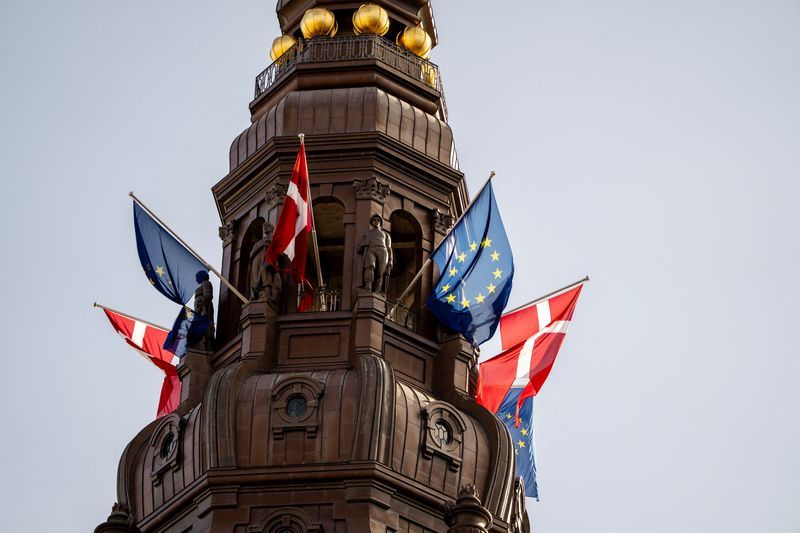
The Danish government has formally entered a high-stakes legal dispute at the European Court of Justice, backing Belgium's position in a case that challenges how technology companies compensate news publishers for content. The intervention, announced by Denmark's Culture Ministry on Monday, reflects growing concern across Europe about the economic viability of journalism in the digital age and the power asymmetry between global tech platforms and regional media houses.
At the heart of the dispute lies Article 15 of the European Union's Digital Single Market Directive, legislation designed to protect the intellectual property rights of news publishers when their work appears on digital platforms. The case, informally known as Streamz after one of the defendants, was originally filed in 2023 by a coalition of major technology firms: Streamz, Google, Meta, Spotify, and Sony. These companies argue that Belgium's implementation of the directive goes beyond what EU law permits and imposes unreasonable obligations on them to negotiate licensing agreements or pay compensation for published news content that appears on their services.
Denmark's decision to intervene carries particular weight in Brussels, as the Nordic nation has long positioned itself as a defender of media freedom and democratic values. The Danish government will participate in oral hearings scheduled for July 6 and 7, presenting arguments that underscore why the European legal order must ensure tech companies pay for journalistic content. Culture Minister Zenia Stampe framed the issue not merely as a matter of intellectual property but as a question of democratic health, warning that allowing platforms to use media content without compensation would devastate Danish journalism and ultimately weaken the information ecosystem that democracy depends upon.
The strategic calculus behind Denmark's intervention reflects a broader pattern emerging across smaller and medium-sized European economies. While tech companies argue that news links and snippets on their platforms actually drive traffic to publisher websites, governments and media organizations counter that this argument undervalues professional journalism and shifts economic benefit entirely to the platforms. Denmark's participation signals that this debate resonates beyond Belgium and suggests coordinated European resistance to what many view as the extractive business models of Silicon Valley firms.
The Streamz case represents only one front in Europe's struggle to regulate tech company behavior toward traditional media. Denmark has simultaneously engaged with another landmark case involving Google's use of press releases to train artificial intelligence systems, further demonstrating the government's determination to establish clear rules about how technology firms can exploit journalistic and editorial work. These parallel cases indicate that European courts will soon need to delineate exactly what "compensation for content" means in practical terms and which specific uses of publisher material trigger payment obligations.
For regional publishers in Southeast Asia and other developing markets, the outcome of this case carries instructive implications. Many news organizations across the region face identical challenges: platforms like Meta and Google command enormous audience reach while capturing the vast majority of digital advertising revenue that once sustained newsrooms. Publishers in Malaysia, Indonesia, and Thailand have watched their business models erode as readers increasingly encounter news through social media feeds rather than visiting news websites directly. The European legal precedent being established could eventually influence how such disputes are resolved elsewhere.
The tech industry's resistance to compensation schemes reflects genuine concerns about operational complexity and cost, but it also reveals a fundamental disagreement about what constitutes fair value exchange in digital ecosystems. Google and Meta maintain that publishers benefit substantially from platform distribution, that users retain choice about where to consume news, and that imposing licensing fees would disproportionately burden smaller platforms and startups. However, Denmark's intervention underscores the view that this market dynamic creates perverse incentives, incentivizing platforms to prioritize engagement and sensationalism over quality journalism, since all content—regardless of production cost or editorial rigor—competes equally for attention.
The timing of Denmark's intervention comes amid broader European regulatory momentum. The Digital Services Act, which took effect in 2024, established new obligations for large online platforms regarding content moderation and transparency. That regulatory environment has emboldened smaller nations to pursue additional protections for domestic media industries. Denmark's move suggests that European governments increasingly view journalist compensation as inseparable from platform regulation more broadly, interpreting media sustainability as a public policy priority equivalent to consumer protection or competition law.
One significant dimension that the Streamz case will clarify concerns the definition of journalistic content worthy of protection. Does compensation extend to all news articles, or only to original reporting? How should payments be calculated when content is shared with attribution but without substantial excerpts? The answers will shape how tech companies negotiate with publishers globally. If the European Court of Justice rules definitively that platforms must compensate for any use of publisher content, compliance costs could indeed rise sharply, potentially shifting platform economics in ways that disadvantage smaller news organizations unable to negotiate favorable terms.
Denmark's Culture Minister explicitly connected the legal argument to democratic concerns, framing this not as a narrow business dispute but as a question about whether democracies can sustain independent journalism when technology companies control distribution without accepting corresponding responsibility for content sustainability. This framing has proven persuasive in Nordic political culture, where media freedom and press independence carry exceptional value as cornerstones of democratic governance.
The oral hearings in July represent a critical moment when European judges will hear detailed arguments about how Article 15 should be interpreted and applied. Denmark's intervention ensures that smaller European nations' perspectives will be represented, challenging any narrative that only large technology firms' interests merit consideration. The case also demonstrates that while tech companies have mobilized substantial legal resources, multiple European governments have likewise prioritized defending publishers' interests, suggesting genuine uncertainty about how courts will ultimately balance competing claims.

