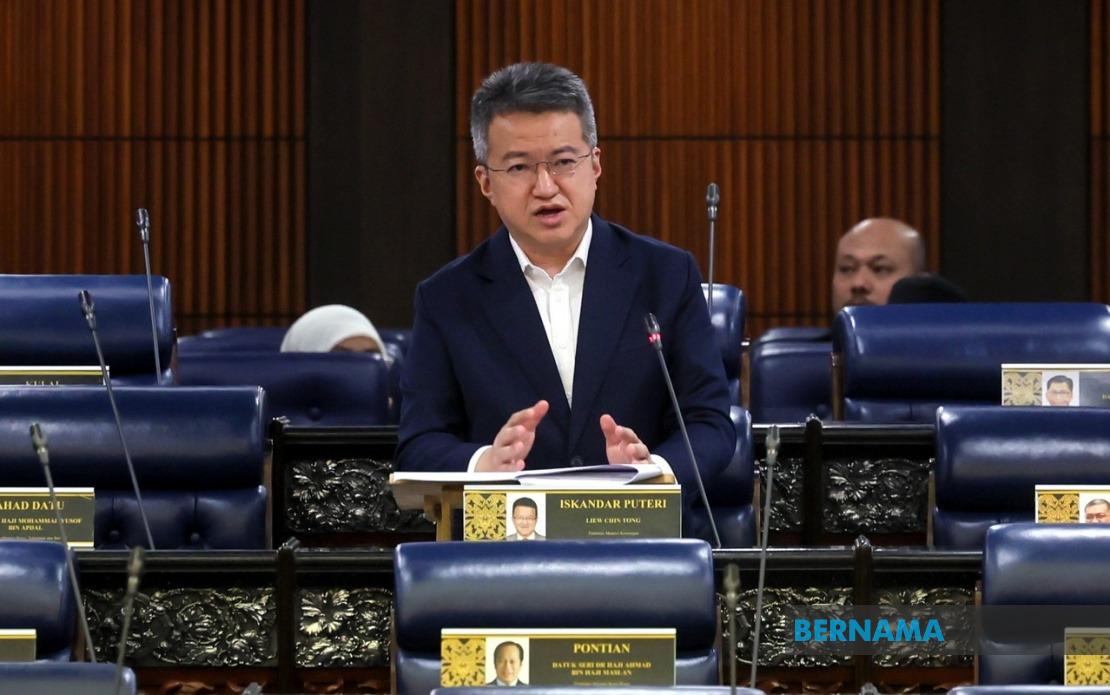
Malaysia's Deputy Finance Minister Liew Chin Tong has categorically denied claims that fugitive businessman Low Taek Jho, commonly referred to as Jho Low, slipped into the country within a Chinese delegation last year to conduct undisclosed negotiations regarding the sprawling 1Malaysia Development Berhad scandal. The terse dismissal came during parliamentary Question Time when opposition legislator Syed Saddiq Syed Abdul Rahman raised the matter, citing media accounts of alleged clandestine meetings aimed at securing a 1MDB repayment arrangement involving Malaysia's Finance Ministry.
The allegation surfaced as Parliament continued scrutinising the government's efforts to recoup the massive sums diverted through 1MDB, one of the most audacious financial frauds in recent Asian history. Syed Saddiq's supplementary question referenced late 2024 reports suggesting that Jho Low, who has evaded international law enforcement for years, had participated in secretive high-level discussions to negotiate settlement terms. The claim, if substantiated, would represent an extraordinary development in a scandal that has consumed Malaysian politics and diplomacy for over a decade.
Addressing the broader parliamentary enquiry from Chong Chieng Jen on the government's approach to 1MDB's outstanding obligations and fund recovery mechanisms, Liew outlined the administration's multifaceted strategy to retrieve misappropriated assets. He highlighted that authorities continue pursuing both criminal prosecutions and civil recovery actions, maintaining sustained legal pressure on key figures implicated in the scheme. This dual-track approach reflects Malaysia's determination to extract accountability through multiple legal channels simultaneously, recognising that criminal convictions and asset recovery proceed along separate but interconnected tracks.
A significant milestone in the government's enforcement efforts materialised when the High Court handed down a substantial sentence against former Prime Minister Datuk Seri Najib Tun Razak on December 26, 2025. The court convicted Najib on 25 charges encompassing money laundering and misuse of executive power to secure illicit personal gain connected to 1MDB operations, sentencing him to 15 years' imprisonment while imposing a concurrent fine of RM11.38 billion. This judgment represents the most comprehensive judicial reckoning to date against any figure in the scandal's upper echelons, establishing precedent for holding senior political leadership accountable for institutional plunder.
Beyond Najib's conviction, the government has pursued civil remedies against other connected parties. The Ministry of Finance has initiated legal action against Datin Seri Rosmah Mansor, Najib's former spouse, seeking damages totalling approximately US$380 million, equivalent to roughly RM1.56 billion. This civil claim specifically targets the appropriation of 1MDB resources allegedly diverted for acquiring high-end luxury commodities, encompassing designer handbags and precious jewellery. The targeting of personal consumption financed through sovereign wealth fund misappropriation underscores the brazen character of the theft, transforming official development capital into private indulgence.
Jho Low, identified as the principal architect orchestrating the systematic plunder of 1MDB, remains the focus of intensive enforcement activity despite his fugitive status. The government has mounted substantial civil litigation against the businessman with claims valued at US$3.78 billion, approximately RM15.4 billion, alongside parallel criminal proceedings. This aggressive pursuit of Jho Low across multiple jurisdictions and legal domains reflects recognition that the scandal's architect and primary beneficiary must face comprehensive accountability, notwithstanding geographical obstacles to his apprehension.
The 1MDB debacle has inflicted multifaceted harm extending beyond simple numerical accounting of missing funds. Liew identified four distinct categories of quantifiable and qualitative damage to the nation. Direct financial losses represent the most readily apparent category, encompassing the billions diverted from the development fund itself. Beyond these immediate pecuniary harms, the scandal triggered substantial opportunity costs, reflecting foregone economic development and investment opportunities that the appropriated capital might have generated had it remained deployed toward legitimate developmental purposes. A third category encompasses losses deemed irrecoverable through conventional legal mechanisms, representing capital and assets permanently lost to the Malaysian state. Most insidiously, the 1MDB affair inflicted severe reputational damage to Malaysia's international standing, undermining investor confidence, complicating diplomatic relations, and casting the nation as vulnerable to institutional corruption at the highest levels.
The deputy minister's categorical denial of Jho Low's alleged entry into Malaysia carries significance beyond the immediate factual claim. Such allegations periodically surface, reflecting persistent rumours circulating in financial and diplomatic circles regarding secret negotiations or settlements. Each denial reinforces the government's stated position of pursuing comprehensive accountability rather than accepting negotiated arrangements that might compromise full justice. The parliamentary exchange underscores ongoing political sensitivity surrounding 1MDB, which continues generating scrutiny across legislative sessions despite the passage of years since initial revelations emerged.
For Malaysian citizens and regional observers, the unfolding 1MDB recovery saga demonstrates extended legal processes required to address large-scale institutional fraud involving politically connected defendants and assets distributed across international jurisdictions. The convictions, civil suits, and asset recovery efforts represent ongoing vindication of governance principles and the rule of law, yet the continued presence of key fugitives like Jho Low abroad illustrates the persistent challenges confronting nations seeking accountability for transnational financial crimes. Malaysia's experience offers sobering lessons regarding both the vulnerability of sovereign wealth mechanisms to exploitation and the protracted institutional commitment necessary to prosecute systematic state-level theft.

