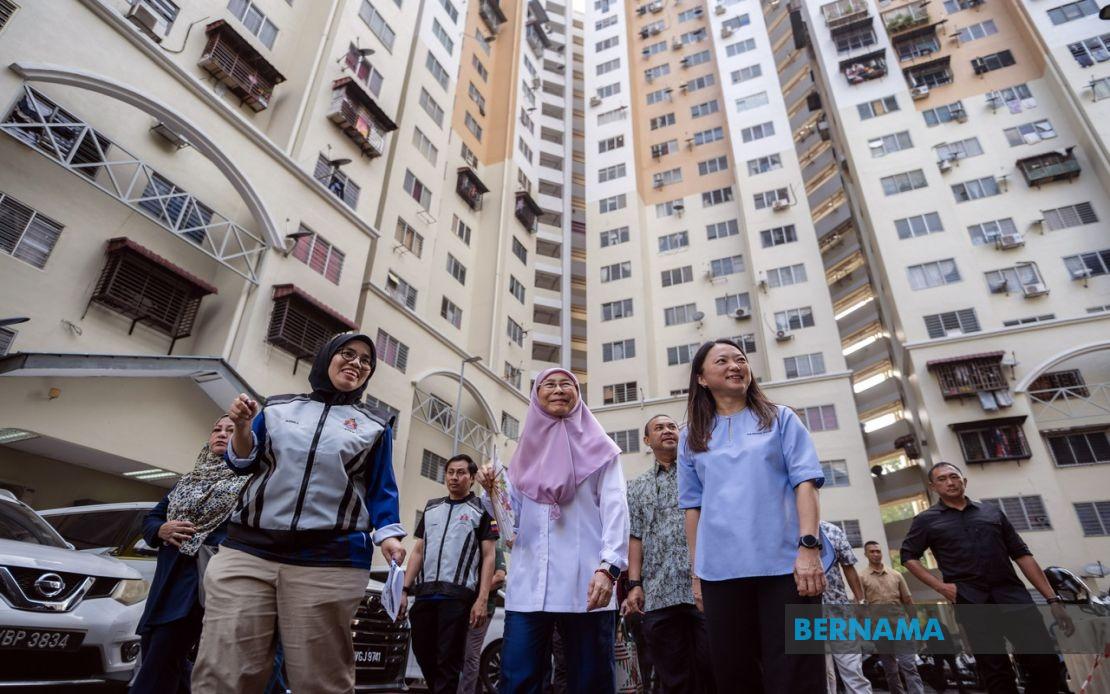
The Desa Tun Razak People's Housing Project in Kuala Lumpur has officially finished its comprehensive upgrading programme, positioning itself among the first wave of completed renovations in the federal capital's ambitious public housing modernisation drive. The RM9.6 million investment in this ageing residential complex represents tangible progress on a broader governmental commitment to systematically overhaul deteriorating facilities across the city's 61 People's Housing Projects, with Minister in the Prime Minister's Department (Federal Territories) Hannah Yeoh confirming that 22 projects have now reached completion status.
The completion of this particular upgrade holds particular significance given the Desa Tun Razak facility's history and current resident demographics. Operating continuously since 1998, the development now houses more than 8,000 residents whose living standards have been substantially compromised by years of deferred maintenance and aging infrastructure. Rather than pursuing piecemeal repairs triggered by immediate crises, the government has articulated a fundamental shift in approach toward planned, holistic upgrading that addresses root causes of deterioration before they escalate into serious safety concerns.
Hannah Yeoh's public statements reveal the philosophical underpinning of this new strategy. The minister emphasised that ad hoc maintenance regimes, however well-intentioned, create structural vulnerabilities that ultimately undermine resident safety and project longevity. By establishing dedicated maintenance funding rather than relying on reactive responses to individual facility failures, policymakers aim to institutionalise prevention rather than perpetual crisis management. This distinction matters considerably for public housing sustainability across Malaysia's urban centres, where similar ageing complexes face comparable infrastructure challenges.
The RM300 million budgetary allocation approved for this calendar year represents the government's financial commitment to translating strategic intent into concrete action. Significantly, this funding secured cross-party backing from all Kuala Lumpur Members of Parliament, indicating broad political consensus that public housing maintenance transcends partisan divisions. For residents in federal territories, this bipartisan support suggests heightened durability for the programme, as continued implementation should survive normal electoral cycles and political transitions.
The specific works undertaken at Desa Tun Razak address the facility's most pressing vulnerabilities with documented urgency. Kuala Lumpur Mayor Datuk Fadhlun Mak Ujud provided detailed breakdowns of the expenditure: RM7 million directed toward comprehensive repainting that refreshes structural appearance while protecting underlying materials, RM1.68 million dedicated to fire prevention infrastructure and electrical system modernisation, and approximately RM1 million allocated for road resurfacing that restores safe pedestrian and vehicular access. These figures underscore the multifaceted nature of modern housing upgrading, which demands simultaneous attention to aesthetic, safety, and functional dimensions.
The emphasis on fire safety improvements reflects lessons learned from recent troubling incidents. Last year witnessed multiple fire emergencies at various People's Housing Projects across Kuala Lumpur, traumatic events that galvanised official attention toward prevention infrastructure. The upgraded fire riser systems and enhanced drainage mechanisms at Desa Tun Razak represent direct responses to these real-world disasters, signalling that resident feedback and crisis analysis actively inform improvement priorities rather than following predetermined templates divorced from actual conditions.
Parallel to these major infrastructure investments, complementary measures address quality-of-life concerns that significantly impact resident satisfaction. The parking shortage that characterises many older public housing developments contributes to daily friction and community deterioration. Kuala Lumpur City Hall's identification of suitable vacant land for temporary parking arrangements demonstrates attention to practical livability factors beyond structural safety, acknowledging that resident wellbeing encompasses convenient access to essential facilities alongside fundamental infrastructure integrity.
Bandar Tun Razak Member of Parliament Datuk Seri Dr Wan Azizah Wan Ismail's intervention at the completion ceremony highlighted an essential truth that frequently escapes public discourse surrounding infrastructure investment. Government expenditure on upgrading projects creates only the foundation for long-term improvement; sustained benefit ultimately depends upon resident stewardship and community commitment to maintaining upgraded facilities. Her call for residents to cultivate protective attitudes toward both public and private property within the development acknowledges that external improvements succeed only when complemented by internal community values that prioritise collective welfare.
The timeline for completing the remaining 39 projects within the 61-property portfolio remains ambitious but achievable. Fadhlun's projection that all upgrades funded through the RM300 million allocation should reach completion by year's end provides a concrete target against which progress can be measured. Should this deadline hold, Kuala Lumpur would accomplish a remarkable transformation of its public housing landscape within a compressed timeframe, potentially establishing a model for other Malaysian states managing comparable facilities.
The Desa Tun Razak completion carries broader implications for how Malaysia approaches its ageing public infrastructure generally. People's Housing Projects serve predominantly low-income urban populations whose limited resources render them dependent on government maintenance commitment. By demonstrating that systematic upgrading remains feasible even for facilities operating across two decades, policymakers signal that public housing need not inevitably deteriorate into uninhabitable conditions through neglect. This commitment becomes increasingly important as Malaysia's housing stock ages and lower-income communities face heightened vulnerability to inadequate shelter conditions.
Regional observers may note that this systematic approach contrasts with some jurisdictions where public housing degradation proceeds unchecked until facilities become irretrievable. The federal territories initiative suggests that political will, adequate funding, and coordinated implementation across political boundaries can reverse decades of deferred maintenance. For Southeast Asian governments managing comparable public housing portfolios, the Desa Tun Razak experience offers both practical lessons regarding cost-effective upgrading strategies and broader reassurance that public sector housing programmes can retain viability through deliberate investment and administrative discipline.

