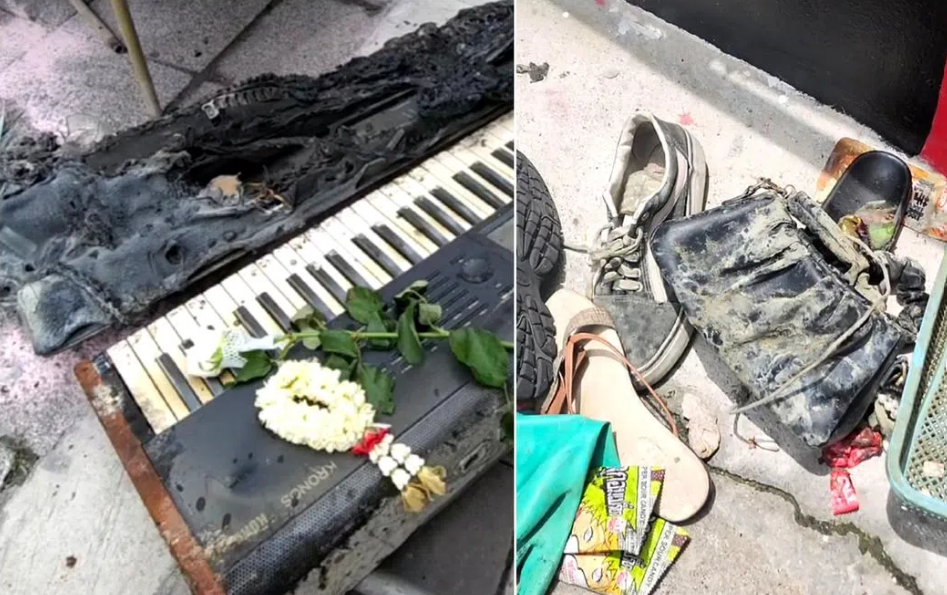
A television news broadcast froze Suwanna Saeteaw, 38, in anguish when she recognised her 25-year-old sister Jarawee Sermsiri's mobile phone among personal effects recovered from the charred Rong Beer Na Lat Phrao bar. The discovery came hours after a raging inferno swept through the single-storey establishment near midnight on July 12, leaving at least 28 dead and more than 70 injured. When Suwanna dialled the number, a rescue worker picked up, shattering any lingering hope that Jarawee had escaped the flames that consumed the building in minutes. The scene revealed the human toll of the tragedy unfolding across Bangkok's hospitals and forensic centres, where families circulated among survivor lists and unclaimed bodies, torn between devastating despair and stubborn determination to locate their loved ones.
The fire represents Thailand's deadliest such incident in nearly two decades, surpassed only by the 2009 Santika club blaze that killed 67 people and injured over 200 during New Year celebrations. The rapid recurrence of a major entertainment venue fire raises uncomfortable questions about the nation's capacity to implement and enforce fire safety regulations, despite existing legal frameworks. Suwanna's ordeal—moving between multiple hospitals and forensic facilities, providing DNA samples that would take three days to process—illustrates the gruelling reality facing dozens of families. "I'm heartbroken right now, but I'm still hoping that my sister's alive and receiving treatment at one of the hospitals," she told journalists on the evening of July 13, her voice trembling with barely contained emotion.
Investigators immediately focused on structural and operational failures that may have transformed the venue into a death trap. Bangkok Governor Chadchart Sittipunt revealed that authorities were examining whether combustible ceiling materials had accelerated the fire's spread, and critically, whether emergency exits had been obstructed or locked. The bar had recently passed an official inspection in April, yet held approximately 300 customers that evening—well below its typical capacity of 600 to 700 patrons, suggesting the fire occurred during a relatively quiet period. The speed at which flames reached the ceiling proved decisive; thick black smoke accumulated rapidly in the low-ceilinged space, likely becoming the primary cause of death as patrons became disoriented and unable to locate exits.
National police chief Kitrat Panphet disclosed a chilling detail: most victims were discovered in the toilets, where they had fled seeking refuge as panic and darkness overwhelmed the crowded space. The absence of emergency lighting proved catastrophic, leaving trapped patrons unable to orient themselves toward exits. Investigators discovered that one emergency door had been obstructed by a shelf, creating a bottleneck that allowed only single-file evacuation when every second counted. The 50-year-old building's electrical wiring and decorative materials came under scrutiny, with officials examining whether aging infrastructure or flammable furnishings had contributed to the conflagration's intensity. The bar's owner remained hospitalised in intensive care, limiting authorities' ability to question him about operational procedures and safety protocols.
Structural engineer Amorn Pimanmas, president of the Thailand Structural Engineers Association, conducted an on-site inspection and identified a particularly dangerous combination of factors. The venue's low ceiling and polyurethane foam decorations—common in entertainment venues across Southeast Asia—had allowed toxic smoke to accumulate at breathable height, trapping patrons within minutes. His assessment illuminated a fundamental enforcement gap: Thailand possesses fire safety legislation, yet the critical challenge lies in consistent implementation and compliance monitoring. "It's not like we don't have the law. It's the problem of how the law can be strictly enforced," he explained, capturing a structural problem affecting similar venues throughout the region where regulations exist on paper but inspections remain inconsistent or perfunctory.
Prime Minister Anutin Charnvirakul visited the devastated site and identified "blind spots" within the venue where fire escape routes remained invisible or inaccessible to panicked patrons. His warning that "there will be no leniency if any laws have been broken" signalled potential criminal liability for venue operators, though enforcement of such pronouncements often depends on political momentum and public attention. The government's response comes amid renewed scrutiny of entertainment venue safety standards, particularly concerning bars and nightclubs where cramped layouts, poor lighting, and combustible decorations create inherent risks. The convergence of multiple failures—obstructed exits, absent emergency lighting, flammable materials, and potentially inadequate ventilation—transformed a licensed venue into a confined inferno in minutes.
Witness accounts from patrons and staff revealed a venue that exhibited warning signs long before the catastrophe. Chaiyo Piwisol, a 30-year-old waiter who had visited the bar on three previous occasions, described a perpetually cramped and crowded environment with narrow doors and extensive decorations hanging from the ceiling. His observation that "there should have been stronger safety measures" reflected the casual acceptance of substandard conditions that characterises many entertainment venues in Southeast Asia, where cost-cutting and aesthetic preferences often override safety considerations. The accumulation of these factors—structural design, operational practices, and apparent indifference to safety protocols—created conditions that allowed a fire to become a mass casualty event within minutes.
Survivor Panathaporn Thongyord, 19, escaped but lost a close friend of 14 years in the blaze. Her haunting recollection of her friend's final words—"Just get out. Don't come back to help me"—and subsequent frustration about an inaccessible back door captures the desperation of those trapped inside. The speed of the tragedy meant that split-second decisions about which direction to run often proved fatal, and structural failures transformed routine decisions into life-or-death choices. Her demand for justice and transparency about why emergency exits couldn't be opened echoes the demands of countless family members now searching hospitals and awaiting DNA identification results.
The tragedy carries implications extending far beyond Bangkok's entertainment district. Similar venues throughout Southeast Asia—in Malaysia, Thailand, Vietnam, and elsewhere—operate under comparable conditions, with enforcement remaining inconsistent and venue operators frequently prioritising profit over comprehensive safety upgrades. The Rong Beer Na Lat Phrao fire, like the Santika club disaster 15 years earlier, will likely generate temporary regulatory attention before institutional memory fades and enforcement lapses resume. Without systematic improvements to inspection protocols, mandatory safety upgrades, and genuine consequences for violations, the region remains vulnerable to recurrence.
The identification process itself underscores the scale of devastation. Authorities stated that DNA analysis would require approximately three days, an agonising wait for families desperate for closure or reunited hope. Suwanna's determination to search hospitals and forensic centres while awaiting scientific confirmation reflects the emotional labour demanded of families confronting mass casualty incidents. The abandoned shoes and bags scattered outside the charred venue—remnants of patrons who fled in panic—serve as physical evidence of the chaos that consumed the space in minutes, transforming an entertainment venue into a crime scene requiring forensic investigation.
As authorities investigate the precise cause of ignition, the underlying factors remain disturbingly clear: a combination of structural design flaws, inadequate emergency systems, combustible materials, and apparent indifference to safety protocols created conditions where a fire became inevitably catastrophic. The investigation promises scrutiny of electrical systems, decorative materials, and exit accessibility, yet the deeper question concerns institutional capacity to enforce existing regulations consistently. Thailand's entertainment industry, valued for its economic contribution to the tourism sector, operates within a regulatory environment where inspections appear conducted as formalities rather than genuine safety assessments. The 28 confirmed dead and 70 injured represent not merely a tragedy, but evidence of systematic failures that regulation alone cannot resolve without accompanying political will to enforce compliance rigorously.

