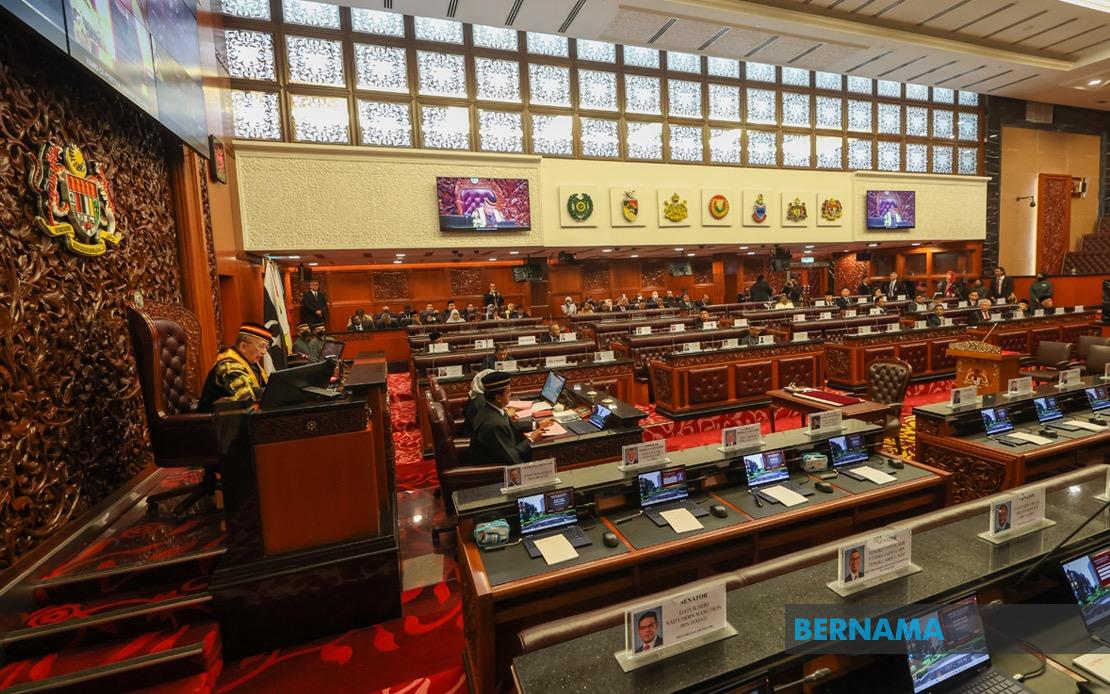
Malaysia's Dewan Negara has wrapped up its second parliamentary sitting of the year with the passage of two significant pieces of legislation aimed at modernising the nation's governance and statistical infrastructure. The 10-day session, which ran from July 20 through early August, saw lawmakers tackle the National Trust Fund Bill 2026 and the Statistics Bill 2026, both designed to address structural gaps in how the country manages its financial commitments and collects economic data. Beyond these headline measures, the sitting revealed the government's multifaceted approach to addressing everything from energy security to attracting premium foreign investment, indicating a strategic pivot toward addressing long-term economic sustainability in an increasingly volatile geopolitical environment.
Deputy Finance Minister Liew Chin Tong introduced the National Trust Fund Bill, which seeks to impose greater rigour on how withdrawals from the fund are administered and approved. The legislation represents an effort to tighten governance mechanisms that have occasionally drawn scrutiny over spending discipline. Simultaneously, Deputy Economy Minister Datuk Mohd Shahar Abdullah tabled the Statistics Bill 2026, which creates a modernised legal architecture for gathering and publishing national statistical data. Both pieces of legislation underscore the government's commitment to institutional strengthening at a moment when Malaysia faces mounting pressures to demonstrate fiscal competence and transparent governance to both domestic stakeholders and international investors.
The fiscal dimension of the sitting proved particularly telling. Finance Ministry officials reported that federal fiscal discipline has tightened for the fifth consecutive year following implementation of sweeping economic and financial reforms. This improvement reflects a deliberate strategy to reduce the deficit without compromising the delivery of essential public services. Notably, spending controls applied during the first half of 2026 yielded nearly RM5 billion in expenditure restrictions, a figure that suggests meaningful progress in rightsizing government operations. The federal debt-to-GDP ratio has remained within statutory thresholds, a milestone that bolsters confidence among foreign creditors and reinforces Malaysia's position as a relatively stable borrower in regional markets where debt sustainability concerns loom larger elsewhere.
Energy security emerged as a critical preoccupation during the sitting. Government officials briefed lawmakers on the necessity of establishing a strategic petroleum reserve, weighing fiscal costs against the security advantages of such a buffer stock. The discussion reflected underlying anxieties about supply chain disruptions stemming from geopolitical tensions in West Asia, a region that supplies much of the crude oil and liquefied natural gas upon which Malaysia depends. To diversify energy sources and hedge against regional volatility, the Economy Ministry highlighted a recently concluded 20-year fuel supply agreement with Russia, encompassing petrol, diesel, crude oil and gas. Officials emphasised that this arrangement aligns with the National Energy Transition Roadmap objectives, suggesting that long-term diversification of supply sources is compatible with the nation's decarbonisation commitments, though critics may question the contradiction between energy transition goals and renewed reliance on fossil fuels from geopolitically sensitive suppliers.
Foreign direct investment formed another focal point of parliamentary attention. Japanese manufacturers have substantially deepened their commitment to Malaysia's electrical and electronics sector, with approved investments totalling RM10.5 billion across 46 projects between 2021 and 2025. These initiatives are expected to generate 9,009 jobs, reinforcing Malaysia's position as a preferred location for high-value semiconductor and electronics manufacturing in a region increasingly competing for such investments. This influx reflects confidence in Malaysia's political stability, skilled workforce, and established supply chain infrastructure, advantages that neighbouring countries continue to challenge through their own industrial incentive schemes.
Competitiveness metrics have also improved, according to government assessments presented during the sitting. Malaysia's ranking in the 2026 World Competitiveness Ranking reflected steady progress, positioning the nation on track to join the world's 12 most competitive economies by the end of the 13th Malaysia Plan period. This trajectory matters greatly for a middle-income country seeking to avoid the middle-income trap by transitioning toward higher-value economic activities and attracting investment in knowledge-intensive sectors rather than labour-intensive manufacturing alone.
Electric vehicle adoption has become a policy priority reflecting both environmental commitments and industrial strategy ambitions. The government confirmed that 6,416 public EV charging stations had been installed nationwide as of late May, with the Ministry of Investment, Trade and Industry emphasising that the EV ecosystem will continue expanding through private sector leadership rather than government price controls on charging services. This approach prioritises market mechanisms over state intervention, positioning Malaysia to benefit from global EV supply chain shifts without bearing the fiscal burden of subsidising charging infrastructure. However, the absence of price regulation may present affordability challenges for lower-income adopters attempting to transition from petrol vehicles.
State-owned institutions also faced renewed scrutiny during the sitting. Prime Minister Datuk Seri Anwar Ibrahim addressed parliamentary questions regarding the Retirement Fund Incorporated's performance, noting that a RM12.9 billion net profit should be evaluated with proper context. His remarks appear designed to defend the fund's investment strategy while acknowledging that certain positions, notably the high-profile investment in eFishery, had not yielded expected returns and provided instructive lessons for future capital allocation decisions. This transparency regarding underperforming investments suggests a maturation in how Malaysian policymakers discuss sovereign wealth management, moving away from defensive postures toward candid acknowledgement of both successes and setbacks.
Pos Malaysia's ongoing transformation initiative attracted parliamentary attention as the national postal operator pursues a path toward financial sustainability through network restructuring, digital service expansion, and cost discipline. The government indicated it is studying establishment of a Postal Service Fund to provide long-term financing for the operator, a move that would transform its business model from reliance on letter-delivery revenue toward a mixed funding approach. This evolution reflects global trends in postal service reform, where traditional letter volumes have declined and governments have increasingly stepped in to guarantee minimum service levels through dedicated funding mechanisms rather than expecting postal operators to remain fully self-sufficient.
Bank Negara Malaysia will implement a new Performance Measurement Framework for Development Financial Institutions from July 1, 2027, signalling intensified oversight of how state-backed lending agencies fulfil their development mandates. The framework promises more comprehensive assessment of DFI governance, operational efficiency, and actual developmental impact, moving beyond narrower financial metrics toward holistic evaluation. For Malaysian businesses, particularly small and medium enterprises dependent on development bank financing, this shift could eventually translate into more purposeful capital allocation aligned with national economic priorities.
The broader arc of the sitting reveals a government grappling with interconnected challenges: maintaining fiscal discipline while investing in future competitiveness, securing energy supplies while pursuing energy transition, and attracting premium foreign investment while ensuring local enterprises benefit from economic growth. These tensions are not unique to Malaysia, but the parliamentary sitting underscored the administration's conviction that institutional strengthening, strategic diversification, and market-oriented policy mechanisms offer the most promising path forward. Whether such an approach proves sufficient to navigate the economic uncertainties ahead remains an open question, particularly given the growing importance of geopolitical risk as a determinant of investment flows and supply chain stability in Southeast Asia.

