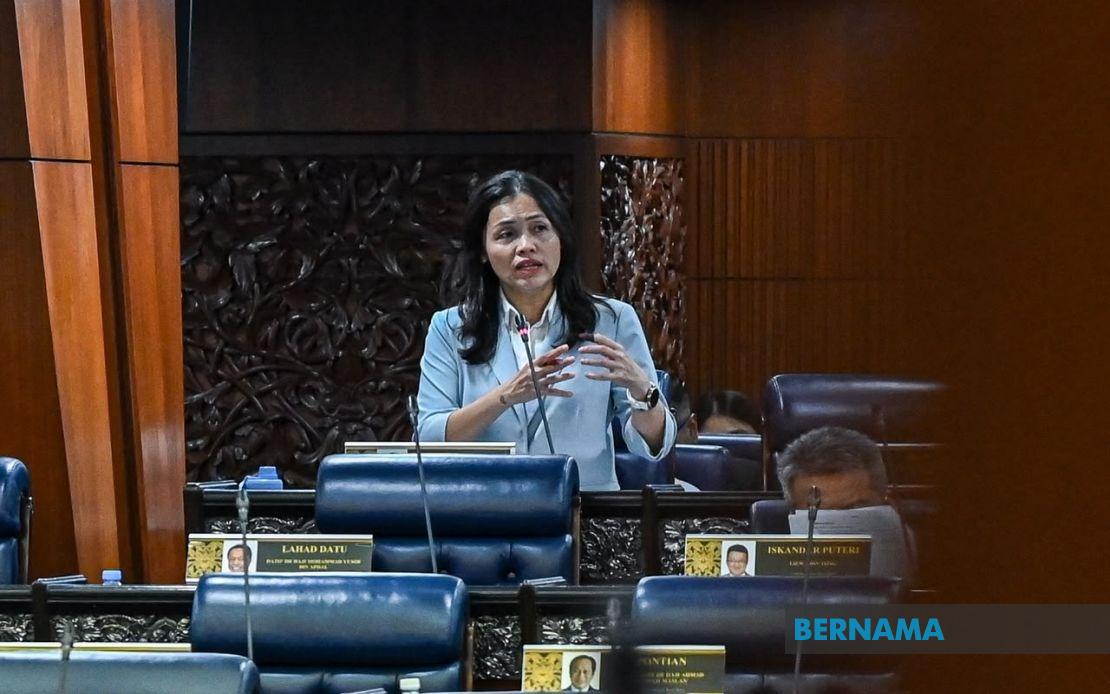
Parliament's lower house has greenlit critical amendments to the Communications and Multimedia Act, signalling the government's commitment to fortifying Malaysia's digital ecosystem against emerging technological and geopolitical challenges. The Dewan Rakyat passed the Communications and Multimedia (Amendment) Bill 2026 following debate among 18 Members of Parliament, with Deputy Communications Minister Teo Nie Ching emphasising that the legislation maintains a laser focus on the communications sector without intruding into areas regulated by other government bodies.
The amendments introduce a National Universal Service Provision (USP) initiative designed to weave security considerations into the fabric of Malaysia's broadband infrastructure. This move reflects policymakers' growing recognition that rapid technological evolution and shifting global power dynamics demand periodic refreshes to legal frameworks governing critical communications networks. Rather than expanding the regulatory scope of Act 588 into unrelated domains, the amendments carefully circumscribe their application to network facilities, application services, and associated infrastructure—keeping the legislative footprint narrow and purposeful.
A central concern animating the parliamentary discussion centered on whether service providers would pass USP costs downstream to consumers. Teo addressed this directly, clarifying that the USP Fund draws exclusively from contributions levied on licensed operators under Act 588, establishing a dedicated revenue stream that cannot be redirected elsewhere. This financial architecture effectively quarantines universal service obligations from general consumer billing, a critical reassurance for ordinary Malaysians already managing mobile and broadband subscriptions in a region where connectivity costs remain significant relative to incomes.
The legislation gains particular resonance in Southeast Asia's development context, where bridging connectivity divides between urban cores and underserved hinterlands remains a persistent challenge. Datuk Suhaimi Nasir, representing Libaran, seized on this reality during debate, urging the government to prioritise rural expansion across Sabah's diverse terrain—the peninsula's isolated coastal enclaves, island communities, and interior settlements where conventional market forces fail to justify infrastructure investment. His intervention underscores how rural connectivity gaps carry real consequences during crises, when emergency services depend on functioning networks to coordinate rescue operations and deliver humanitarian assistance.
The security dimension embedded in the amendments reflects a broader regional pivot toward digital sovereignty. By explicitly incorporating national security elements into the USP framework, Malaysia joins neighbouring countries in attempting to ensure critical communications infrastructure withstands both natural disruptions and deliberate interference. This proves particularly important given Southeast Asia's geographic vulnerability to natural disasters—cyclones, earthquakes, and floods that routinely cripple networks across the region. A resilient, secure USP network becomes essential infrastructure for disaster response and continuity of government functions.
Datuk Mohd Suhaimi Abdullah, speaking for Langkawi, raised scrutiny around the Kumpulan Wang USP balance sheet and its projected deployment. His questioning reflected legitimate parliamentary oversight concerning whether security enhancements might inadvertently drain resources allocated to the core mission of expanding rural communications coverage. Such tensions between security hardening and universal access represent genuine policy trade-offs, and the amendment's passage did not explicitly resolve whether the USP Fund possessed sufficient scale to serve both objectives simultaneously.
Cybersecurity vulnerabilities present an increasingly acute challenge across Malaysia's digital landscape. Datuk Shahelmey Yahya proposed that the Malaysian Communications and Multimedia Commission (MCMC) publish regular advisories cataloguing emerging digital manipulation techniques, enabling households and businesses to fortify defences against fraud and identity theft. He additionally urged the MCMC to deepen internal cybersecurity capabilities through enhanced recruitment and training—an implicit acknowledgement that the regulator's current technical expertise may lag behind threats it must monitor and contain. This skills gap mirrors patterns across Southeast Asian regulators, many struggling to attract and retain talent in a competitive global market for cybersecurity professionals.
The legislative development carries significance beyond Malaysia's borders, potentially signalling how other ASEAN nations might approach balancing security objectives with universal service mandates. The region's authoritarian and democratic governments alike have grappled with designing telecom regulations that acknowledge geopolitical risks without compromising market competition or consumer welfare. Malaysia's approach—embedding security requirements within a dedicated funding mechanism rather than imposing blanket regulations—offers a template worth monitoring as Indonesia, Thailand, Vietnam, and the Philippines contemplate their own regulatory modernisation.
The amendment's passage without additional user charges represents a deliberate political choice, signalling that parliament views digital security as a public good warranting collective financing through industry levies rather than consumer fees. This framing prevents the government from shifting security costs to already-stretched household budgets while maintaining the principle that network operators bear responsibility for system resilience proportional to their market share and profitability.
Implementation challenges loom ahead, particularly regarding coordination between MCMC, the Communications Ministry, and defence or national security agencies whose interests in critical infrastructure may diverge from traditional telecommunications regulation. The amendment explicitly disclaims territorial ambitions into other agencies' domains, yet the boundary between communications security and broader national security remains notoriously blurry in practice. Clear operational guidelines will prove essential to prevent bureaucratic turf wars that could undermine the initiative's effectiveness.
The timing of these amendments reflects Malaysia's positioning within an increasingly competitive regional landscape for digital leadership. As Singapore, South Korea, and other neighbours invest heavily in next-generation networks and cybersecurity capabilities, Malaysia's modernisation of its legal framework—though perhaps less visually dramatic than infrastructure spending—represents an important structural foundation. Without updated regulations that explicitly contemplate contemporary security threats and technological realities, no amount of physical network investment will generate sustainable competitive advantage.
Parliamentary support for the amendment appears broad-based, spanning government and opposition MPs who recognised that technological change outpaces legal frameworks if legislative bodies fail to periodically update them. This consensus, reflected in the comfortable passage, suggests political appetite for additional digital-era reforms addressing data protection, online privacy, artificial intelligence governance, and platform regulation—issues that will inevitably require parliamentary attention as Malaysia navigates the digital economy's expansion.

