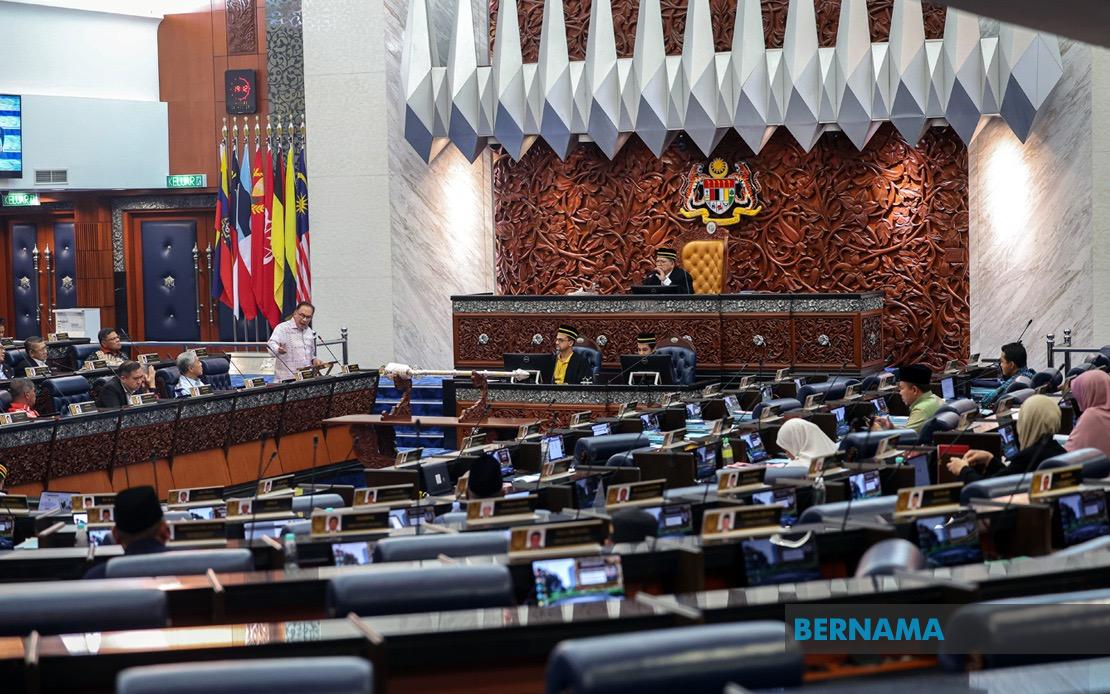
Parliament's lower house gave its backing on June 30 to revisions of the Employment Insurance System (Amendment) Bill 2025, establishing a tiered approach to penalising employers who neglect to inform the Social Security Organisation (PERKESO) when positions become available. Lawmakers from across the political spectrum engaged in substantive debate before the chamber approved the measure by majority voice vote, reflecting broad consensus that the regulatory framework needed recalibration to encourage workplace transparency without creating undue hardship for businesses.
The legislative journey underscores how parliamentary deliberation can refine policy instruments before final enactment. The Dewan Negara had already endorsed the amendments to Clause 11 and Subsection 45F(4) in March, establishing a penalty ladder that begins at RM1,000 for initial breaches, escalates to RM3,000 for repeated violations, and reaches a ceiling of RM5,000 for subsequent infringements. This structured approach differs markedly from an earlier proposal that would have capped penalties at RM10,000, suggesting that stakeholder feedback effectively shaped the final framework toward proportionality.
Deputy Human Resources Minister Datuk Khairul Firdaus Akbar Khan characterised the amendments as advancing a philosophy that prioritises education and voluntary adherence over punitive measures, while simultaneously tightening the architecture of labour market administration. He emphasised that authorities would not immediately resort to financial penalties, instead issuing compliance notices that afford employers a reasonable window to rectify their reporting lapses. This graduated enforcement pathway addresses longstanding business concerns about regulatory overreach, particularly for smaller enterprises that may struggle with administrative requirements.
The government's engagement process with the private sector demonstrably influenced the final outcome. PERKESO conducted multiple consultation sessions across different industry sectors nationwide, gathering practical feedback about implementation feasibility and cost implications. This consultative groundwork led directly to the reduction of maximum fines and the recalibration of entry-level penalties, illustrating how systematic stakeholder input can moderate policy ambitions while preserving their underlying objectives. The iterative refinement suggests a more mature policymaking approach than top-down mandate.
Parliamentarians across factional lines raised substantive concerns about execution. Azahari Hasan from Padang Rengas stressed that the reporting infrastructure must be straightforward and accessible, cautioning that unnecessarily complex systems could undermine voluntary compliance and compromise the labour market intelligence that justifies the entire requirement. His intervention touched on a critical tension in modern regulation: administrative burdens, if poorly designed, can defeat the very purpose of data collection. The job-matching objective—reducing unemployment and enabling evidence-based labour policy—depends fundamentally on employers finding the submission process intuitive and relatively frictionless.
Rural and smaller business communities warranted particular attention during the debate. Nurul Amin Hamid of Padang Terap acknowledged the merit of lowering maximum penalties but flagged persistent awareness deficits in less urbanised areas where businesses operate with limited exposure to regulatory updates and compliance infrastructure. This observation carries genuine weight for Malaysian policymakers, as rural enterprises often possess neither dedicated compliance staff nor ready access to government portals and advisory services. Targeted outreach and simplified guidance materials could be essential complements to the legislative amendments, ensuring the law achieves equitable application rather than inadvertently penalising those with fewer institutional resources.
Transparency in job advertising emerged as another parliamentary theme with broader significance. Syerleena Abdul Rashid highlighted the connection between mandatory vacancy reporting and fair employment access, underscoring that centralised government portals could democratise information about opportunities while combating informal networks that often exclude disadvantaged groups. This perspective reframes the vacancy notification requirement beyond mere administrative compliance, positioning it as a tool for social equity and broader workforce participation. When job information remains confined to informal channels or employer networks, individuals from marginalised communities face structural barriers regardless of their qualifications.
The legislative trajectory reflects Malaysia's gradual evolution toward more consultative governance in economic and social policy. Rather than imposing penalties unilaterally, the government chose to solicit feedback, adjust its proposals accordingly, and present a final framework that most stakeholders could support as reasonable. Such collaborative approaches, while sometimes slower and requiring genuine flexibility on official positions, tend to generate superior compliance outcomes because affected parties perceive the rules as fair rather than arbitrary. This lesson extends beyond employment insurance to regulatory design across sectors.
Implementation success will depend substantially on how PERKESO executes the compliance framework. Clear communication campaigns explaining the requirements, deadlines, and procedures must reach employers across size categories and geographic locations. Digital infrastructure for submissions should be genuinely user-friendly, not merely compliant with accessibility standards on paper. Training sessions for HR personnel in smaller firms could substantially elevate voluntary compliance rates before the first penalty structures trigger. Government investment in compliance assistance often yields higher returns than reliance on enforcement mechanisms alone.
For Malaysia's broader labour market architecture, this amendment represents incremental strengthening of information systems that policymakers increasingly recognise as essential for workforce development planning. As the economy confronts skill gaps, demographic shifts, and sectoral transformation, reliable data on employment needs and turnover patterns becomes strategically important. The vacancy notification regime, once fully operational and embedded, could inform vocational training curricula, educational institution planning, and targeted immigration policies for labour shortages. The near-term regulatory focus obscures longer-term potential contributions to economic competitiveness.
The consensus demonstrated across parliamentary lines also suggests potential for broader legislative advancement in employment law, provided the government maintains its consultative approach with business and labour stakeholders. Regional peers such as Singapore and South Korea have leveraged employment data systems to support advanced labour market policies that anticipate sectoral change. Malaysia possesses equivalent opportunities if it continues refining the institutional and regulatory foundation for systematic information gathering, as this Employment Insurance amendment constitutes one piece of a larger infrastructure project.

