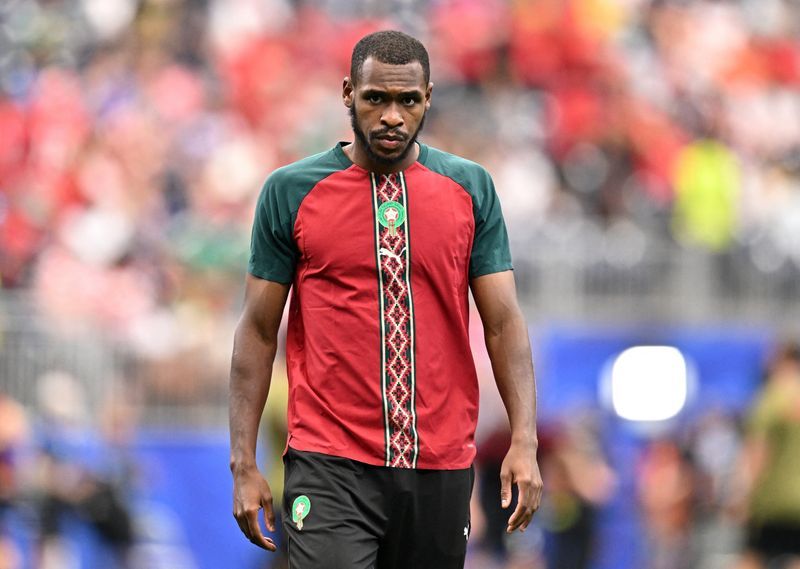
The prospect of Morocco facing France in Thursday's World Cup quarter-final carries an extraordinary subplot centred on Issa Diop, a 29-year-old centre-back whose international journey represents one of football's most compelling narratives of principle tested against pragmatism. Born in Toulouse and raised in French culture, Diop spent years rebuffing overtures from both Morocco and Senegal, the nations connected to him through his family heritage, insisting that his allegiance belonged solely to France. Now, in perhaps football's most delicious irony, he must marshal Morocco's defence against Kylian Mbappé, the PSG star representing the country he once claimed was his only home.
Diop's family background provided clear pathways to alternative football allegiances. His father hailed from Senegal, whilst his mother came from Morocco, and his grandfather occupied a place in Senegal's football history as one of the nation's first national team coaches. Yet the young defender consistently turned aside diplomatic efforts from both African nations, viewing such switches as pragmatic compromises rather than expressions of genuine belonging. The conviction he harboured about his identity remained unyielding through his formative years as a professional footballer.
His public commitment to France ran so deep that seven years ago, whilst representing France's Under-21 side, he articulated his position with remarkable clarity during an interview with Canal Plus. Diop emphasised the foundational role France had played in his life, stating that to pursue international football elsewhere simply because he had been overlooked by the senior squad would constitute hypocrisy. Such a decision, he argued, would amount to treating a transfer to another nation as little more than a fallback option rather than a genuine choice rooted in identity and loyalty. These statements would echo through social media when his position finally shifted, making his eventual conversion to Morocco's colours appear as a reversal requiring explanation.
The transformation occurred this year, when Diop accepted Morocco's invitation to join their World Cup preparations. Coach Mohamed Ouahbi orchestrated this recruitment drive amid pressing defensive vulnerabilities. The departure of captain Romain Saiss following January's Africa Cup of Nations tournament had created a notable gap in Morocco's back line, whilst injuries sidelined Nayef Aguerd in March, further constraining available options. Diop represented a solution with substantial Premier League experience, having spent eight seasons competing in England's top division for West Ham United and Fulham. Ouahbi recognised in the centre-back not merely a player of defensive capability, but someone whose lifestyle and frequent visits to Morocco suggested a genuine connection to the nation beyond football calculations.
Diop made his Moroccan debut in a friendly against Ecuador during March, and subsequently established himself as the preferred central defensive partner for Crystal Palace's Chadi Riad. Ouahbi, reflecting on Diop's integration, spoke of observing a player genuinely committed to the project, someone whose personal habits and regular presence in Morocco suggested authentic engagement rather than opportunistic convenience. The coach expressed confidence that Diop would exert positive influence within the dressing room and contribute meaningfully on the pitch, emphasising that historical questions about his previous stance warranted less focus than his present attitude and future contributions.
Diop's credentials were cemented dramatically during Morocco's round-of-32 encounter with the Netherlands, a match that illustrated both his value to the squad and his emerging status as an unlikely folk hero. Deep into stoppage time, with the match approaching its conclusion and penalty shootout approaching, Diop advanced from his defensive position and connected with a cross from Chemsdine Talbi. His powerful header found the net in the ninety-first minute, rescuing Morocco from elimination with seconds remaining. The goal proved decisive, carrying the match into extra time and ultimately leading to Morocco's penalty victory. That stoppage-time intervention transformed Diop's narrative from curiosity to catalyst, silencing past debates about his commitment and demonstrating his willingness to contribute in all aspects of play.
Diop's own recollection of that crucial goal carried the casual humility that often accompanies such clutch moments. He described advancing forward without clear tactical instruction, finding space opportunistically and finishing instinctively when the occasion presented itself. Such spontaneity, typical of penalty-box scrambles in dying moments, belied the reality that his goal had essentially salvaged Morocco's tournament hopes. The intervention transformed perceptions of his allegiance question; suddenly, the previous seven years of declared French loyalty seemed distant and irrelevant against the immediate reality of his decisive contribution to Morocco's advancement.
Thursday's quarter-final matchup against France presents the ultimate testing ground for Diop's integration into Morocco's project. He will likely assume primary responsibility for containing Mbappé, whose electric pace and clinical finishing represent among world football's most formidable attacking threats. The positioning places Diop in direct opposition to the nation whose national team he previously held as his singular aspiration, against a player representing France's contemporary football excellence. The task demands both defensive sophistication and mental fortitude, requiring Diop to manage not merely the technical demands of marking an elite forward but also the psychological weight of confronting his previously declared home nation.
For Morocco, Diop's presence addresses a genuine defensive necessity whilst simultaneously bringing to bear a player with direct knowledge of French football patterns and tendencies. His eight seasons in English football have provided broader tactical education, but his formative years in French systems mean he understands French approaches to build-up play and attacking transitions. Against the tournament's obvious heavyweight aside from Argentina, such accumulated understanding carries tangible value. Should Morocco progress, Diop's contributions will have played material roles in eliminating the nation he once insisted represented his only legitimate international future.
The narrative arc surrounding Diop extends beyond individual achievement into broader questions about belonging, evolution, and the relationship between inherited identity and chosen commitment. His journey from steadfast French loyalist to crucial Morocco contributor illustrates how football careers can pivot unexpectedly, and how principles once held as immovable can shift when circumstances and self-awareness evolve. Whether his performance against Mbappé and France will ultimately define his international legacy remains to be determined, but his presence in Morocco's quarter-final squad represents a conclusion to his long deliberation about where his football future truly lay. The irony that this conclusion places him directly against the nation he once insisted was his only home adds poignancy to what promises to be a momentous occasion for Moroccan football.

