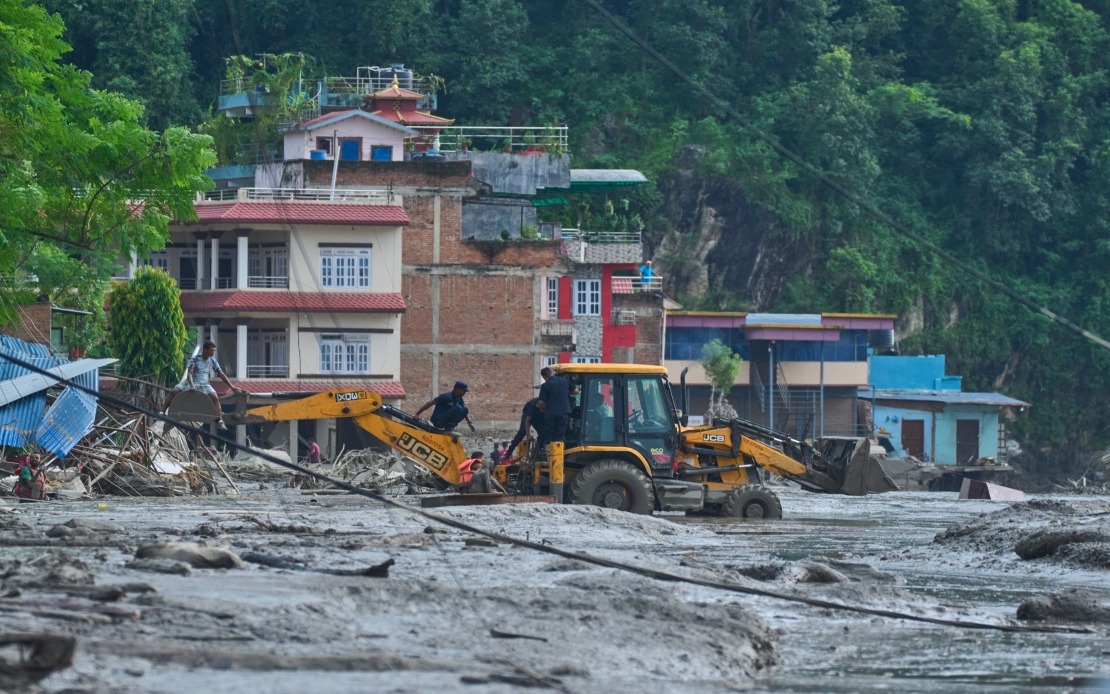
A massive humanitarian crisis has unfolded along the Nepal-China border following devastating flash floods and mudslides that have claimed at least 160 lives and left more than 680 people unaccounted for, with rescue operations continuing across both nations. Nepalese authorities reported recovering 157 bodies so far while managing to extract 54 survivors from the affected areas, while Chinese state media documented three confirmed deaths and 265 missing persons in the southern Tibet region. The scale of the disaster underscores the vulnerability of mountainous border regions to sudden natural catastrophes and has prompted a major coordinated emergency response from both governments.
The missing persons represent a diverse cross-section of nationalities, reflecting the region's importance as a gateway for international tourism and commerce. Among those unaccounted for are substantial numbers of foreign trekkers and tourists, with preliminary reports identifying visitors from Malaysia, Australia, the Netherlands, South Africa, the United Kingdom and India, alongside 93 Nepalese nationals. The South Korean Foreign Ministry separately reported that eight of its citizens remain missing, while another 10 are stranded following the floods. This international dimension has elevated the disaster's profile globally and created urgent consular challenges as governments attempt to locate and assist their nationals caught in the affected zones.
Nepalese officials identified a particularly troubling subcategory among the missing: security and infrastructure personnel deployed on critical development projects. According to the Prime Minister's Office, the missing include 44 army personnel, 28 police officers, 13 armed police members and 60 civilian employees working on hydropower construction initiatives. Their loss represents both a human tragedy and a potential setback to Nepal's ongoing energy infrastructure development, which has become increasingly vital for the nation's economic ambitions. The concentration of missing workers in remote project sites reflects how such development activities, while economically necessary, expose workers to significant environmental and geological risks in demanding mountain terrain.
The physical destruction wreaked by the disaster extends far beyond immediate casualties. Nepalese Foreign Minister Sishir Khanal reported to parliament that at least 19 bridges have been completely swept away, while approximately 40 kilometres of road infrastructure and 13 hydropower projects sustained varying degrees of damage. This damage threatens both short-term humanitarian relief efforts and long-term regional connectivity. The affected districts—Rasuwa, Dhading and Chitwan—serve as crucial transit corridors for both domestic commerce and cross-border trade, meaning the disruption will likely have ripple effects throughout Nepal's economy and adjacent regions, including potential impacts on supply chains and tourism revenue streams that these areas depend upon.
The Rasuwagadhi crossing, situated in the Rasuwa district, holds particular strategic importance as a major thoroughfare for tourists and pilgrims heading to iconic Himalayan destinations. The region is renowned as a staging point for treks into the Langtang range, one of Nepal's premier trekking destinations that attracts thousands of international visitors annually. Additionally, many travellers utilise this route as their passage to the sacred Mount Kailash and Lake Mansarovar in Tibet, making Rasuwagadhi essential infrastructure for religious tourism and cultural exchange across the border. The destruction of bridges and roads in this corridor has temporarily severed these connections and forced authorities to redirect traffic or suspend services entirely.
On the Chinese side, state media reported that a mudslide struck the vicinity of Gyirong Port in the Xizang Autonomous Region, creating cascading infrastructure failures. Beyond the immediate geological hazard, the disaster severed road connections to the port, eliminated telecommunications access and disabled power supplies to surrounding communities. These compound effects—loss of transit routes combined with communication blackouts—significantly complicated early rescue operations and humanitarian coordination. Chinese President Xi Jinping responded by ordering comprehensive search and rescue mobilisation, demanding that authorities not only locate missing persons but also evacuate residents in vulnerable positions and provide urgent medical attention to injured survivors.
Both governments deployed substantial rescue resources to counter the scale of the emergency. Nepalese Foreign Minister Khanal outlined the comprehensive response, explaining that helicopters, unmanned drones and specialised rafting equipment were positioned across the disaster zone. Rescue personnel drawn from Nepal Police, the Armed Police Force and the Nepal Army worked in coordinated fashion to access remote, flood-affected communities and extract survivors from precarious situations. In the Kathmandu capital region, government hospitals and military medical facilities were emptied of routine patients and repurposed to accommodate the injured being airlifted or transported from affected zones. The simultaneous activation of multiple agencies demonstrates recognition of the disaster's magnitude and the imperative for rapid, multi-sector coordination.
The regional dimension of this crisis extended beyond Nepal and China, with neighbouring India positioning itself as an active humanitarian partner. Indian Prime Minister Narendra Modi communicated directly with his Nepalese counterpart Balendra Shah, offering condolences and pledging comprehensive support. India acted swiftly by dispatching 10 tonnes of humanitarian assistance, disaster relief supplies and essential medicines to support Nepal's response infrastructure. In Bihar state, which shares a border with Nepal and could face secondary impacts including embankment stress from increased water flows, Chief Minister Samrat Choudhary issued orders for enhanced monitoring of flood barriers, night-time patrols and preparedness measures across sensitive districts. This precautionary stance reflects the interconnected nature of South Asian hydrology and demonstrates how a discrete disaster in Nepal carries implications for adjacent regions.
The timing and location of this disaster raise questions about climate vulnerability in the Himalayan region. Experts have long warned that warming temperatures and shifting precipitation patterns are intensifying the frequency and severity of flashflood events in mountain ranges. The Nepal-China border region, with its steep topography, concentrated rainfall during monsoon seasons and saturated soil conditions, remains exceptionally prone to such events. Infrastructure development, including the proliferation of hydropower projects that the missing workers were helping construct, has in some cases altered natural water drainage patterns and potentially increased vulnerability to cascading failures. For Malaysian and Southeast Asian readers, this disaster serves as a stark reminder that climate-related geological hazards do not respect national boundaries and that mountain nations throughout Asia face escalating risks that demand both national preparedness and regional cooperation mechanisms.
The missing persons statistics also underscore how individual trekkers and adventure tourists, though small in number relative to mass tourism, bear disproportionate risks when natural disasters strike remote regions. Malaysian tourists and others from Southeast Asia regularly visit Nepal for trekking expeditions, and this incident highlights the importance of travel advisories, insurance coverage and emergency coordination protocols. Travel agencies and individual adventurers planning Himalayan expeditions must now incorporate updated risk assessments and may face pressure to adjust booking patterns or heighten safety precautions. The disaster has already prompted several countries to review their travel advisories and consular support capabilities for nationals undertaking risky activities in geologically unstable zones.
The recovery and reconstruction phase will likely extend for months or years. Beyond the immediate casualty management, authorities must simultaneously restore critical transit corridors, rehabilitate damaged hydropower infrastructure, rebuild bridges and restore communications networks. These tasks will require substantial financial resources and probably attract international development assistance, though such support typically arrives with conditions and strategic considerations. For Nepal, the disaster represents both a humanitarian imperative and a development challenge, as the nation attempts to balance the modernisation goals that drove hydropower expansion with the environmental and safety realities of mountain development.

