Overshadowed by Beijing, Shanghai and Chengdu in international travel consciousness, Changsha remains a destination brimming with historical significance and cultural depth that merits serious consideration from Malaysian visitors. The Hunan provincial capital has developed substantially in recent years while preserving substantial portions of its heritage, creating an appealing balance between modern urban amenities and authentic cultural experiences. Malaysia Airlines, AirAsia and Batik Air now operate direct services from Kuala Lumpur, eliminating the logistical barriers that previously discouraged casual tourism to this central Chinese city.
Any exploration of Changsha logically begins at the Hunan Museum, a repository of over 540,000 artefacts documenting the region's extraordinary civilisational trajectory. The institution's centrepiece comprises materials recovered from the Mawangdui Han Tombs, excavated during the early 1970s from burial sites belonging to the family of Li Cang, who served as chancellor of the Changsha Kingdom during the Western Han Dynasty. Archaeologists recovering these tombs unearthed approximately 3,000 items spanning silk textiles, painted works and written manuscripts in remarkable states of preservation. The most celebrated specimen is Lady Dai, the wife of Li Cang, whose corpse survived millennia of underground entombment in conditions suggesting she had been buried only decades rather than two thousand years prior. International scholars regard this discovery as among the most consequential archaeological findings globally, offering unparalleled insight into daily life, artistic achievement and material culture of ancient China's Han period.
Beyond the Mawangdui collection, the museum's galleries showcase porcelain vessels, landscape paintings and calligraphic specimens spanning multiple dynasties, enabling visitors to trace aesthetic evolution and technical refinement across centuries of Chinese artistic production. This comprehensiveness makes the Hunan Museum valuable not merely for specialists but for general visitors seeking structured understanding of regional history.
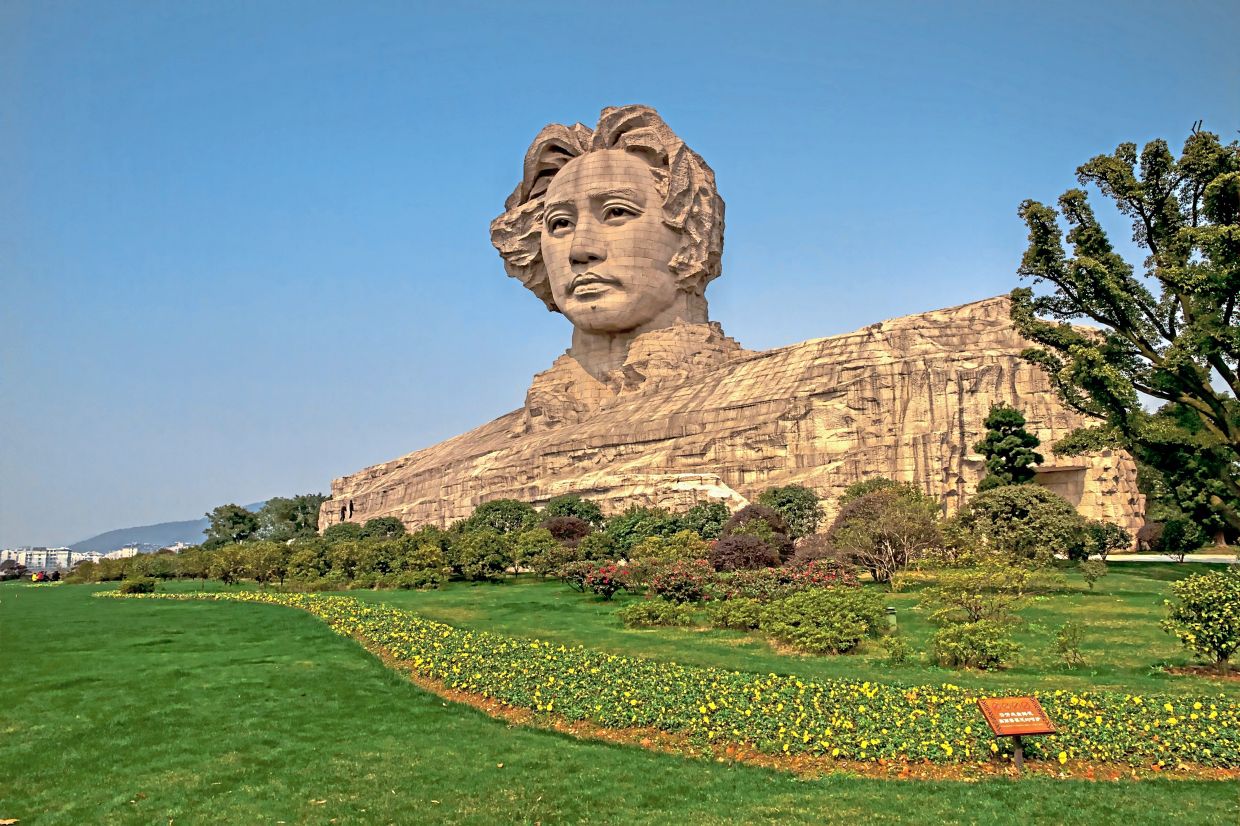
Orange Isle, also designated as Juzizhou Island, occupies a strategic position within the Xiang River flowing through Changsha's metropolitan area and functions as one of the city's premier recreational destinations. Despite its historical association with citrus cultivation, the contemporary island operates primarily as an expansive parkland hosting walking, cycling, picnicking and leisure activities for residents and tourists alike. A monumental stone sculpture depicting the youthful Mao Zedong commands attention among visitors, commemorating his formative years spent in Changsha where intellectual currents shaped his nascent ideological framework. Manicured botanical gardens, designated pedestrian routes and exhibition facilities complement the island's natural riverside setting. Evening hours transform the location into a particularly compelling experience as urban illumination intensifies and human activity concentrates, providing atmospheric contrast to daytime visits.
Extending approximately fifty kilometres from Orange Isle, Jinggang Ancient Town represents a preserved commercial settlement spanning more than a millennium of continuous habitation. Positioned along the Xiang River corridor, the township functioned historically as a vital trading hub facilitating circulation of tea, silk and salt commodities during periods of regional prosperity. Contemporary architecture preserves numerous traditional structures including residential courtyards, religious temples, beverage establishments and retail vendors merchandising locally manufactured articles and regional delicacies. The intact cobblestone streetscape and pre-industrial scale offer pronounced contrast to contemporary urban environments, making it an attractive afternoon excursion for visitors seeking quieter, more contemplative experiences away from Changsha's central commercial zones.
Taiping Street occupies significant historical standing within Changsha's urban fabric as one of the municipality's earliest established thoroughfares, simultaneously functioning as a gastronomic destination showcasing authentic Hunan culinary traditions. Visitors encounter stinky tofu, spicy freshwater crayfish and sweetened oil-based cakes among signature local preparations. The street accommodates diverse dietary preferences through conventional cafes and standard restaurants alongside specialist establishments, ensuring accessibility regardless of adventurousness toward regional cuisine. Artisanal commerce flourishes throughout the street, with vendors offering handcrafted goods, regionally produced tea varieties and traditional snacks. The architectural stock itself commands aesthetic appreciation, representing stylistic periods reflecting Changsha's economic development and cultural continuities through successive eras.
Positioned on the Xiang River's banks, Du Fu Pavilion constitutes a memorial dedicated to Du Fu, one of Chinese civilisation's most venerated literary figures who spent his final years within Hunan territory. The structure adheres to traditional architectural principles featuring multi-tiered wooden construction, curved eaves characteristic of Chinese design and intricate decorative carving throughout. Interior spaces facilitate biographical study of the poet's life trajectory and display manuscripts showcasing literary accomplishments. Elevated vantage points furnish panoramic perspectives encompassing the Xiang River waterway, Orange Isle's verdant expanse and Changsha's contemporary skyline, creating photographic opportunities and visual satisfaction for visitors navigating the pavilion's upper stories.
Yuelu Mountain provides convenient escape from concentrated urban conditions while offering historical and natural attractions. The mountain's foundational locality contains Yuelu Academy, positioned among China's four most historically significant ancient educational institutions. Established over a thousand years before the contemporary era, the academy functioned as a consequential centre for scholarly advancement and philosophical discourse, retaining architectural integrity and intellectual legacy substantially intact. Contemporary administrative structures have incorporated the academy within Hunan University's institutional framework, facilitating continued educational functions while maintaining heritage preservation. Ascending the mountain via established pedestrian pathways passes through forested environments featuring maple and pine vegetation. Seasonal transformations render autumn especially visually striking as maple foliage transitions into crimson and amber coloration. Aiwan Pavilion, positioned prominently along the mountain's slopes, constitutes one of the region's most frequently photographed locations due to its chromatic scenic surroundings and architectural refinement.
Malaysian travellers considering Changsha should recognise the city's distinctive appeal relative to better-publicised Chinese destinations. The combination of world-class archaeological collections, reasonably preserved historical quarters, riverine geography and mountain environments creates itinerary flexibility accommodating diverse interests and temporal constraints. Direct flight connections substantially streamline journey logistics compared to previously necessary multi-city routing through hub airports. For those seeking cultural immersion within less-crowded conditions than Shanghai or Beijing present, while accessing substantive historical documentation and authentic regional experiences, Changsha merits serious prioritisation in travel planning discussions.

