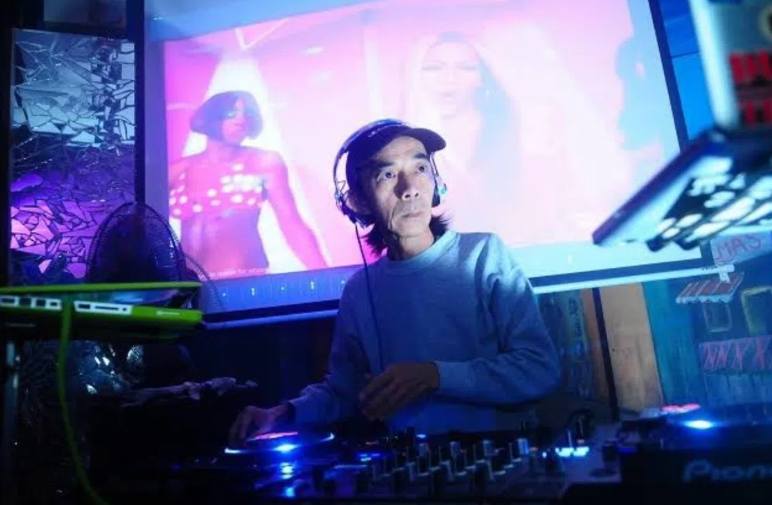
The Singapore nightlife community mourns the loss of Andrew Chow, the virtuoso turntablist and DJ known professionally as DJ Wiz, who succumbed to stomach cancer on August 3 at the age of 63. His death marks the end of an era for a nation whose modern music and club culture was substantially shaped by his innovative work spanning three decades. Chow's influence extended far beyond the decks he commanded; he became synonymous with the emergence and maturation of hip-hop and R&B as legitimate art forms in Southeast Asia's most cosmopolitan city-state.
Chow's credentials as a trailblazer in turntablism are substantial and internationally recognised. Between the 1990s and early 2000s, he claimed victory in three separate DMC Singapore championships—a competition that commands respect across global DJ circles—and notably triumphed at the 1998 Technics World DJ Championships' Singapore leg. These achievements positioned him among the region's elite practitioners of an art form that demands technical mastery, creative improvisation, and deep musical knowledge. His performances became legendary not merely for technical proficiency but for the energy and style he brought to venues that became pilgrimage sites for music enthusiasts across the region.
For much of his career, Chow maintained a residency at the original Zouk on Jiak Kim Street, one of Southeast Asia's most influential nightclubs. From the mid-1990s through the early 2010s, he graced the decks of this iconic venue, building a devoted following that extended well beyond Singapore's borders. Within Zouk's complex existed Phuture, a club where Chow became a dominant force during the big beat era, drawing crowds who would spend entire nights transfixed by his mixing and scratching abilities. That venue eventually closed, but the imprint Chow left on Singapore's nightlife landscape remained indelible, influencing how subsequent generations of DJs approached their craft.
The breadth of his musical knowledge and influence was reflected in the diverse testimonials from peers. DJ KoFlow, whose real name is Wayne Liu, emphasised that Chow's legacy transcends his individual performances, instead residing in the collective consciousness of everyone he inspired to pursue hip-hop and turntablism. Liu, speaking at 45 years old, understood intimately the cultural debt owed to someone who had dedicated his existence to nurturing and elevating these once-marginalised genres into mainstream acceptance. Chow's contributions went beyond technical innovation; he fundamentally altered perceptions about what constituted serious musical art in a region where Western and regional traditions had long dominated commercial spaces.
Kavan Spruyt, founder of Rasa and a significant figure in Singapore's nightlife development, offered perspective on Chow's generational impact. Now 46, Spruyt recalls his younger self watching Chow command the mixer and turntables with such authority that the entire venue seemed to pulse to his rhythm. Spruyt's description captures something essential about Chow's presence—he was not merely performing music but orchestrating collective experience, making the mechanical act of DJing into something transcendent. The younger generation of club-goers who discovered nightlife through venues where Chow performed absorbed lessons about musicianship, showmanship, and dedication that shaped their own artistic journeys.
DJ Eddie Chan, who performs under the moniker DJ Small and had maintained a four-decade friendship with Chow, distilled what made Chow exceptional: a combination of pedagogical instinct, genuine passion, and an almost prescient understanding of musical trends. Chan characterised Chow as someone who functioned simultaneously as teacher and brother, roles that are rarely embodied by the same individual. His skills with mixing and scratching were described without equivocation as flawless, yet Chan's tribute emphasised that technical capability alone does not explain Chow's outsized influence. Rather, it was his willingness to engage deeply with music across multiple genres and his commitment to advancing the art form itself that distinguished him from contemporaries.
Remarkably, Chow remained engaged with the music community even in recent times. His final public appearance came on May 24, when he served as both judge and performer at the DMC Warm-Up Battle held at Kossa, a local club. This engagement demonstrated his continued relevance and the respect accorded to him by younger practitioners and event organisers. More poignantly, he was slated to receive the DMC Legacy Award at the DMC Singapore event scheduled for September 6 at Rasa—an honour recognising his lasting contributions to the DJ profession. Tragically, he would not live to accept this recognition, though it stands as acknowledgment of how deeply he had marked his field.
Chow's daughter Abby, aged 27, revealed her father's final wishes regarding his farewell. Rather than adhering to conventional funeral practices emphasising solemnity and restraint, Abby invited attendees to celebrate her father's life by wearing colourful and stylish attire. This directive encapsulates something essential about Chow's personality and philosophy—he approached life, music, and human connection with an emphasis on vitality, style, and joy. His request eschewed formal dress codes in favour of authentic self-expression, a preference entirely consistent with someone who spent his life pushing against conventional boundaries in pursuit of artistic authenticity.
The broader implications of Chow's death extend beyond Singapore's borders. His generation of pioneers established hip-hop and turntablism as legitimate cultural forces throughout Southeast Asia during a period when these genres remained marginalised in many Asian contexts. Chow's three-decade commitment to these art forms helped legitimise them not through academic argument but through consistent excellence and community building. For Malaysia and other regional nations increasingly interested in developing indigenous hip-hop and electronic music scenes, Chow's trajectory offers both inspiration and cautionary lessons about the time and dedication required to establish new cultural practices. His passing marks the end of an irreplaceable chapter in regional music history, one that younger artists will study and attempt to honour through their own work.

