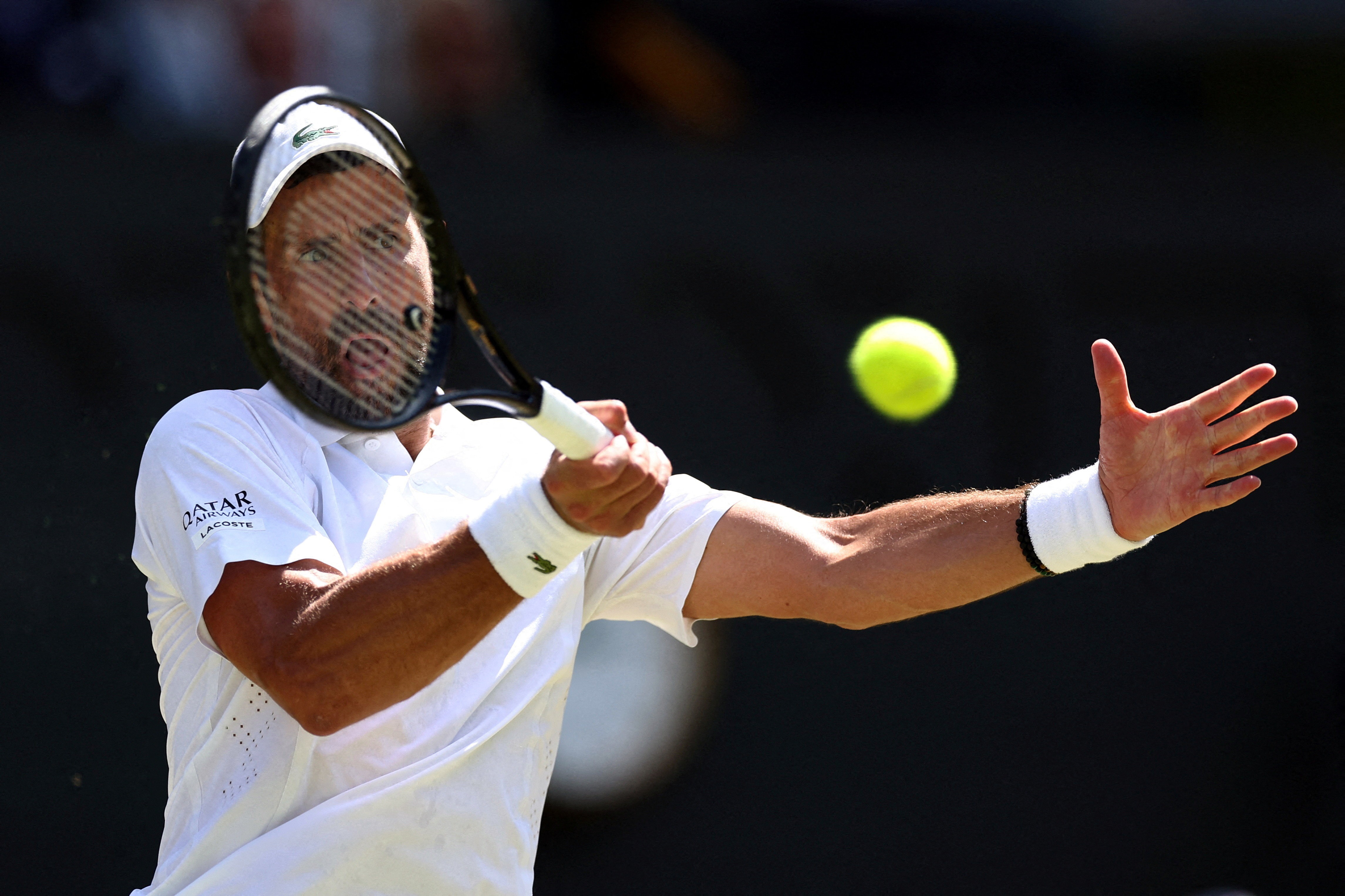
Novak Djokovic's path to the Wimbledon semifinals proved as contentious as it was exhausting, the 39-year-old Serbian emerging from a five-hour-15-minute quarterfinal against Canada's Felix Auger-Aliassime with a 7-6 (12-10), 3-6, 6-3, 6-7 (4-7), 7-6 (10-4) victory that ranks as the longest quarterfinal in the grass-court championship's storied history. The match concluded just six minutes before the tournament's 11 pm curfew, leaving both competitors drained as Djokovic advanced to face defending champion Jannik Sinner.
The flashpoint emerged midway through the encounter when tournament referee Denise Parnell instructed the players that Centre Court's roof would be closed as daylight faded. At that moment, 7.40 pm, the match stood level at one set apiece—a juncture that proved pivotal to Djokovic's mindset. The veteran competitor immediately protested, arguing forcefully that sufficient daylight remained to complete another entire set without artificial cover. His frustration stemmed partly from the 14-year age gap between himself and the younger Canadian, whose reputation as an accomplished indoor player made controlled court conditions advantageous for Auger-Aliassime.
Djokovic's objections carried particular intensity given his recent experience. He referenced his first-round encounter against Wu Yibing, when the roof remained open until nearly 8.30 pm, suggesting inconsistency in Parnell's application of timing protocols. "We can play a whole other set outdoors," he insisted, emphasizing that Wimbledon's identity rested upon its outdoor heritage. The heated exchange revealed the psychological pressure both players faced, with Djokovic evidently concerned that roof closure would shift momentum against him. His blunt assertion—"With Jannik, I don't care what happens. I care about our match right now!"—captured the intensity of the moment.
Parnell held firm, explaining that her caution stemmed from a recent cautionary tale. During Sinner's fourth-round match against Japan's Shintaro Mochizuki, darkness had forced roof closure mid-set, disrupting rhythm and flow. The referee sought to prevent a recurrence of that scenario, though her decision seemed to irritate Djokovic considerably. However, events in the third set's opening game would vindicate the official's judgment. Auger-Aliassime's 14-minute service hold demonstrated the challenge of maintaining concentration under increasingly murky outdoor conditions, suggesting that extended daylight play might indeed have compromised match quality and player safety.
The physical toll on Djokovic mounted noticeably during the opening set. After appearing to tweak his left calf in the first set's closing stages, he required a medical timeout, grimacing visibly with each serve despite ultimately claiming the set via tiebreak. Such discomfort raises questions about his condition heading into the semifinal against Sinner, a formidable defender of his title. Yet despite this injury concern, Djokovic moved more freely as the match progressed, suggesting the issue remained manageable rather than debilitating. The Serbian's resilience in overcoming physical adversity has long defined his career, and this performance reaffirmed that trademark durability.
Auger-Aliassime presented a stern challenge throughout. The third-seeded Canadian had yielded serve only once across the entire fortnight, an exceptional statistic that underscored his serving dominance. Yet Djokovic finally managed a love break midway through the third set, seizing that psychological advantage to claim the set and shift momentum in his favor. The fourth set descended into another tiebreak, which Auger-Aliassime captured convincingly, forcing the decider and setting the stage for the marathon concluding set that would stretch past midnight by Djokovic's clock.
The deciding set developed into a first-to-10-points tiebreak format, a grueling format that favors neither player but instead rewards mental fortitude and nerve management. Djokovic's ability to navigate such extreme tension—a skill honed across decades of high-pressure tennis—ultimately proved decisive. After clinching the match, the veteran reflected on his performance with characteristic introspection. "I did it with a racket, and a lot of heart," he acknowledged, emphasizing the emotional and psychological demands that such extended contests impose. He spoke candidly about nerve management and the intense tension that accumulates over five-plus hours, portraying the experience as simultaneously draining and rewarding.
Djokovic's path to an eighth Wimbledon title now runs through Sinner, whose youth, power, and proven championship pedigree present formidable obstacles. The Belgian's rueful comment about preferring the final to be reached without concern about recovery time illustrated the accumulated fatigue from his quarterfinal ordeal. Such exhaustion could prove problematic against a fresh, hungry defending champion. Yet Djokovic's victory here, achieved under adverse physical circumstances and emotional pressure, demonstrates that despite his age, he retains the mental resources and competitive hunger that have defined his remarkable career.
From a Southeast Asian perspective, this quarterfinal carries significance beyond immediate tennis interest. Young players across the region observe how elite athletes manage pressure, injury, and adversity at the sport's highest level. Djokovic's demonstrated ability to perform when physically compromised—and to maintain focus amid officiating disputes—provides instructive lessons in professional resilience. Furthermore, the tournament's evolving relationship with technology, rules enforcement, and player welfare reflects broader conversations occurring within Asian sporting institutions as they develop world-class facilities and hosting capabilities.
The semifinal matchup between Djokovic and Sinner will determine whether the Serbian can claim an improbable eighth Wimbledon crown or whether the young champion consolidates his position atop the sport. What remains indisputable is that this quarterfinal, for all its controversy and exhaustion, delivered compelling tennis that reminded audiences why such grand tournaments continue to captivate global audiences, even as debates about rules application and player management persist.

