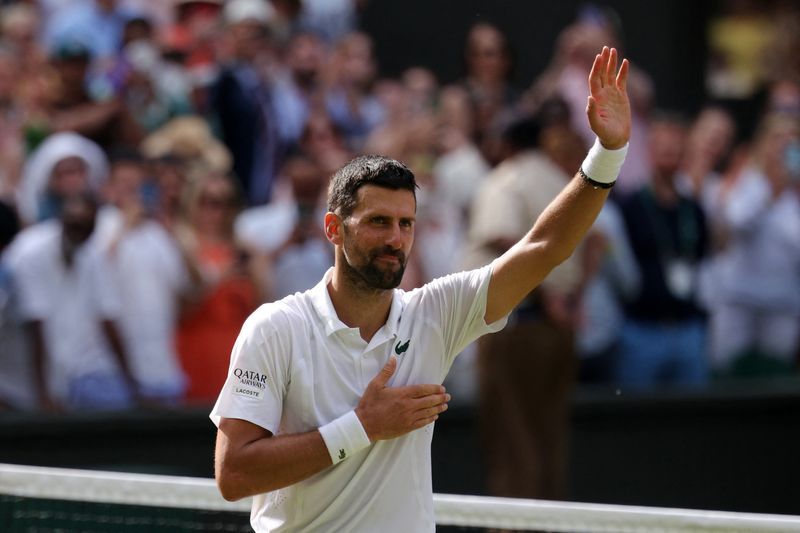
The Wimbledon Championships enter their knockout phase on Tuesday with two commanding narratives at stake: veteran Serbian star Novak Djokovic's relentless pursuit of tennis history, and Japanese 14th seed Naomi Osaka's surprising resurgence after three years without a Grand Slam title. The quarter-final stage promises high-stakes drama across multiple fronts, with each remaining competitor harbouring legitimate ambitions of lifting the Venus Rosewater Dish.
At 39 years old, Djokovic now holds the distinction of recording the most victories at any single Grand Slam venue, surpassing his previous milestone with his 106th All England Club triumph against qualifier Roman Safiullin in the previous round. Yet this statistical achievement masks a sobering reality: the Serbian champion has required extended battles to progress, finding himself stretched into four-set contests in each of his last two matches. His three-hour-plus struggle with Safiullin revealed a competitor grinding through adversity rather than dominating opponents, a concerning pattern when facing the elite talents remaining in the draw.
Djokovic's immediate obstacle comes in the form of third seed Felix Auger-Aliassime, a 25-year-old Canadian whose technical development has steadily impressed the sport's hierarchy. The pair have split their two 2022 encounters, providing Auger-Aliassime with genuine optimism heading into their quarter-final showdown. Speaking before the match, the Canadian acknowledged the profound respect he holds for his opponent's career achievements, noting how the cumulative workload and longevity of Djokovic's journey transcends ordinary professional accomplishment. For Auger-Aliassime, this represents an opportunity to showcase how significantly his game has evolved, potentially marking a breakthrough moment in his Grand Slam aspirations.
The men's draw features another intriguing quarter-final pairing: defending champion Jannik Sinner, the world number one Italian holding four major titles, faces Germany's Jan-Lennard Struff. At 36 years of age, Struff has achieved a remarkable milestone by becoming the oldest male player in the Open Era to reach a Grand Slam quarter-final for the first time, an accomplishment he secured when his opponent Hubert Hurkacz withdrew due to a hip injury during their previous-round encounter. Sinner, meanwhile, has won all three prior meetings against Struff, though the Italian acknowledges that past results carry minimal predictive value in knockout competition.
On the women's side, Osaka's trajectory has captured significant attention following her comprehensive dismantling of world number one Aryna Sabalenka in the round of 16. The Japanese player, who last captured a Grand Slam title in 2021, displayed the technical precision and mental fortitude that defined her peak years, particularly through her devastating serve and penetrating forehand strokes that systematically neutralised Sabalenka's aggressive baseline game. This represented a notable reversal, as Sabalenka had defeated Osaka in their three prior encounters during the current season, establishing the Japanese player's victory as a genuine upset among elite competitors.
Osaka's quarter-final opponent, Czech 10th seed Karolina Muchova, presents a different strategic challenge. Muchova has now reached the quarter-finals stage at Wimbledon on three separate occasions, yet has never progressed beyond this juncture at the All England Club, suggesting persistent difficulties against the highest-calibre opposition on grass surfaces. The head-to-head record stands evenly balanced at three wins each from their six previous meetings, though Muchova holds a crucial advantage having defeated Osaka in their sole grasscourt encounter at the Bad Homburg Open just weeks prior. Muchova credits her pre-Wimbledon tournament schedule for providing the additional match practice necessary to develop comfort and rhythm on grass courts, a deliberate preparation strategy that paid dividends through her elimination of former champion Barbora Krejcikova.
Osaka's performance against Sabalenka carried particular significance given her extended absence from major championship victory. Reflecting on the psychological dimension of her comeback trajectory, Osaka revealed her mental approach to the encounter, treating the high-pressure situation as a practice environment despite the enormous crowd and global attention. This perspective adjustment represents a crucial tactical component for players attempting to manage the psychological burden of championship tennis, where external pressure frequently overwhelms competitors' technical capabilities. Her fashion choices at the tournament have also generated considerable media discussion, contributing to her elevated profile beyond purely sporting considerations.
The American quarter-final pairing between fourth seed Jessica Pegula and seventh seed Coco Gauff adds another layer of competitive depth to the women's draw. Both American players have demonstrated substantial improvements across the season, and their meeting represents a clash between two players with legitimate aspirations of advancing toward the championship stages. The presence of multiple American representatives in the latter rounds reflects the continuing strength of American women's tennis, despite the dominance of European and international competitors in recent seasons.
For Malaysian and Southeast Asian tennis followers, Osaka's presence in the tournament carries particular resonance, as her Japanese heritage and global recognition bring considerable viewership appeal across regional markets. Her victory over Sabalenka, widely regarded as the current season's dominant player, demonstrates that established hierarchies remain vulnerable to disruption, a theme that resonates throughout professional tennis. Similarly, Djokovic's continuing presence at 39 represents a remarkable defiance of conventional athletic decline, encouraging players across the region who harbour ambitions of extending their professional careers.
The quarter-final stage represents a critical threshold where consistency becomes secondary to handling exceptional pressure. Players remaining in the draw have demonstrated the physical conditioning, technical sophistication, and mental resilience necessary to survive multiple rounds against progressively stronger opposition. The outcomes of Tuesday's matches will fundamentally reshape championship probability projections and provide crucial insights into which players possess the psychological fortitude and tactical flexibility to navigate the tournament's final phases. For Djokovic and Osaka specifically, their respective journeys toward or away from championship glory will define their legacy trajectories and shape broader conversations about longevity and competitive sustained excellence in contemporary professional tennis.

