Novak Djokovic arrives at Flushing Meadows with a genuine opportunity to claim an outright record 25th Grand Slam trophy, a scenario that seemed improbable just months earlier when Alcaraz and Sinner appeared to have seized control of men's tennis. The withdrawal of Sinner through knee injury and Alcaraz's extended recovery from a wrist problem have fundamentally altered the competitive landscape heading into the year's final major championship, potentially opening a door that has been firmly shut against the 37-year-old Serbian star.
Djokovic's pursuit of sole possession of tennis's all-time major record has become increasingly complicated over the past eighteen months. Since capturing the 2023 U.S. Open title, the veteran competitor has watched Alcaraz and Sinner accumulate an extraordinary haul, combining to win ten of the last eleven Grand Slam tournaments. More specifically, these two rivals have eliminated Djokovic five times across the most recent six major championships, effectively preventing him from breaking Margaret Court's long-standing record of twenty-four titles.
The Australian Open earlier this year represented what many observers considered Djokovic's most realistic chance in years to close the gap, yet that opportunity dissolved in a straight-set defeat to Alcaraz in the final. However, the 37-year-old has demonstrated little inclination toward resignation, leaning instead on a deeply ingrained Serbian mentality to sustain his competitive drive. In a newly released documentary, Djokovic elaborated on the concept of "inat," a culturally resonant term describing a stubborn determination that surfaces when external forces work against you. This psychological framework appears instrumental to his continued willingness to pursue what many regard as an impossible target.
The current circumstances favour Djokovic more substantially than recent tournaments have. Sinner's injury removes perhaps the most consistent threat he faces, a player who has demonstrated superior performance in virtually every metric during their head-to-head encounters. Alcaraz's situation presents a more ambiguous challenge. While the defending U.S. Open champion has historically elevated his game at the sport's biggest stages, the uncertainty surrounding his physical readiness following four months away cannot be dismissed. Questions about his competitive sharpness remain unanswered until matches are actually contested.
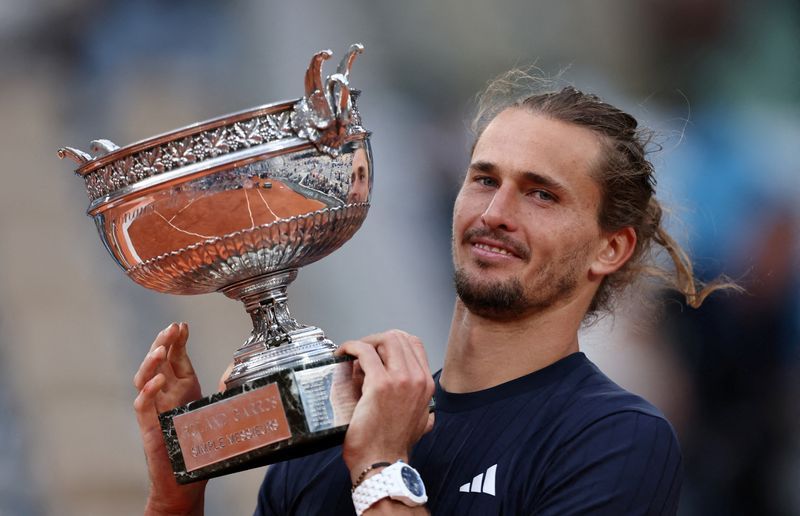
Alexander Zverev has emerged as Djokovic's most formidable obstacle, having finally broken through with a maiden Grand Slam victory at the French Open before reaching the Wimbledon final weeks later. Zverev's sudden ascension into the elite tier of major contenders represents a significant shift in the draw's composition, furnishing him with legitimate credentials to challenge for the title. His recent performances suggest he possesses the weapons and confidence necessary to trouble even the most storied competitors.
Roger Federer, offering perspective from his own legendary career, declined to rule out Djokovic despite the broader competitive landscape. Speaking to journalists in New York, the Swiss icon emphasized that Djokovic's mere presence in any draw provides grounds for genuine contention, pointing to a demonstrated track record across multiple eras and surfaces. Federer's assessment reflects not mere sentiment but concrete observation of Djokovic's historical capacity to deliver under extraordinary pressure at the game's most significant moments.
The American contingent presents a compelling secondary narrative at this year's championship. Ben Shelton, who captured the Canadian Open crown earlier this month, has positioned himself as a legitimate contender despite a disappointing first-round Wimbledon departure and uneven performance in Cincinnati. Former champion Andy Roddick cautioned that Shelton must navigate the first week successfully to maintain contention through the latter stages, noting the Canadian's historical difficulty in sustaining form across the entire span of major tournaments. Frances Tiafoe arrives as Cincinnati runner-up, while Taylor Fritz, who reached last year's final, represents America's best prospect for ending a drought stretching back to 2003.
The broader field encompasses rising talents including Arthur Fils and Rafael Jodar, who will seek to establish themselves among the elite, while Felix Auger-Aliassime pursues his best major result after reaching the semi-finals twelve months earlier. The dispersion of potential challengers across multiple nationalities and experience levels reflects the current state of men's professional tennis, where several players possess the capability to win majors in the absence of the sport's most dominant figures.
Djokovic's path to the title appears considerably more navigable than it has in recent years, though calling him the favourite would stretch credibility given his age and the physical toll visible in recent performances. What remains constant is his refusal to accept defeat even when circumstances appear overwhelmingly unfavourable. Whether that celebrated inat can overcome the tennis equivalent of the odds confronting him in New York remains tennis's most compelling question as the final major approaches. The field may be weakened, but the challenge confronting a 37-year-old player seeking his fifth U.S. Open crown remains formidable, even if historical precedent suggests the possibility should not be entirely discounted.

