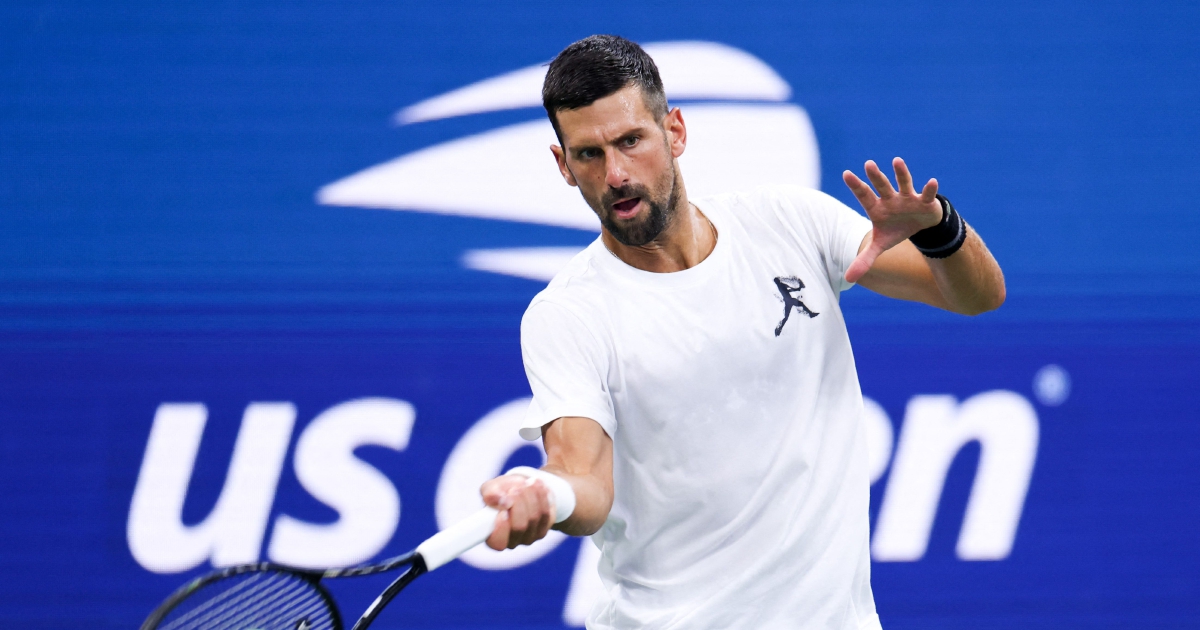
Novak Djokovic enters the US Open as one of sport's most relentless pursuers of historical achievement, with the Serbian champion eyeing a record-breaking 25th Grand Slam title that would establish an unprecedented benchmark in professional tennis. Since claiming the 2023 US Open crown—a triumph that matched Margaret Court's long-standing record of 24 major championships—Djokovic has maintained an unwavering focus on etching his name further into the annals of tennis greatness.
The significance of Djokovic's quest extends well beyond mere statistics. For decades, Margaret Court's 24 Grand Slam victories represented a seemingly immutable standard in women's and men's tennis. By equalling that mark at Flushing Meadows last year, Djokovic validated the extraordinary consistency and longevity he has demonstrated across nearly two decades of elite competition. The prospect of surpassing this historic number carries profound weight within the sport, particularly given how elusive major titles have proven for even the most accomplished players.
Djokovic's preparation for this latest campaign reflects the meticulous approach that has defined his career trajectory. At an age when many champions contemplate retirement, the Serbian star continues to invest the physical and mental resources required to compete at the highest level. His training regimen, dietary discipline, and strategic planning all converge on a singular objective: securing the silverware that would conclusively establish him as the greatest accumulator of Grand Slam titles in tennis history.
The competitive landscape surrounding this year's tournament adds another layer of intrigue to Djokovic's pursuit. The men's game continues to showcase emerging talent and sustained excellence from rivals who remain capable of derailing even the most meticulously prepared campaign. Djokovic's capacity to navigate these challenges while maintaining the precision and psychological fortitude necessary for Grand Slam competition remains perhaps his most valuable asset.
For Malaysian and Southeast Asian tennis enthusiasts, Djokovic's continued pursuit of records demonstrates the enduring appeal of individual excellence across sport. His journey resonates with audiences throughout the region who appreciate the combination of technical mastery, competitive hunger, and longevity required to sustain dominance across multiple decades. The narrative of a player refusing to accept comfortable historical parity in favour of pursuing absolute supremacy carries universal appeal.
Djokovic's previous US Open victories have showcased his particular adaptability to the hard court conditions at Flushing Meadows. The American venue's distinctive characteristics—its rapid court speed, challenging weather patterns, and demanding schedule—have suited his game repeatedly throughout his career. Understanding these environmental factors positions him favourably as he undertakes another campaign to advance his legacy.
The mental dimensions of Djokovic's challenge deserve particular emphasis. Pursuing a 25th Grand Slam carries psychological weight that transcends ordinary tournament preparation. Every match becomes laden with historical significance, every setback threatens to derail a season-long objective, and every victory adds momentum toward an outcome that would reshape tennis history. Navigating these pressures while maintaining the focus required for consistent excellence across seven competitive matches represents perhaps his greatest challenge.
From a regional perspective, Djokovic's continued excellence underscores the globalisation of tennis at its highest level. His Serbian heritage and his status as a player who has captured significant followings across Europe, Asia, and elsewhere demonstrate how individual athletes transcend national boundaries through sustained excellence. For younger competitors throughout Southeast Asia aspiring toward international sporting prominence, Djokovic's example provides instruction in the discipline, resilience, and systematic approach required to achieve sustained success.
The trajectory toward a 25th Grand Slam has itself become a storyline within the broader sporting calendar. Media attention intensifies with each major tournament, and anticipation builds regarding whether Djokovic will achieve this historic milestone. This narrative momentum itself becomes part of the competitive environment that Djokovic must navigate—enthusiasm and expectations that can either galvanise focus or create additional pressure.
Djokovic's preparation also reflects strategic decisions about which tournaments to contest and which to forego. By concentrating resources on major championships where Grand Slam points are available, he optimises his pathway toward record-setting achievement. This selective approach contrasts with earlier phases of his career when he pursued tournament victories across all levels, demonstrating the refined prioritisation that characterises veteran champions.
As the US Open approaches, Djokovic arrives carrying the momentum of a player who has steadfastly refused to accept historical satisfaction with equalling Court's achievement. His preparation extends across months of training, strategic analysis of potential opponents, and mental conditioning designed to sustain focus across a fortnight of demanding competition. Whether this year's campaign produces the historic 25th title remains uncertain, but Djokovic's determination to pursue this objective remains unmistakable.

