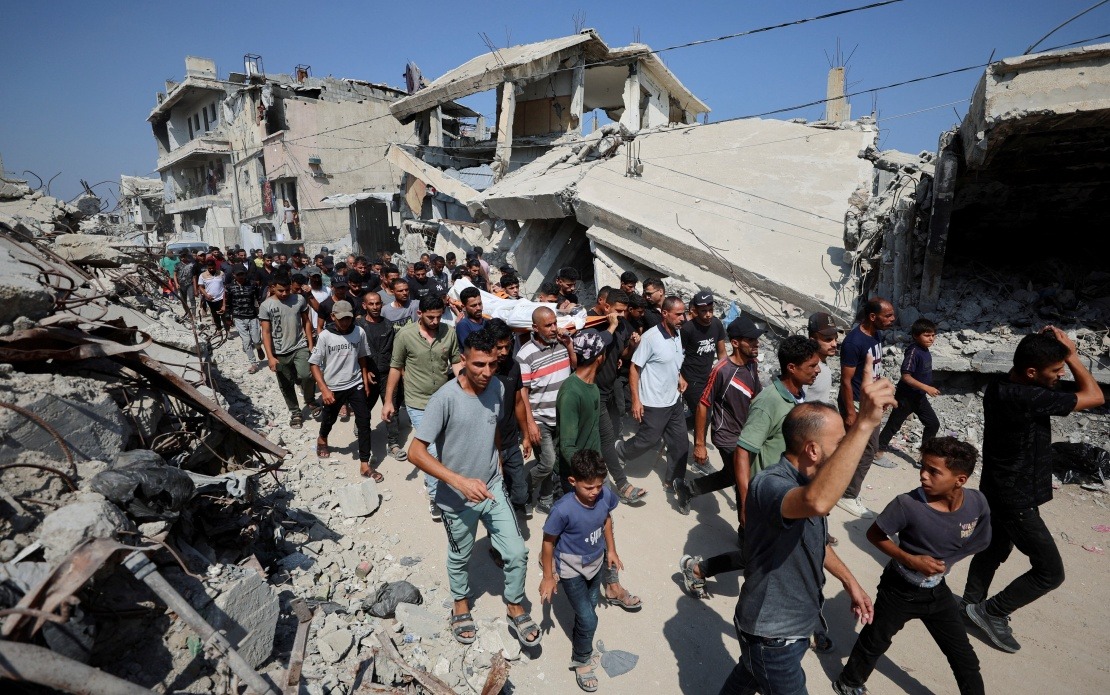
Doctors Without Borders (MSF) has strongly criticised the Israeli military's move to shut down investigations into the deaths of its personnel and their family members in Gaza without initiating any formal criminal inquiry. The international medical humanitarian organisation made its position clear on Thursday, describing the closure of these cases as a failure of justice and arguing that the Israeli legal system has demonstrated its inability to hold perpetrators accountable for actions that may constitute serious violations of international humanitarian law.
The decision by Israel's Military Advocate General comes after nearly two years of persistent requests by MSF for proper investigation into multiple incidents. The organisation had exhausted internal channels before escalating the matter to Israel's High Court, where it petitioned over the military authority's apparent reluctance to respond to their concerns. This progression underscores the mounting frustration within the humanitarian sector regarding what it views as systematic obstruction of accountability mechanisms.
A fundamental aspect of MSF's complaint centres on the provision of identifying information to Israeli military forces. The organisation maintains that it had shared the names and locations of all its personnel with Israeli forces beforehand, and that its vehicles displayed clear markings indicating their humanitarian status. According to MSF, these measures were designed specifically to prevent incidents, yet incidents occurred nonetheless. The group contends that the available evidence overwhelmingly points to the Israeli army's responsibility for the deadly attacks against its staff and operations.
One particularly significant incident occurred in November 2023, when an MSF convoy came under attack, resulting in the deaths of two relatives of staff members. Among those killed was Alaa Al Shawa, who had also been volunteering with MSF medical teams at Al-Shifa Hospital. This dual role—both as a staff member's family and as a volunteer healthcare worker—highlights the complex nature of casualties in conflict zones, where individuals often hold multiple roles within humanitarian organisations.
Another severe incident took place in February 2024 in Khan Younis, where an MSF shelter was targeted in what the organisation describes as an attack. This strike killed the wife and daughter-in-law of an MSF staff member and left six others wounded, including five who were women or children. The pattern of casualties involving family members of staff suggests either inadequate protection mechanisms or, as MSF implies, deliberate targeting despite the provision of protective information.
The scale of medical personnel casualties in Gaza adds significant context to MSF's grievances. Since the escalation of conflict in October 2023, the organisation has lost 15 of its own staff members to Israeli military actions. This figure must be understood within the broader humanitarian catastrophe in the enclave, where approximately 1,700 healthcare workers have been killed during the same period. The sheer number of deaths among medical professionals raises serious questions about the conduct of military operations in densely populated civilian areas.
MSF's core argument centres on what it perceives as a fundamental structural flaw in relying on military systems to investigate themselves. The humanitarian group argues that such internal mechanisms cannot provide the genuine, independent, and impartial accountability that violations of this magnitude require. By closing these cases without criminal investigation, MSF suggests that the Israeli legal system has effectively signalled there is no prospect of justice for victims of these incidents within existing frameworks.
The organisation has explicitly linked the closure of investigations to broader patterns it identifies in Gaza, using language that reflects the depth of its concern. MSF's statements invoke the language of mass atrocity, positioning these individual deaths within what it characterises as systematic violence affecting civilians across the territory. This framing represents not merely a procedural complaint but a fundamental challenge to the legitimacy of the investigative process itself.
In response to the case closures, MSF has called for the incidents involving its personnel to be reviewed by an independent investigative body, one that stands outside the military structure entirely. The organisation emphasises that no legitimate military objective can justify what it describes as the wholesale sacrifice of civilians, a principle that echoes long-established humanitarian law regarding proportionality and necessity in armed conflict.
The humanitarian toll documented by Gaza's Health Ministry provides additional perspective on the environment in which these incidents have occurred. Official figures indicate that in the 24 hours preceding MSF's statement, 10 Palestinians were killed and 25 injured in Gaza. Cumulative death tolls since October 2023 reached 73,417, with 174,360 others sustaining injuries. These statistics emphasise the density and intensity of the conflict affecting the territory, though they also raise questions about distinguishing between direct casualties and those resulting from broader conditions of siege and displacement.
For Malaysian and Southeast Asian observers, this case carries implications beyond the immediate humanitarian context. The question of accountability mechanisms within military justice systems, the treatment of humanitarian workers, and the consequences of protracted conflict in densely populated areas are relevant across the region. Malaysia's own diplomatic tradition of supporting humanitarian principles and international law puts particular emphasis on ensuring that humanitarian personnel receive protection and that violations against them are properly investigated through credible processes.

