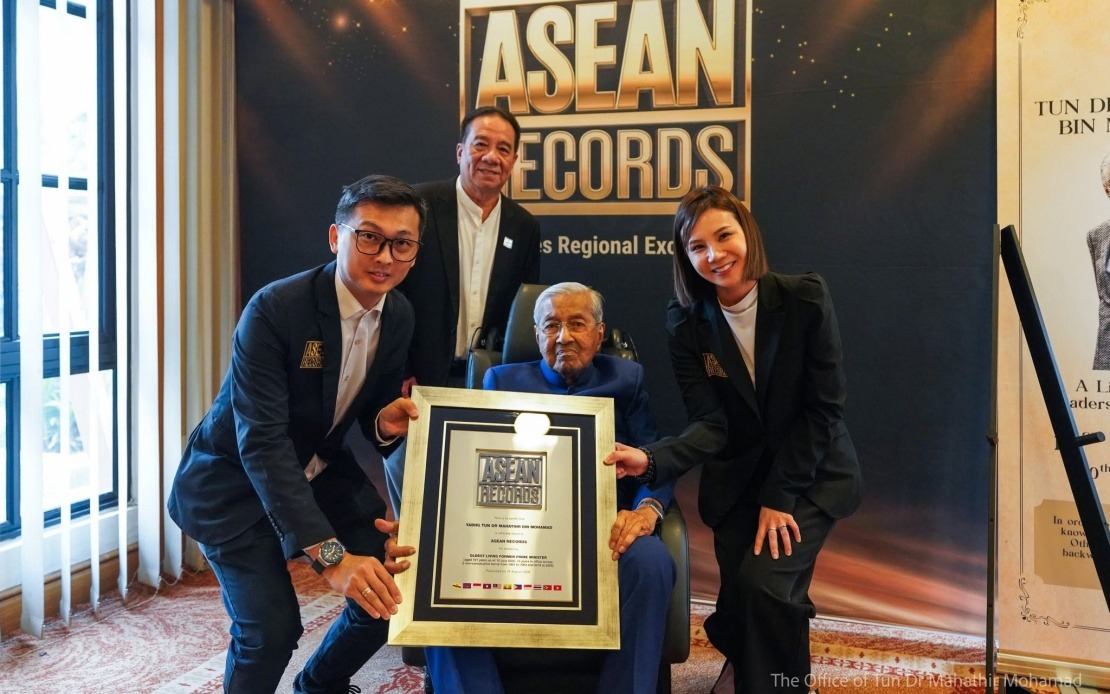
Tun Dr Mahathir Mohamad and his wife Tun Dr Siti Hasmah Mohd Ali have entered the record books as a remarkable centenarian couple, achieving three distinct recognitions that underscore their place in the region's contemporary history. The accolades, presented at a ceremony held at the Perdana Leadership Foundation in Kuala Lumpur, celebrate both their individual longevity and their unprecedented joint achievement as a couple who have both crossed the century mark while remaining closely associated with Malaysia's political leadership.
At 101 years old, Dr Mahathir received acknowledgment from ASEAN Records as the Oldest Living Former Prime Minister, a distinction reflecting his enduring prominence more than two decades after stepping down from the nation's highest office. His wife, now 100 years old, was simultaneously recognised as the Oldest Living Spouse of a Former Prime Minister, an honour that speaks to her own vitality and the couple's shared commitment to public engagement throughout their married life. The third and perhaps most significant record came as a joint achievement: ASIA Records certified them as the First Former Head of Government and Spouse to Both Become Living Centenarians, a milestone that had never been publicly documented across the broader ASEAN region or other major Asian markets.
The timing of these recognitions is particularly poignant, as they come amid a cluster of personal milestones for the couple. Dr Mahathir celebrated his 101st birthday on July 10, with Dr Siti Hasmah marking her centenary just two days later on July 12. The couple further commemorated their 70th wedding anniversary on August 5, demonstrating a partnership spanning nearly seven decades. In documenting these achievements on social media, Dr Mahathir reflected on the significance of being publicly recognised for their longevity and the unique position they hold as a couple in Southeast Asian public life.
The verification process undertaken by ASEAN Records and ASIA Records involved rigorous adjudication to ensure that no comparable achievement existed within documented records across the region. The adjudication team, led by ASEAN Records Advisory Board chairman Tan Sri Danny Ooi and accompanied by chief adjudicators Gillian Ooi and Eldrick Koh, conducted thorough research to confirm the unprecedented nature of Dr Mahathir and Dr Siti Hasmah's accomplishment. This methodical approach underscores the genuineness of the records and their significance within the broader context of political leadership and longevity across Southeast Asia.
For Malaysia, the achievement carries particular resonance given Dr Mahathir's 22-year tenure as Prime Minister, a period during which he shaped the nation's development trajectory and international relations. His continued vitality and public presence, even in his advancing years, has made him a figure of considerable influence in Malaysian political discourse. The recognition of both him and his wife as centenarians speaks to the quality of life and healthcare standards enjoyed by Malaysia's senior citizens, as well as the particular circumstances that have enabled this couple to maintain such remarkable health and engagement with public affairs.
Dr Siti Hasmah's achievement carries its own significance, particularly for women in Southeast Asia. As the spouse of a longtime national leader who has lived to 100 years while remaining actively engaged in social and philanthropic endeavours, she represents a generation of women who have wielded considerable influence beyond formal political office. Her longevity and continued involvement in various charitable and social initiatives have made her a respected figure in her own right, independent of her association with her husband's political career.
The records gained additional prominence given Malaysia's ageing population and the region's broader demographic shifts. As Southeast Asian nations grapple with the implications of longer lifespans, the example set by Dr Mahathir and Dr Siti Hasmah demonstrates the potential for vigorous engagement and meaningful contribution across the entire lifespan. Their continued participation in public life challenges conventional assumptions about capacity and relevance in advanced age, offering an alternative narrative to the often-marginalised status of centenarians in many societies.
The presentation of these records at the Perdana Leadership Foundation further emphasises the institutional framework through which Dr Mahathir's legacy is managed and preserved. The foundation, which bears his name and promotes leadership development, serves as both a repository of his political philosophy and a platform for his continued influence on national discourse. The choice to formalise the recognition of the couple's achievements through this venue demonstrates the deliberate curation of his public legacy and his abiding commitment to shaping Malaysia's future direction through educational and institutional channels.
For observers of Malaysian politics, the records serve as a tangible marker of generational continuity and the persistence of figures who dominated the nation's landscape during transformative decades. While Dr Mahathir has alternated between active political engagement and relative withdrawal from formal political roles in recent years, his symbolic importance remains considerable, particularly among constituencies that value his developmental achievements and assertive approach to national sovereignty and Islamic identity. The centenary celebrations thus acquire a broader meaning within the context of Malaysian political identity and the nation's ongoing negotiation between legacy and contemporary challenges.
The achievement also reflects the personal and intimate aspects of political leadership that frequently remain obscured by the public dimensions of high office. The 70-year marriage between Dr Mahathir and Dr Siti Hasmah represents a partnership that weathered the immense pressures of leading a nation through decades of transformation, economic development, and regional repositioning. Their joint longevity and the formal recognition thereof provide an unusual window into the personal foundations that sustained one of Southeast Asia's most influential political figures throughout his lengthy career.

