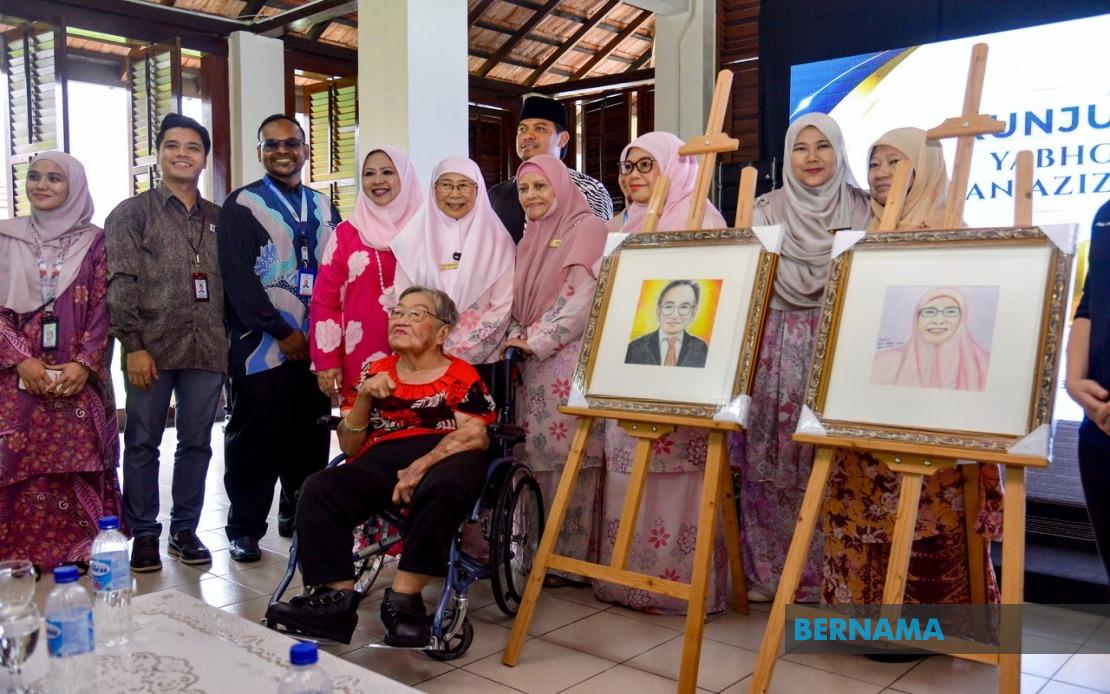
The National Leprosy Control Centre (PKKN) at Sungai Buloh Hospital deserves permanent preservation as a cornerstone of Malaysia's medical heritage, according to Datuk Seri Dr Wan Azizah Wan Ismail, wife of the Prime Minister. Speaking after a special visit to mark the facility's 100th anniversary, Dr Wan Azizah emphasised the institution's unique place in documenting the nation's public health journey and its role in transforming how leprosy has been managed across the country since its establishment in 1926.
During her tour of the facility, Dr Wan Azizah, who represents Bandar Tun Razak in Parliament, received a detailed briefing on the centre's historical significance and contemporary operations. She spent considerable time interacting with staff and residents, underscoring the human dimension of the institution's work. The visit culminated in a symbolic gesture of solidarity when Dr Wan Azizah contributed daily necessities to residents and received a portrait painted by one of them—a moment that highlighted the artistic and cultural contributions of the community housed within the centre.
As chairman of KASIH Malaysia, a charitable organisation linked to the Prime Minister's office, Dr Wan Azizah articulated a vision that extends beyond mere nostalgic preservation. She advocated for a balanced approach where historical structures and archives are maintained alongside continuous modernisation of healthcare services delivered at the facility. This dual emphasis suggests recognition that heritage conservation need not impede clinical excellence or patient care standards, a principle increasingly relevant to Southeast Asian institutions juggling tradition with contemporary demands.
The PKKN occupies a remarkable position in global medical history. Before Malaysia achieved official leprosy elimination status in 1994, the Sungai Buloh facility ranked as the world's second-largest dedicated isolation centre for the disease. This international prominence reflects both the scale of leprosy's historical burden in Malaysia and the systematic approach the nation adopted to combat it. Today, with prevalence rates standing at 0.15 cases per 10,000 population—substantially below the World Health Organisation's elimination threshold—the centre has successfully transformed from a sprawling isolation facility into a specialised medical hub with evolving responsibilities.
Leprosy, scientifically known as Hansen's disease, remains significant in public health discourse despite its control in developed nations. Dr Wan Azizah's comments acknowledge a persistent challenge: social stigma and outdated perceptions surrounding the disease continue to affect patients and survivors. Modern epidemiological evidence confirms that leprosy is neither highly contagious nor the dire condition historical narratives portrayed. Yet communities in Malaysia and across the region still harbour misconceptions, making public education through heritage preservation particularly valuable. The PKKN's physical existence and documented history can serve as educational resources that combat these harmful stereotypes.
The centre's relevance has extended into recent years in unexpected ways. During the COVID-19 pandemic, PKKN facilities were repurposed as a dedicated ward for coronavirus patients in 2020, demonstrating institutional flexibility and the capacity of Malaysia's healthcare infrastructure to pivot during public health emergencies. This modern application of a century-old institution underscores why preservation matters—such facilities represent accumulated technical expertise, established patient care protocols, and institutional memory that prove invaluable when new threats emerge.
Malaysia's approach to leprosy elimination reflects broader achievements in infectious disease control within Southeast Asia. The nation's success in reducing prevalence below WHO thresholds represents decades of dedicated public health work, antimicrobial innovation, and healthcare accessibility improvements. Many neighbouring countries have pursued similar strategies, making the PKKN potentially significant as a regional reference point for other nations still grappling with higher prevalence rates. Preserving the centre and its records could benefit not only Malaysian medical historians but also health professionals across the region seeking to understand effective elimination strategies.
The heritage argument advanced by Dr Wan Azizah carries implications for how Malaysia treats other specialised medical institutions and historical sites. Many countries have demolished or radically repurposed dedicated disease treatment centres once epidemiological circumstances changed, erasing physical evidence of past struggles and achievements. By advocating for preservation, Dr Wan Azizah positions PKKN alongside UNESCO-recognised medical heritage sites and national monuments, suggesting a cultural and educational value that transcends its original clinical mission.
Stakeholders in Malaysia's healthcare sector are increasingly recognising that medical heritage preservation serves multiple purposes beyond nostalgia. Such sites become teaching institutions, attracting researchers, historians, and public health students interested in understanding disease control strategies, patient experiences, and the evolution of medical science. They offer documented examples of how public health systems respond to long-term challenges and how communities adapt to living with chronic disease. For Malaysia, a nation positioning itself as a regional medical hub, such heritage assets strengthen institutional credibility and historical narrative.
The timing of Dr Wan Azizah's advocacy, coinciding with the centenary celebration, creates momentum for formalising preservation plans. Whether through legislative protection, heritage designation, or dedicated funding mechanisms remains to be determined. However, her prominence as Prime Minister's wife and active parliamentarian suggests this endorsement carries political weight. The visit and accompanying statements signal official recognition that PKKN merits protection comparable to other nationally significant buildings and institutions.
For residents and staff of the PKKN, Dr Wan Azizah's public commitment to preservation likely carries symbolic importance beyond policy implications. Acknowledgment from high-level government figures validates their work and affirms that the institution they serve remains valued by national leadership. This recognition can strengthen morale and institutional identity, particularly important for staff working in specialised medical fields that may receive less public attention than more prominent hospital departments.
Moving forward, the challenge will lie in translating this advocacy into concrete protective measures and funding allocations. Preservation of a century-old medical facility demands ongoing investment in building maintenance, infrastructure upgrades, and archival organisation. The PKKN's future likely depends on successful navigation between heritage conservation and healthcare modernisation—maintaining historical integrity while ensuring clinical facilities meet current standards. Dr Wan Azizah's emphasis on simultaneous preservation and improvement suggests a workable framework, though implementation will test institutional commitment and governmental prioritisation.

