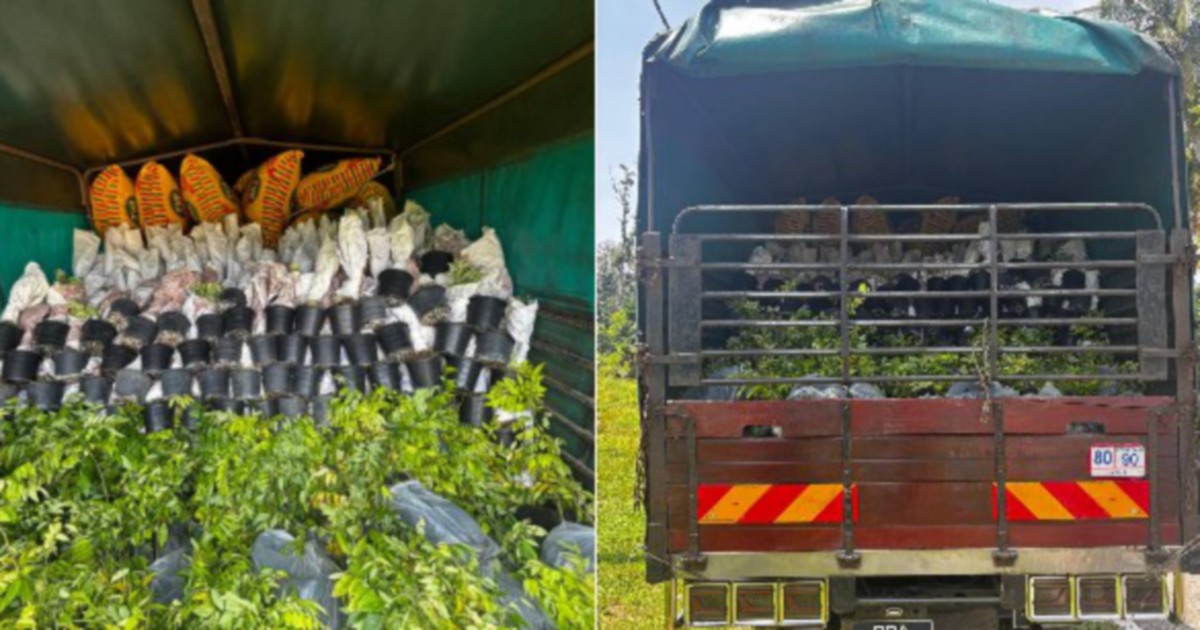
A commercial driver faces charges following the discovery of a substantial cache of ornamental plant saplings during an enforcement operation at Rantau Panjang. The seizure, executed at Kampung Padang Licin, uncovered approximately 6,000 saplings with an estimated market value of RM200,000, authorities say were illegally transported across the Malaysia-Thailand border. The apprehension marks another chapter in the region's ongoing struggle against wildlife and botanical smuggling networks that exploit porous border areas.
The interception highlights vulnerability in Malaysia's agricultural import systems, particularly along the Kelantan-Thailand frontier where enforcement resources remain stretched. Ornamental plants represent a lucrative but often overlooked commodity in smuggling operations, overshadowed by attention on more dramatic contraband. Yet the horticultural trade generates substantial revenue for criminal networks while potentially introducing invasive species and plant diseases into local ecosystems. The seized saplings' intended destination and end-market remain under investigation, though domestic ornamental plant dealers represent a probable buyer base.
Malaysia's porous northern borders have long presented logistical challenges for customs and agricultural agencies. The Rantau Panjang border crossing, spanning between Kelantan and Thailand's Narathiwat province, serves as a major checkpoint but illicit goods frequently bypass official channels through rural routes. Enforcement agencies periodically conduct coordinated operations targeting high-risk trafficking corridors, though the scale of contraband successfully slipping through remains unknown. The driver's arrest suggests operational intelligence guided authorities to this location, indicating possible surveillance of smuggling networks.
The economic implications warrant consideration beyond the immediate seizure value. Smuggled ornamental plants undercut legitimate domestic cultivators and importers who comply with phytosanitary regulations and taxation requirements. Malaysia's nursery industry, concentrated in regions like Selangor and Perak, faces unfair competition when bootleg competitors avoid compliance costs. Additionally, unvetted plant material poses biosecurity risks—smuggled saplings may carry pests, fungal infections, or pathogens that spread rapidly once established in local growing environments or sold to unsuspecting consumers.
Phytosanitary regulations exist precisely to mitigate such threats. Malaysia's Department of Agriculture enforces strict import protocols requiring health certificates, species documentation, and quarantine procedures for foreign botanical material. Smuggled goods circumvent these safeguards entirely, potentially introducing destructive organisms like thrips, scale insects, or root rot fungi to local horticultural operations and home gardens. The 6,000 saplings, had they entered circulation unchecked, could have disseminated pathogens across multiple growing regions and household collections.
The ornamental plant trade warrants heightened attention from regional regulators. Thailand, Indonesia, and Vietnam command substantial horticultural export markets, supplying decorative plants throughout Southeast Asia. While legitimate trade channels operate efficiently, organised smuggling networks exploit demand differentials between countries—Thai saplings may fetch lower prices on black markets than through legal importation channels. Cross-border plant trafficking also intersects with broader environmental concerns; rare or protected flora occasionally masquerade as common ornamentals, fuelling illegal exploitation of endangered species.
Malaysia's enforcement capacity against agricultural smuggling remains constrained relative to the threat scale. Agencies including the Royal Malaysian Customs and the Department of Agriculture coordinate operations, yet personnel shortages and competing priorities limit sustained border patrols. Intelligence-driven interventions, such as the Rantau Panjang seizure, represent optimal deployment of finite resources but cannot substitute for permanent, systematic oversight. Technology solutions including biometric scanning and automated manifests could enhance screening efficiency, though implementation remains incomplete across Malaysian checkpoints.
The arrest signals determination to combat agricultural crime, yet enforcement alone cannot address supply-demand imbalances that incentivise smuggling. Education campaigns reaching hobby growers and commercial landscapers about the environmental and health risks of unvetted plants could reduce consumer demand for illicit stock. Simultaneously, legitimate importers require government support—tariff rationalisation or certification subsidies—to remain price-competitive against contraband alternatives.
Regionally, Malaysia might strengthen cooperation with Thai and Bruneian authorities through enhanced intelligence sharing and joint operations targeting smuggling syndicates at their source. Many organised networks operate with headquarters in one country and distribution networks across borders; dismantling these structures requires transnational coordination. ASEAN's various trade and agricultural frameworks provide institutional channels for such cooperation, though political will and resource allocation often limit practical implementation.
For the arrested driver and associated networks, prosecution will test Malaysia's legal apparatus. Charges under Customs Act provisions or Agricultural Code sections determine sentence severity; penalties ranging from fines to imprisonment depend on judicial interpretation and prior offender status. However, individual prosecutions address symptoms rather than underlying structural vulnerabilities. Sustained reduction in horticultural smuggling ultimately requires durable improvements in border surveillance, interagency coordination, and regional cooperation mechanisms—objectives demanding sustained political commitment and budgetary investment from Malaysian authorities and neighbours alike.

