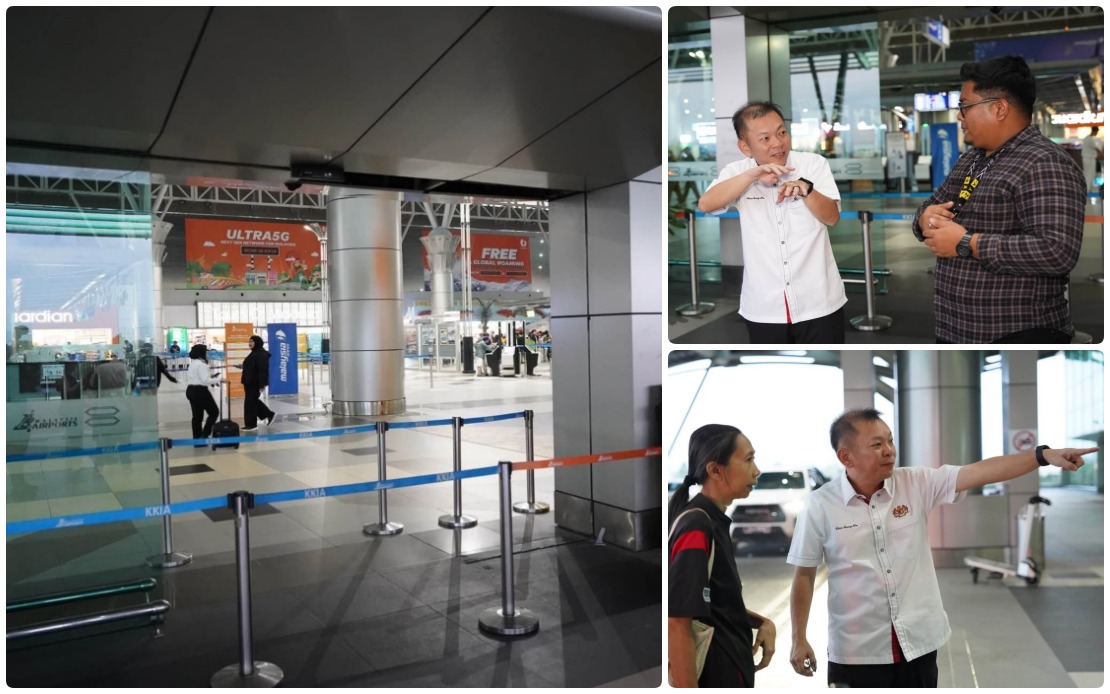
A woman driver sustained minor injuries on Wednesday afternoon when her sports utility vehicle suddenly lost control and smashed into the glass entrance doors at the departure level of Kota Kinabalu International Airport, triggering an immediate emergency response that prevented broader disruption to the facility's operations.
The incident occurred at approximately 4:20 pm at the kerbside entrance on Level 3 of the Terminal 1 departure hall. The impact was severe enough to shatter the glass door structures entirely, while the front of the vehicle sustained considerable damage. However, the collision did not endanger other airport users or staff members, limiting casualties to the driver alone.
Authorities moved quickly to contain the situation. Malaysia Airports, which operates the facility, dispatched aviation security and customer service teams within minutes of the incident. Medical personnel were summoned, and the injured driver was transported by ambulance to a nearby hospital for treatment of her minor injuries. The operator completed clearing of the damaged vehicle and surrounding debris by 6:00 pm, allowing normal foot traffic to resume through alternative entrances.
Kota Kinabalu District Police Chief ACP Shahrudin Mat Husain confirmed the incident and indicated that investigators are working to establish what caused the vehicle to lose control. The exact circumstances—whether mechanical failure, driver error, or environmental factors played a role—remain under examination as the police investigation continues.
Repair work on the damaged entrance doors began immediately following the removal of debris. Malaysia Airports stated in an official statement that the facility's operations experienced no interruption, with other automatic doors at the departure level remaining fully functional to accommodate passenger flow. The swift response prevented any cascading effects on airport traffic or flight schedules.
Deputy Minister of Agriculture and Food Security Datuk Chan Foong Hin, who had just arrived at the airport at the time of the incident, publicly acknowledged the professionalism demonstrated by KKIA personnel. He commended the management and staff for their rapid deployment and effectiveness in securing the area and restoring normal conditions. His intervention underscored the collaborative approach to crisis management at the airport level.
The incident highlights broader questions about safety protocols at major transport hubs across Southeast Asia, particularly regarding vehicle access control in passenger-facing areas. International airports increasingly grapple with balancing convenience for travellers and airport users with security and safety measures designed to prevent such accidents. KKIA's experience demonstrates that robust contingency planning and trained personnel can mitigate potential harm when unexpected incidents occur.
Malaysia Airports has referred the matter to the Royal Malaysia Police for formal investigation and stated it is providing full cooperation to relevant authorities. This standard procedure ensures that insurance claims, liability assessment, and any necessary policy adjustments can be made based on factual findings rather than assumption. The operator's transparency in communicating the incident and its resolution to the public also reflects modern aviation industry standards around accountability.
For Sabah's tourism and business travel sectors, which depend significantly on smooth airport operations, the incident and its rapid resolution offered reassurance about KKIA's resilience and crisis management capacity. The facility handled a potentially serious disruption without affecting flight schedules or passenger experience, a critical factor for maintaining confidence among airlines and travellers choosing the airport for regional connections.
The incident serves as a reminder of the diverse hazards that modern airports must anticipate and manage. Beyond traditional security concerns, facility operators must account for vehicle-related accidents, health emergencies, structural failures, and other unpredictable events. KKIA's response in this case—swift medical intervention, rapid debris clearance, immediate alternative arrangements, and transparent communication—represents the standard expected of major regional airports.
As repair work progresses on the damaged doors, investigators will likely focus on vehicle maintenance records, road surface conditions, and any witness accounts to determine precise causation. Understanding the root cause will inform whether additional preventive measures, such as reinforced barriers or modified traffic flow patterns, might be warranted in future airport design or operations.
The incident concluded without lasting impact on airport services, a testament to Sabah's aviation infrastructure readiness and the professionalism of those responsible for managing one of Malaysia's key regional gateways.

