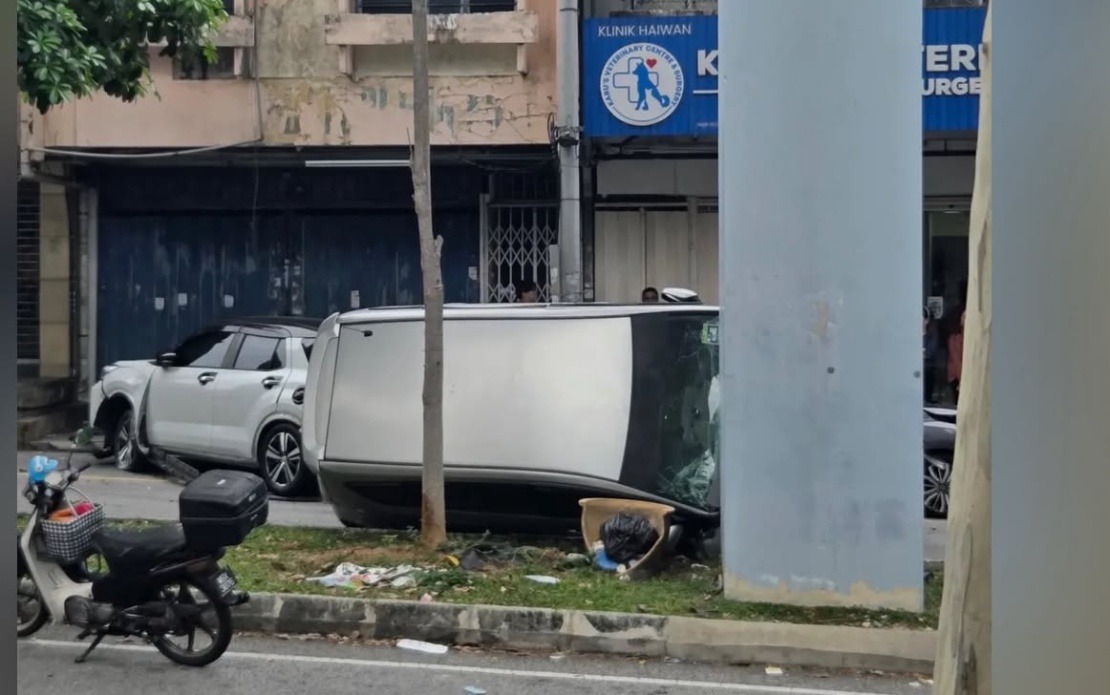
A medical emergency unfolded on Jalan Midah 1 in Cheras on Wednesday morning when a 28-year-old driver suffered an acute seizure episode while operating his BMW 320i, leading to an uncontrolled collision with six stationary vehicles parked along the roadside. The incident, which occurred at approximately 8.30 am, has raised fresh concerns about medical fitness standards for Malaysian motorists and the need for enhanced screening protocols among drivers with known neurological conditions.
According to ACP Mohd Zamzuri Mohd Isa, chief of the Kuala Lumpur Traffic Investigation and Enforcement Department, the driver was commuting from his residence to work at a location in Taman Midah 1 when the seizure suddenly incapacitated him. The loss of consciousness and motor control triggered an immediate deviation from the intended driving path, with the vehicle veering leftward and subsequently striking the parked cars with considerable force. The sequence of events unfolded rapidly, leaving the driver unable to apply emergency braking procedures or steer to safety.
Fortunately, the parked vehicles bore no occupants at the moment of impact, sparing potential casualties despite the severity of the collision. The six damaged vehicles were registered to four female vehicle owners aged between 29 and 43, one male owner aged 39, and one commercial entity vehicle. This distribution reflects the typical composition of parking arrangements in residential and semi-commercial areas along the Taman Midah corridor, where shared parking facilities accommodate both personal and business-related vehicles.
Investigative procedures initiated at the scene included a breathalyser examination, which conclusively ruled out alcohol impairment as a contributing factor. The test yielded a reading of zero milligrammes per 100 millilitres of blood, indicating that substance intoxication played no role in the accident. This finding shifted investigative focus entirely toward the documented medical history that subsequently emerged during preliminary checks.
The revelation that the 28-year-old driver possessed a seizure history spanning approximately a decade adds a critical dimension to this incident. Such neurological conditions, particularly those with recurrent manifestations over extended periods, warrant careful consideration regarding an individual's suitability to operate motor vehicles. In Malaysia, drivers holding valid licenses but experiencing episodic medical episodes face complex legal and practical questions about their continued eligibility to drive safely within public spaces.
No individuals sustained physical injuries as a consequence of the collision, though the property damage sustained by the six vehicles represented substantial financial loss for their owners. The absence of personal harm, while fortunate, does not diminish the broader implications of this preventable accident. The incident underscores the vulnerability of stationary vehicles in parking areas and the potential for significant property damage when drivers lose vehicular control due to medical conditions rather than negligent or reckless behavior.
The Kuala Lumpur traffic authorities have classified the accident under Rule 10 of LN 166/59, a regulatory framework governing vehicle-related incidents with specific causal factors. This classification signals that investigating officers have determined the primary cause to be a medical episode rather than traffic violations, dangerous driving, or mechanical failure. The distinction carries important implications for liability determination, insurance claims processing, and potential policy recommendations regarding driver medical fitness assessments.
Ongoing investigations aim to establish a comprehensive timeline of the seizure onset, determine whether the driver had sought recent medical consultation or medication adjustments, and assess whether adequate disclosure of the pre-existing condition had been made during previous license renewal processes. These inquiries will inform whether current regulatory mechanisms adequately protect public safety on Malaysian roads when dealing with drivers experiencing recurring neurological episodes.
The Tun H.S. Lee traffic police station, which has taken primary responsibility for the investigation, welcomes information from witnesses or members of the public who observed the incident or possess knowledge relevant to the case. Queries can be directed to the station at 03-2071 9999 or forwarded to any neighboring police station. Such community engagement often yields crucial corroborating details about incident circumstances and can assist in establishing precise timelines for medical episode onset.
This incident inevitably raises questions about medical fitness certification standards for Malaysian drivers, particularly those with documented histories of conditions that could impair consciousness or motor control. Regulatory bodies may need to review whether existing protocols for license renewal adequately assess ongoing medical management of chronic seizure disorders, or whether additional restrictions should apply to drivers with such conditions. The balance between individual mobility rights and public safety imperatives remains a persistent challenge in traffic regulation policy.

